
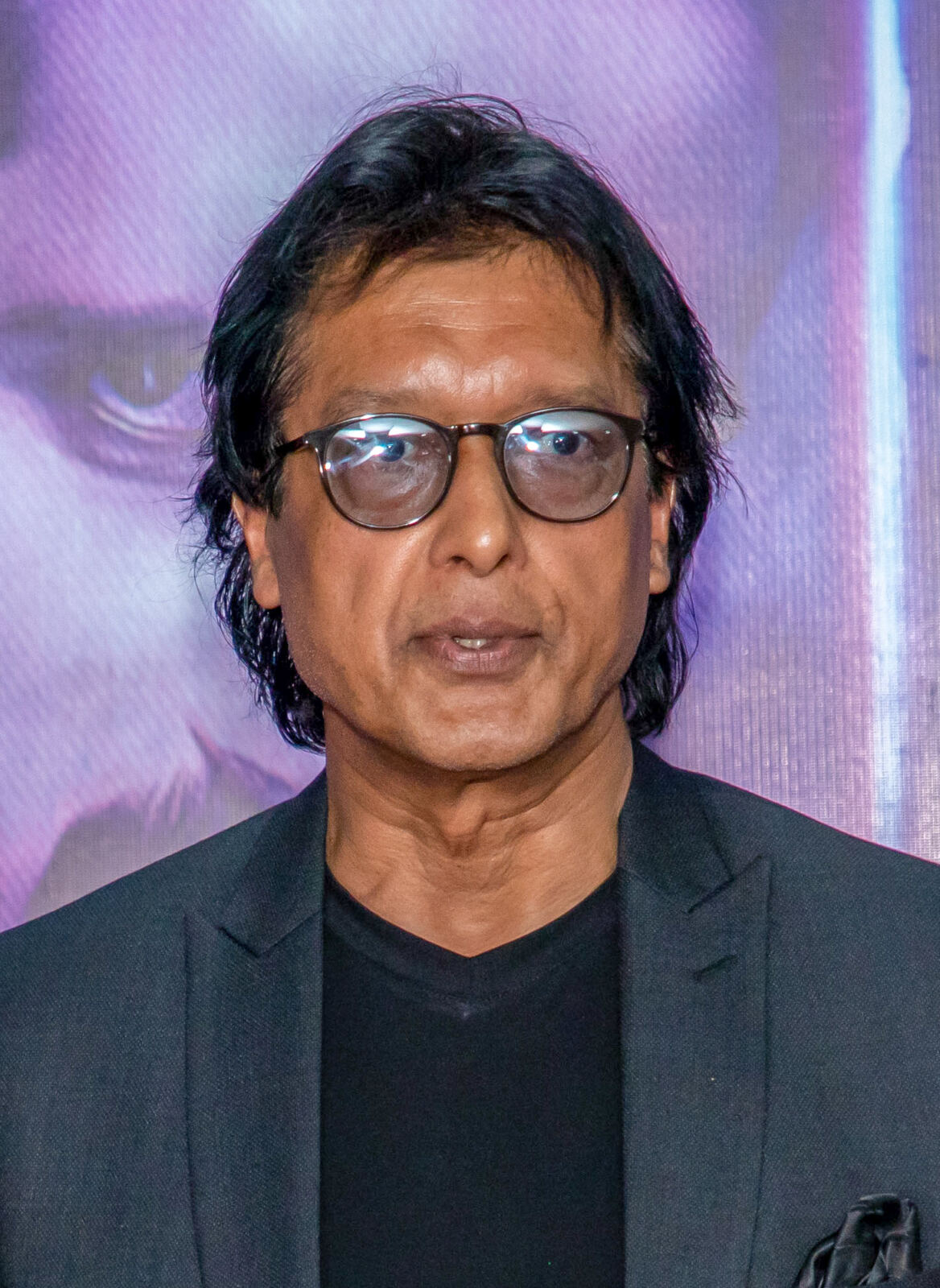
There are actors who become famous because of a film, and there are actors who eventually become a reference point for an entire era. In Nepal, Rajesh Hamal belongs to the second category.
For more than three decades, his name has travelled far beyond cinema halls. It has entered advertising, television, jokes, memes, public events and everyday conversation. Even people who cannot name five of his films know the face, the voice, the hair and the familiar public persona.
That is what makes Hamal’s career interesting. His significance is not simply that he acted in many films. It is that he became one of the first Nepali screen stars whose celebrity could survive changes in technology, taste and generation.
Before the superstar
Born in Tansen in 1964, Hamal spent parts of his childhood and youth outside Nepal and later studied English literature at university in India. Cinema interested him before acting became a profession. In later interviews, he has described modelling as a possible route toward films rather than an end in itself.
His screen breakthrough came with Yug Dekhi Yug Samma, the film whose title would later become the name of his memoir. The project arrived at a moment when Nepal’s commercial film industry was still small, technically limited and heavily influenced by the dominant Hindi film market across the border.
Audiences nevertheless wanted local stars. Hamal arrived with qualities that the era’s commercial cinema knew how to magnify: height, a deep voice, physical presence and the ability to carry melodrama without appearing embarrassed by it.
When the hero had to be larger than life
The films that made Hamal a household name belonged to an industry built around the theatrical hero. That hero fought, suffered, loved, delivered speeches and restored moral order. Subtlety was not always the point. Recognition was.
Hamal fit that grammar almost perfectly.
Films such as Deuta, Basanti and many others helped establish a public image in which the actor and the heroic figure often overlapped. The audience did not simply watch Rajesh Hamal playing a character; they often went to watch “Rajesh Hamal” himself.
That distinction matters. Stardom is partly acting and partly repetition. A recognisable gesture, hairstyle, voice or stance accumulates meaning over time. Hamal’s long hair and baritone became cultural shorthand, instantly imitable and instantly identifiable.
The industry around him
The 1990s and early 2000s were a period when Nepali cinema was trying to build a domestic market with limited capital and infrastructure. Production schedules could be rushed, scripts formulaic and technical quality uneven. Yet the industry kept producing because there was an audience willing to see familiar faces on the big screen.
Hamal became one of the faces that could carry that system.
His workload was immense. He appeared repeatedly across genres, sometimes in films that were memorable and sometimes in films that disappeared quickly. The volume itself became part of the legend.
This is also why evaluating Hamal only through a modern idea of selective filmography can miss the historical context. He was working in a star system where continuity mattered. Audiences expected to see him frequently, and producers valued a dependable marquee name.
Why “Mahanayak” stuck
Fans began referring to Hamal as “Mahanayak”, literally a great hero. The title is not an official rank and it has sometimes been debated, but its endurance says something important about celebrity in Nepal.
The label is less useful as a technical judgment of acting than as a measure of cultural reach.
Hamal became one of the few film actors recognised across urban and rural Nepal, across age groups and across communities that might otherwise have very different entertainment habits. His fame became self-reinforcing: the more familiar he became, the more he represented the idea of a Nepali movie star.
Surviving a changing screen
The film industry that made Hamal famous no longer exists in the same form.
Digital cameras lowered production costs. Multiplexes changed viewing habits. YouTube and streaming gave audiences access to global content. New filmmakers brought different ideas about realism, performance and dialogue. Social media fragmented celebrity and created stars who could become famous without a cinema hall.
Many performers from Hamal’s generation faded as the industry changed.
Hamal did not disappear.
Instead, he gradually moved from being a constantly working leading man to a cultural figure whose relevance no longer depended on regular film releases. Television appearances, public speaking, social media and brand work kept him visible. Younger audiences, some of whom had never seen his biggest films in theatres, encountered him through clips, interviews and memes.
A surprisingly digital afterlife
Internet culture has been unusually kind to Rajesh Hamal.
His old dialogue deliveries, poses and dramatic expressions have been recycled online with affection and irony. For some older stars, meme culture can reduce a career to a joke. In Hamal’s case, it often seems to have done the opposite: it introduced the iconography of his stardom to people too young to remember its original context.
That is one reason his public image feels unusually durable. He can be treated seriously as a veteran actor and playfully as an internet character at the same time.
Reading, discipline and privacy
The contrast between Hamal’s screen image and public personality has also helped sustain interest in him.
On screen he was often emphatic and physically dominant. In interviews he has frequently presented himself as reflective, disciplined and private. He speaks often about reading, exercise and the value of routine.
That gap creates curiosity. The man associated with exaggerated commercial cinema is also an English literature graduate who speaks at length about books and changing cultural habits.
A return to conversation
In recent years Hamal has increasingly appeared in discussions about the evolution of Nepali cinema rather than merely promoting individual films. He has spoken at film festivals and public forums about how audiences, technology and storytelling have changed.
That transition is natural. A career long enough to span the analog and digital eras becomes a form of institutional memory.
When Hamal talks about a time when a new film release could feel like a national event, he is describing an entertainment economy very different from the one young actors now inhabit.
The meaning of longevity
Stardom is usually temporary. It depends on fashion, timing and the audience’s willingness to keep looking.
Rajesh Hamal’s unusual achievement is that the public kept looking even after his position in the film industry changed.
The younger Nepali cinema of today is less dependent on a single heroic figure. Actors move between arthouse and commercial projects. Writers and directors receive more attention. Audiences are more demanding and more fragmented.
That makes Hamal’s era difficult to reproduce.
But it also makes it historically important.
He became famous when Nepal needed film stars who could make local cinema feel like a national spectacle. Decades later, the films have aged unevenly, but the symbol remains.
Rajesh Hamal’s career is therefore not just the story of one actor. It is the story of a period when Nepali cinema learned how to create a superstar—and then discovered that the superstar could outlive the system that created him.