
At the close of Prabal Gurung’s spring 2020 show in New York, the models did not simply return for a final walk. They came out wearing pageant-style sashes printed with a question: “Who gets to be American?”
It was September 2019, ten years after Gurung had launched his own label. The anniversary could have been a victory lap: a decade of red carpets, prominent clients and survival in an unforgiving industry. Instead, the designer used the runway to unsettle the idea that Americanness has a single face.
The question carried the route that had brought him there. Gurung was born in Singapore to Nepali parents, raised in Kathmandu, trained in New Delhi and New York, and became a United States citizen in 2013. His work has moved between those places without treating identity as a choice between them. Fashion, for him, has become a way to ask who is seen, who is welcomed and who is allowed to belong.
Learning to look closely
Gurung grew up in Kathmandu, where his mother, Durga Rana, ran a boutique. The shop gave him an early view of clothes as more than finished objects. Behind every garment were decisions about cut, colour, labour and the person who would wear it.
His childhood was not an easy apprenticeship. In his 2025 memoir, Walk Like a Girl, Gurung wrote about an abusive father, bullying and the pressure he felt as a queer child who did not fit the roles expected of him. He has described his mother as the central source of courage in that period. Her example joined creativity to endurance: making a life required both imagination and practical resolve.
He first pursued hotel management, a respectable path that did not hold him for long. Fashion drew him south to New Delhi and the National Institute of Fashion Technology. India’s capital offered a much larger industry than Kathmandu, along with a vivid collision of handwork, street colour, cinema and international style.
Gurung worked with designer Manish Arora, whose exuberant approach to colour and surface helped make Indian fashion visible abroad. The experience placed him inside the daily mechanics of a design business. It also showed that an Asian point of view did not have to be muted to travel.
An immigrant in the workroom
New York was the next leap. Gurung studied at Parsons School of Design, interned at Donna Karan and spent two years with Cynthia Rowley. In 2004, he became design director at Bill Blass, the American house associated with polished, confident womenswear.
These were years of learning how glamour is constructed. A dress that appears effortless on a runway or red carpet is the end of a long chain: sketching, draping, fittings, fabric orders, production schedules and revisions measured in fractions of an inch. Gurung absorbed that discipline while developing a language of his own—precise tailoring softened by movement, intense colour balanced by clean line, and evening clothes that could be romantic without becoming fragile.
He left Bill Blass after five years and launched Prabal Gurung in February 2009. The timing was severe. The global financial crisis had shaken retail and made an independent luxury label a precarious proposition. But the first collection established him as a designer with technical control and a clear idea of modern elegance.
Recognition came quickly. He entered the CFDA Fashion Incubator, was a runner-up for the 2010 CFDA/Vogue Fashion Fund and received the CFDA Swarovski Award for Womenswear in 2011. Michelle Obama wore his designs, bringing the work of a young immigrant designer into one of the most scrutinised wardrobes in the world.
Over time his clothes appeared on figures including Oprah Winfrey, Kamala Harris, Kate Middleton, Sarah Jessica Parker and many others. Those names expanded the label’s visibility, but celebrity dressing was not the whole achievement. The harder work was keeping an independent company alive while maintaining production, staff and a recognisable point of view.
Making the runway wider
Gurung’s politics became increasingly visible as his platform grew. His collections and campaigns argued that beauty did not belong to one body type, race or background. A 2017 collaboration with Lane Bryant brought his design language to women who had long been underserved by luxury fashion. That year, a runway finale featured T-shirts carrying feminist messages, turning the applause at the end of a show into a declaration about women’s rights.
The 2019 anniversary show pushed the argument further. Its “Who gets to be American?” sashes echoed the visual language of beauty contests, institutions that traditionally rank women according to narrow standards. On Gurung’s runway, the sash became a challenge to another narrow standard: the assumption that nationality can be read from a face, name or accent.
This did not mean abandoning beauty for slogans. The collection used roses, tailoring, evening dresses and references to American sportswear. Cowboy boots joined textiles and colours shaped by a wider world. The clothes made the point through pleasure as well as protest: a national style could become more generous by admitting more people into the picture.
For Gurung, that position was personal but not private. He had arrived in New York as an immigrant and built a label in an industry whose gatekeepers did not always reflect its customers. He later became a vice chair of the Council of Fashion Designers of America, moving from the margins of the establishment toward a role in shaping it.
The road back to Nepal
Success in New York did not dissolve Gurung’s ties to Nepal. In 2011, he helped establish the Shikshya Foundation Nepal with his siblings, Pravesh Gurung and Kumudini Gurung Shrestha, and friends Rati Shah, Rupali Golchha, Riva Thapa. The foundation’s work grew from the belief that education can widen the range of lives available to a child.
After the April 2015 earthquake devastated Nepal, Gurung launched a relief fund and used his international network to direct attention and money toward the emergency. Shikshya’s team moved from its education focus into relief, distributing food, water, medical support and temporary shelter. The effort eventually reached thousands of families before the organisation returned to longer-term work.
The response showed a different side of diaspora influence. Gurung could translate visibility in fashion capitals into practical support at home. It also complicated the familiar story of talent “leaving” Nepal. His career was built abroad, but part of its reach flowed back through education, relief and work linked to Nepali craft.
That connection appeared in his business too. His first New York boutique, opened on Bleecker Street in 2019, included a light installation inspired by Nepal and carried hand-knitted shawls made by women there. A portion of proceeds supported the foundation. The gestures were not substitutes for public policy or structural reform, but they made Nepal part of the label’s operating world rather than a decorative memory.
Beyond the single success story
Gurung has also worked beyond the traditional seasonal runway. Collaborations with Target, MAC Cosmetics, TOMS and Lane Bryant put versions of his aesthetic before wider audiences. In 2017 he became global creative director of the Japanese jewellery house Tasaki, adding pearls and fine jewellery to the vocabulary of his work.
Each expansion carried a familiar tension. Luxury fashion depends on exclusivity, while Gurung’s public argument emphasises inclusion. He has not resolved that contradiction so much as worked inside it: widening representation, collaborating across price points and using the rarefied runway as a public stage.
Walk Like a Girl, published in May 2025, brought the personal history behind that position into fuller view. The memoir traces Kathmandu, New Delhi and New York while revisiting the ridicule and violence that shaped his early years. Its title reclaims a phrase used to police gender, turning an insult into a way of moving through the world without apology.
The book arrived after more than fifteen years under his own name. By then, the story could easily have been packaged as a simple ascent: a child from Kathmandu reaches New York and dresses famous women. Gurung’s own account resists that neatness. Achievement did not erase the wounds of childhood, and acceptance by powerful institutions did not end the need to question them.
That is why the 2019 runway question still holds. It was not only about passports. It asked who is allowed to represent a nation, whose labour becomes visible, whose body is imagined as elegant, and whose story counts as success.
Gurung’s answer has been built collection by collection rather than stated once. It can be found in the discipline he learned in New York workrooms, the colour he carried from South Asia, the women he places at the centre of his clothes, and the educational work sustained in Nepal.
On a runway, a designer controls the order in which people see things: first a silhouette, then movement, detail and meaning. Gurung has used that sequence to make beauty the invitation and belonging the deeper subject. Kathmandu is not merely the place he came from, and New York is not simply where he arrived. Together, they form the distance across which he continues to design.
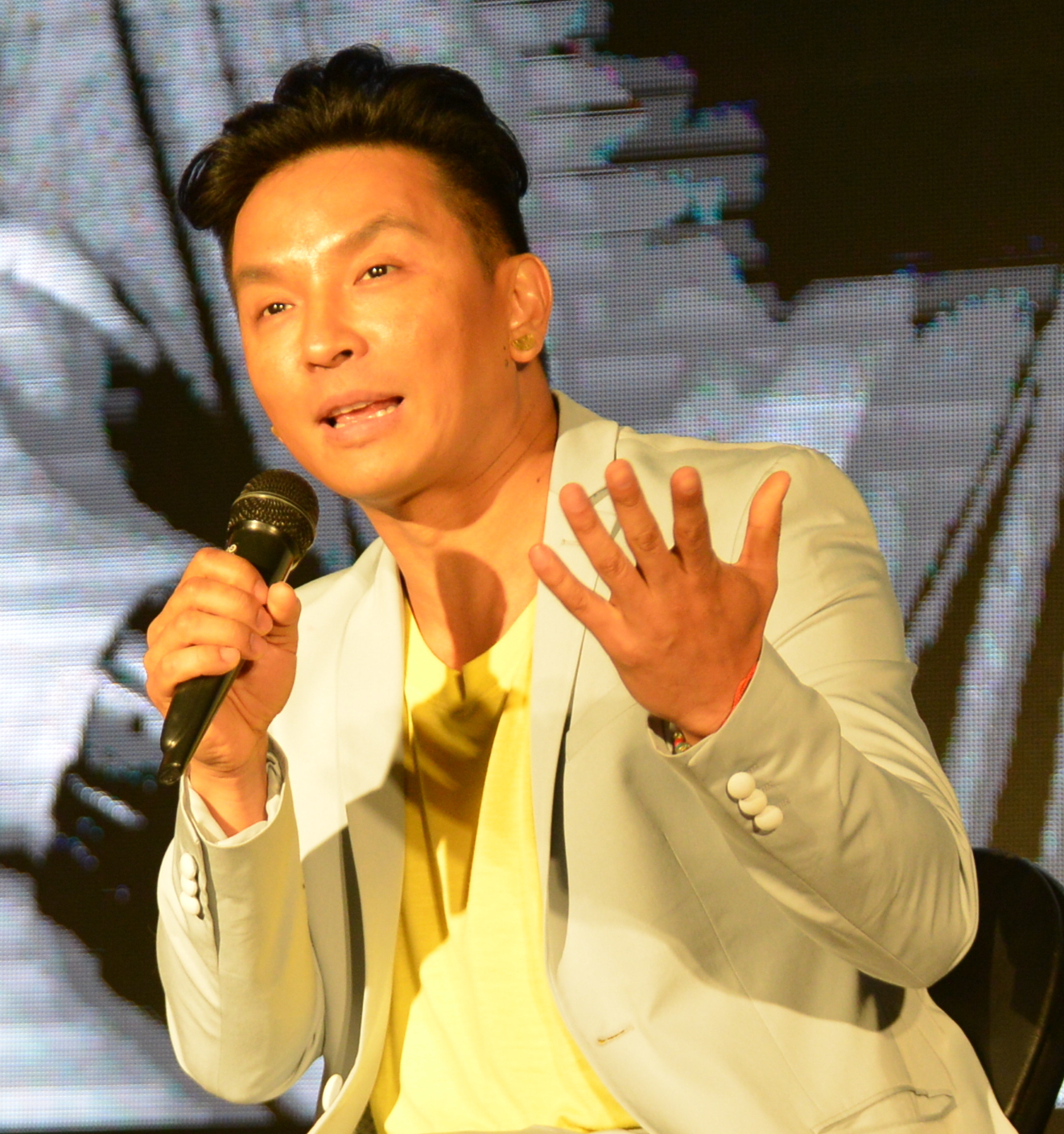
Featured image: Prabal Gurung speaking at Patan Durbar Square in 2018. Photograph by S Pakhrin, via Wikimedia Commons, licensed under CC BY 2.0. Cropped from the original.