How Leanne Pooley’s 3D docudrama reconstructed the 1953 Everest expedition—and why the story of Edmund Hillary and Tenzing Norgay still shapes how the world sees Nepal and the Himalayas.
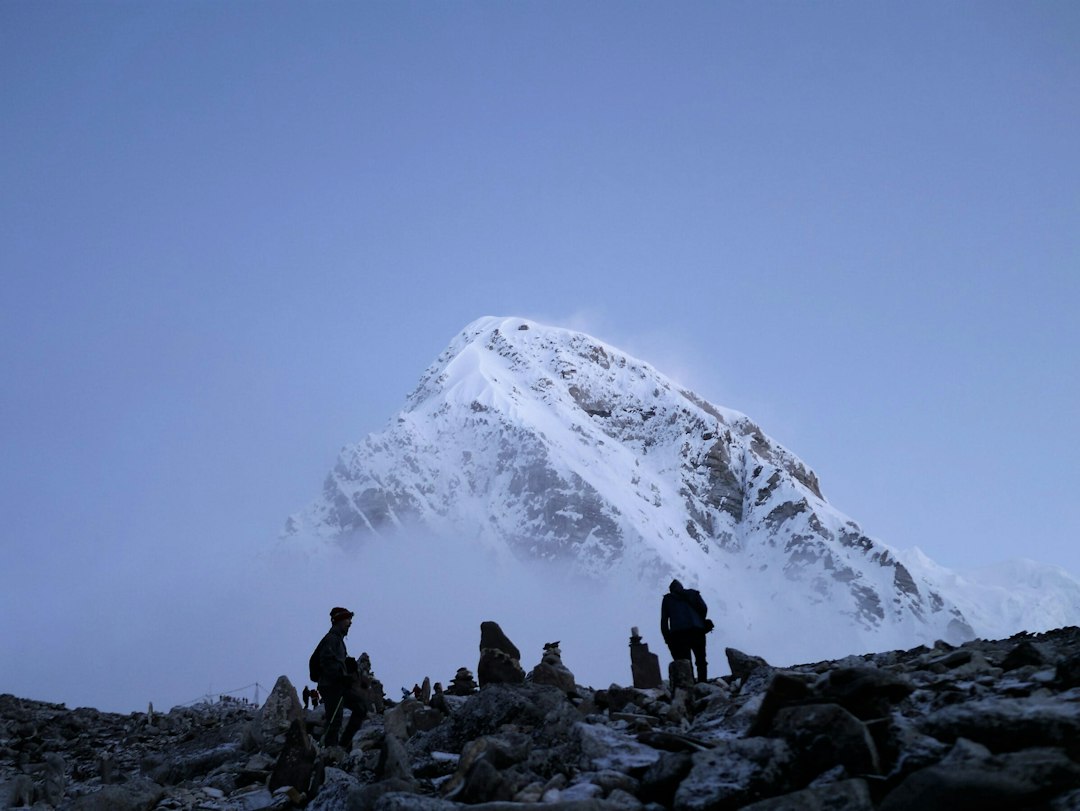
There are few moments in Himalayan history more famous than the morning of 29 May 1953, when Edmund Hillary and Tenzing Norgay reached the summit of Mount Everest. The achievement was immediately turned into global news, imperial symbolism, national pride and personal legend. Yet the story has never belonged to a single country or a single man. It sits at the intersection of Nepal, New Zealand, Britain, India and the Sherpa world.
Beyond the Edge, directed by New Zealand filmmaker Leanne Pooley and released in 2013, returns to that moment using a hybrid form. It combines original 1953 photographs and film material with interviews, archival audio and dramatic reconstructions. Chad Moffitt plays Hillary, while Sonam Sherpa plays Tenzing Norgay. John Wraight appears as expedition leader John Hunt.
The New Zealand Film Commission describes the film as a 90-minute 3D adventure documentary, while NZ On Screen notes that Pooley mixed archival material with recreated scenes to place the viewer inside the endurance and danger of the expedition. Nepal’s Film Development Board also includes Beyond the Edge among foreign productions connected to Nepal.
Watch the Official Trailer
Official trailer published by IFC Films / Independent Film Company.
1953 Before It Became a Legend
Today, Everest is part of a massive commercial and cultural system. There are expedition companies, live tracking, satellite communication, weather forecasting, high-altitude logistics and global social media attention. In 1953, the uncertainty was far greater. Everest had been attempted repeatedly but no ascent had yet been confirmed.
The British expedition led by John Hunt was therefore not merely another climbing trip. It was organised at a scale associated with national expeditions: climbers, Sherpas, porters, scientific planning, oxygen systems and a long chain of logistics from the plains to the high mountain.
Beyond the Edge is strongest when it restores the physical difficulty hidden by the simplicity of the famous sentence: Hillary and Tenzing reached the top. Before that moment came weeks of load movement, acclimatisation, route finding, camp building and failed summit attempts.
Tenzing Norgay and the Problem of Historical Memory
For decades, popular retellings often placed Hillary at the centre and Tenzing beside him. The imbalance reflected who wrote the books, which newspapers dominated international coverage and how colonial-era adventure narratives were structured.
Yet Tenzing was not a passive assistant. He was one of the most experienced high-altitude climbers of his generation and had participated in earlier Everest expeditions. By 1953 he understood the mountain environment at a level few people in the world could match.
Beyond the Edge improves on older narratives by casting Sonam Sherpa as Tenzing and giving the partnership visual equality. But the film also remains partly framed through Hillary’s national story. The New Zealand Film Commission itself describes the film in terms of Hillary’s achievement and the way it defined an era.
For a Nepal-centred audience, that creates a useful tension. The summit was both a New Zealand story and a Himalayan story. Neither interpretation should erase the other.
Who “Conquered” Everest?
Older publicity frequently used the language of “conquering” Everest. The phrase remains common because it gives adventure stories a clear dramatic structure: humans versus mountain, victory versus failure.
But the language is increasingly questioned. Mountains are not opponents that lose. Climbers can reach a summit and return safely; the mountain remains unchanged.
This distinction is especially important in Himalayan cultures, where mountains can be sacred landscapes rather than objects waiting to be defeated.
A modern reading of Beyond the Edge is therefore stronger when the summit is understood as an extraordinary human achievement rather than the defeat of nature.
The British Expedition and the End of an Imperial Era
The 1953 expedition also belonged to the final decades of the British imperial world. News of the summit reached London around the time of Queen Elizabeth II’s coronation, giving the achievement enormous symbolic value in Britain.
That timing helped turn the ascent into something larger than mountaineering. It became a story about courage, national confidence and exploration.
Yet the expedition itself depended on people and geography far beyond Britain. Nepal granted access. Sherpa workers performed essential high-altitude labour. Tenzing had deep connections across Nepal, Tibet and India. Hillary was a New Zealander.
The event’s global ownership was present from the beginning, even when imperial media language tried to simplify it.
Why the Film Uses Reconstruction
Documentaries about historical expeditions face a basic problem: the most dramatic moments were not filmed from multiple angles. Cameras were heavy, film stock was limited, and survival took priority over documentation.
Pooley’s solution was reconstruction.
Rather than pretending to have footage that does not exist, the film openly combines authentic archival images with recreated climbing sequences. The 3D format was intended to make physical space—the exposure, ice walls and altitude—more immediate.
This approach can be controversial because dramatic reconstruction always introduces interpretation. Costume, performance, camera placement and editing create a version of the past.
But when used carefully, reconstruction can make archival history more legible without claiming to replace it.
Sonam Sherpa as Tenzing
The casting of Sonam Sherpa is significant because Tenzing’s role could easily have been reduced to resemblance alone. The production’s own account says Sonam was originally from Nepal and living in New Zealand’s alpine region when selected.
That background does not make him Tenzing, but it gives the casting a cultural and physical connection absent from older films in which Himalayan people were treated generically.
The film’s challenge is larger than performance. Tenzing became a symbol claimed by multiple societies. Nepal celebrated him. India celebrated him. The Sherpa community saw one of its own become globally famous. Western media sometimes reduced him to “Hillary’s Sherpa.”
Any modern retelling must navigate those competing memories.
The Hillary Step and the Power of Detail
One of the most famous features on the old Everest route was the Hillary Step, a near-vertical rock obstacle close to the summit. The feature became inseparable from Hillary’s account of the ascent.
Stories like this matter because they turn a huge expedition into a sequence of human-scale decisions. The audience understands the expedition not through abstract altitude numbers but through boots, ropes, oxygen and problem solving.
Beyond the Edge repeatedly uses such physical detail to make a story everyone knows feel uncertain again.
Nepal Before Everest Tourism
The 1953 ascent occurred before modern Everest tourism. There was no Lukla airport, no dense network of trekking lodges and no commercial expedition industry comparable to today’s.
The approach to Everest required a much longer journey through Nepal. That historical geography matters because the expedition moved through communities that were not yet organised around international trekking demand.
Later, Hillary’s relationship with the Khumbu region expanded far beyond climbing. Through the Himalayan Trust, he became involved in schools, health facilities and infrastructure projects, creating a legacy in Nepal that cannot be reduced to the summit.
Tenzing, Hillary and the Question Everyone Asked
After the ascent, reporters repeatedly wanted to know who stepped onto the summit first.
The question reveals how strongly modern culture prefers individual winners, even inside a partnership.
Hillary eventually explained that he reached the summit moments before Tenzing, but both men resisted turning that detail into a hierarchy of achievement. They had climbed as a rope team.
That response remains one of the story’s most important lessons. At extreme altitude, partnership is not sentimental language. It is operational reality.
How Beyond the Edge Differs From Everest and Sherpa
Nepal Digest’s earlier features on Everest and Sherpa show how much the mountain world changed after 1953.
Everest examines the commercial guiding system through the 1996 disaster. Sherpa examines the labour structure beneath that system after the 2014 Khumbu Icefall tragedy.
Beyond the Edge goes back before commercial Everest became normal.
The contrast is powerful. In 1953, simply reaching the summit was uncertain. By 1996, people were paying professional companies to increase their chances. By 2014, Everest had become an industry large enough to produce labour conflict.
Heroism Without Simplicity
The film celebrates endurance and courage, but a modern audience can also ask harder questions about how adventure histories are constructed.
Who receives individual credit? Whose labour becomes anonymous? Which nations claim the achievement? Which communities live with the long-term effects of exploration and tourism?
None of those questions diminishes Hillary or Tenzing. They make the story larger.
Why the Film Still Matters
Beyond the Edge arrived sixty years after the ascent. It was therefore already an act of memory rather than immediate history.
That distance gives the film value. It allows modern viewers to see how much Everest has changed—and how much the basic human drama has not.
People still climb because the summit represents something difficult to explain in purely practical terms. People still argue about risk, recognition and ambition. Sherpa expertise still remains essential. The mountain still refuses guarantees.
The 1953 ascent survives because it contains all of those themes in their clearest early form.
Hillary and Tenzing did not end the Everest story.
They opened a new chapter in it.
Further reading: New Zealand Film Commission: Beyond the Edge · NZ On Screen · Independent Film Company · Nepal Film Development Board