How a Chinese romantic road movie used Kathmandu, Chitwan and Pokhara to turn Nepal into a place where urban ambition slows down—and why that says as much about China in 2013 as it does about Nepal.
When Chinese cinema looks at Nepal, the result is different from Hollywood’s mystical Kathmandu or European cinema’s Himalayan adventure.
Up in the Wind, released in China at the end of 2013, is a road movie and romantic comedy directed by Teng Huatao and written by Bao Jingjing. It stars Ni Ni and Jing Boran and follows a group of Chinese travellers whose trip through Nepal gradually becomes less about tourism and more about dissatisfaction with the lives they left behind.
Perfect World Pictures, one of the film’s production companies, states that more than four-fifths of the movie was shot in Nepal. The official synopsis describes a travel group including food columnist Cheng Yumeng, wealthy young man Wang Can and other urban Chinese characters searching for happiness while travelling through the country.
IMDb and other film databases identify the production as a Chinese comedy set in Nepal, while Nepal’s Film Development Board lists Up in the Wind among foreign productions shot in the country.
Watch the Nepal Featurette and Trailer Material
China Movie Channel hosts multiple official promotional clips from the production, including a Nepal featurette with Ni Ni and Jing Boran and the film’s final trailer.
Watch the Nepal production featurette on China Movie Channel
A Chinese Story About Escaping Chinese Pressure
The film arrived during a period when urban Chinese cinema was increasingly interested in burnout, consumerism and the emotional cost of rapid economic growth.
Its characters come from a society moving at enormous speed. Careers, housing, status and relationships are shaped by competition.
Nepal becomes useful because it offers contrast.
The travellers enter a country they perceive as slower, less structured and less obsessed with status. The trip interrupts their routines.
This is not simply tourism. It is a narrative device that allows the characters to ask whether the lives they are chasing are actually desirable.
Ni Ni and the Professional Woman Who Is Tired of Performing Success
Ni Ni’s character represents the modern urban professional under pressure to appear competent and successful.
Travel journalism should theoretically make her adventurous, but the film uses the Nepal trip to show how professional identity can become another performance.
Her job requires her to turn experience into content. She is supposed to observe Nepal, package it and return with a story.
Instead, Nepal begins to disrupt the story she tells about herself.
Jing Boran and the Privileged Search for Meaning
Jing Boran’s character brings a different kind of dissatisfaction. Wealth and mobility have not produced clarity.
This is a recurring theme in East Asian travel cinema: economic success creates the ability to move, but movement does not automatically create meaning.
Nepal becomes the place where privilege loses some of its structure.
Kathmandu, Chitwan and Pokhara
The film’s Nepal is geographically broader than many foreign productions.
Rather than remaining only in Kathmandu or only in the Everest region, the story moves through different tourism environments.
Kathmandu provides density, ritual and urban contrast.
Chitwan introduces forests, wildlife tourism and the lowland Terai.
Pokhara offers lake, mountain and leisure imagery.
Together, these locations create a travel arc that resembles how many international visitors actually encounter Nepal.
Four-Fifths Shot in Nepal
Perfect World’s official page states that more than four-fifths of the film was shot in Nepal.
That is significant.
Many foreign productions use Nepal only for establishing shots before completing most scenes elsewhere. Up in the Wind relies on Nepal as the primary physical environment.
The country is not merely proof that the characters travelled. It shapes the film’s tone.
The Chinese Gaze Versus the Western Gaze
Much of Nepal’s international screen image was historically produced by Europe, America and India.
Up in the Wind is valuable because it shows Nepal through a Chinese commercial-cinema perspective.
The stereotypes are different.
Western films often search for spirituality, danger or mystical knowledge. Chinese travel cinema is more likely to frame Nepal as emotional distance from urban pressure.
The destination represents freedom from schedules and status competition.
Is Nepal Really “Slow”?
This is where the film’s romanticism becomes visible.
Foreign visitors often describe Nepal as relaxed or simple. Such descriptions can reflect real differences in social rhythm, but they can also ignore the pressure Nepalis experience.
Kathmandu residents face congestion, rising costs, work stress and migration pressure. Tourism workers operate under schedules. Families manage education, remittances and employment uncertainty.
Nepal may feel slow to a visitor because the visitor is on holiday.
That is not the same as the country itself being free from pressure.
Travel as a Mirror
The film understands one important truth about travel: people often learn less about the destination than about themselves.
When ordinary routines disappear, habits become visible.
A person who believes work defines them may discover how empty they feel without it. A person who believes money creates freedom may discover that wealth does not resolve uncertainty.
Nepal functions as a mirror for the characters’ internal conflicts.
The Risk of Turning Nepal Into Therapy
This is similar to the issue raised by Highway to Dhampus.
Foreign films often use Nepal as a place where outsiders recover authenticity.
The risk is that Nepalis become background characters inside someone else’s emotional recovery.
Up in the Wind is less exploitative than many examples because it is fundamentally a travel comedy, but the structure remains.
Pokhara and the Cinematic Promise of Release
Pokhara is ideal for the film’s emotional logic.
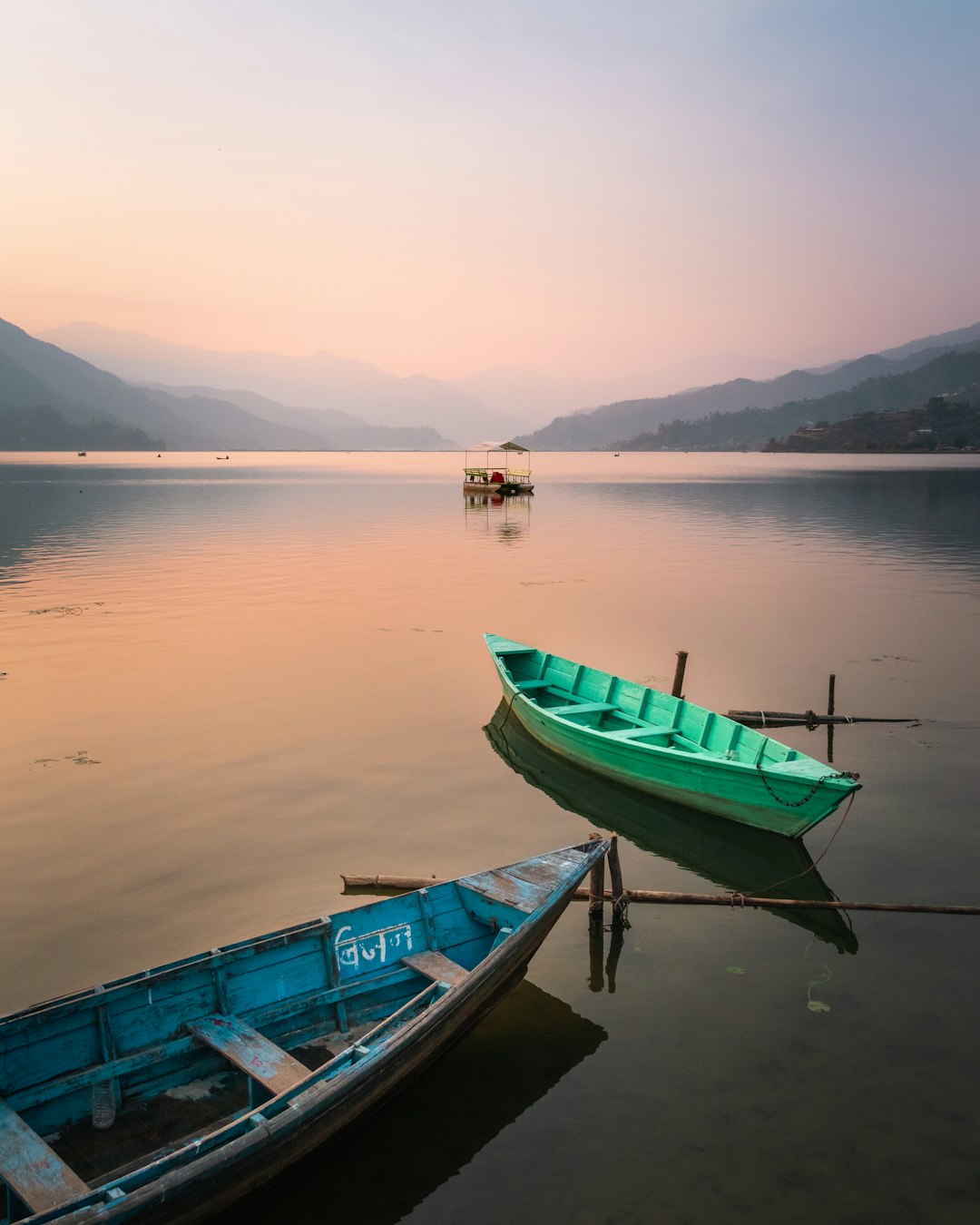
Phewa Lake, the Annapurna skyline and the tourism economy create an environment where movement seems optional rather than mandatory.
The city appears to offer space.
That cinematic image has become central to Nepal tourism: wake up, see mountains, sit beside a lake and reconsider your life.
The image is attractive because it contains enough truth to feel believable.
Chitwan and the Expansion of Nepal’s Screen Image
Including Chitwan prevents the movie from reducing Nepal entirely to snow mountains and temples.
The Terai introduces humidity, forest and wildlife, reminding viewers that Nepal’s geography is far more diverse than its international Everest image.
This is one of the film’s quiet strengths.
Chinese Tourism and Nepal
The film also belongs to a larger historical shift: the rapid growth of outbound Chinese tourism.
As Chinese middle-class travel expanded, Nepal increasingly marketed itself not only to Western trekkers and Indian visitors but to Chinese travellers interested in scenery, culture and adventure.
A mainstream Chinese film shot extensively in Nepal therefore had tourism significance beyond the plot.
What the Film Says About 2013 China
The most interesting way to read Up in the Wind is not as a documentary about Nepal.
It is a document of Chinese urban anxiety.
Its characters can afford to leave, but they are not sure what they are working toward.
Nepal becomes the distance required to see that problem.
How It Differs From Hollywood Nepal
There is no secret monastery teaching supernatural powers. There is no lost kingdom. There is no white adventurer trying to conquer a mountain.
The fantasy is more ordinary.
It is the fantasy that one can travel somewhere else and discover a simpler way to live.
That idea may be less spectacular than Marvel mysticism, but it is arguably more influential in real tourism.
What Nepal Gains From the Film
A production that spends most of its shoot in Nepal brings direct economic activity through crews, transport, accommodation and local services.
It also creates destination exposure in a market of enormous scale.
For Nepal, Chinese cinema can function as tourism promotion even when the movie itself is not designed as advertising.
What Nepal Risks
The same exposure can freeze Nepal into a consumable image: the place where stressed foreigners go to slow down.
That image can become commercially useful while remaining incomplete.
The better response is not to reject it, but to expand it.
Nepal is capable of being both destination and subject.
Why Up in the Wind Matters
The film deserves a place in Nepal’s foreign-cinema archive because it captures a shift in who was looking at the country.
For decades, Europe and America dominated the outsider image of Nepal.
Up in the Wind belongs to a more multipolar media world.
China arrives not as a political actor in the film, but as an audience, tourism market and source of cultural imagination.
That makes the movie historically valuable even beyond its romantic story.
Further reading: Perfect World Pictures: Up in the Wind · China Movie Channel: Nepal featurette · Nepal Film Development Board