
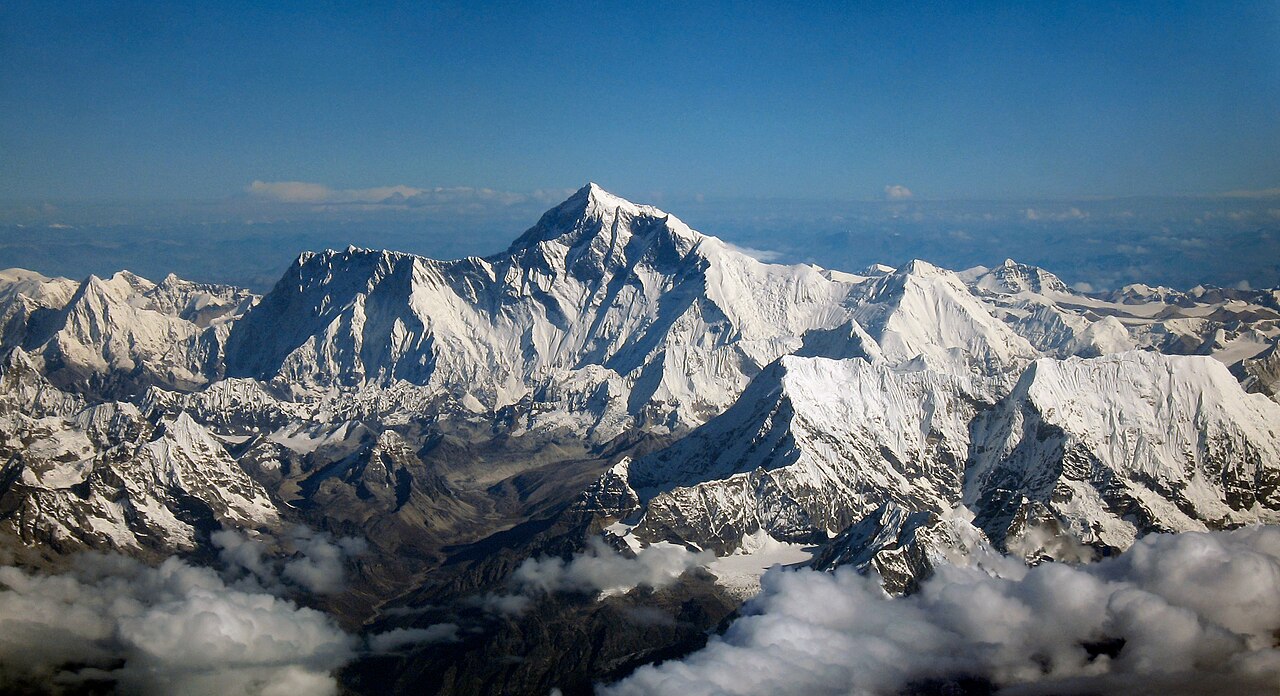
On 17 May 2026, Lhakpa Sherpa stood on the summit of Mount Everest for the eleventh time. The number extended a record no other woman has matched. Yet the achievement was not simply another entry in mountaineering statistics. It was a return by a woman whose life has repeatedly moved between the world’s highest mountain and ordinary work far from it.
For years in Connecticut, the person holding the women’s Everest record cleaned houses, washed dishes, stocked shelves and worked supermarket shifts. She raised children, struggled to pay bills and lived through an abusive marriage. Many customers who passed her at work had no idea that the woman serving them had crossed the death zone more often than most celebrated climbers ever would.
Her eleventh summit brought the two versions of her life together again: Lhakpa the immigrant worker and mother, and Lhakpa the mountaineer who has spent more than a quarter-century returning to Chomolungma.
A childhood beneath Makalu
Lhakpa grew up in Balakharka in Sankhuwasabha, an eastern Himalayan district dominated by Makalu, the world’s fifth-highest mountain. She was one of 11 children in a family that raised yaks. There was no formal schooling for her. In the village of her childhood, education was more readily imagined for boys, while girls were expected to help at home and prepare for marriage.
The mountains, however, offered work. As a teenager, she began carrying loads for expeditions. Portering meant walking difficult trails with equipment that belonged to other people, often men who had travelled across the world to climb peaks visible from her own home. It was hard labour, but it placed her close to a profession from which women like her were largely excluded.
She wanted to climb, not only carry. At first, that ambition met the restrictions attached to gender and poverty. She did not have the education, international contacts or sponsorship that often make an expedition possible. What she did have was experience at altitude and an unusually clear sense of where she belonged.
In 2000, she joined the Nepali Women Millennium Expedition. On 18 May, she reached the top of Everest and returned safely, becoming the first Nepali woman to complete both the ascent and descent. Pasang Lhamu Sherpa had become the first Nepali woman to reach the summit seven years earlier, but died during the descent. Lhakpa’s safe return therefore carried its own place in Nepal’s climbing history.
The summit did not create a simple path to fame or financial security. It did, however, confirm that she could operate at the highest level of the sport. She returned in 2001 and again in 2003. That third ascent became a family achievement when she reached the summit with her brother Mingma Gelu and sister Ming Kipa.
Across an ocean
By then, Lhakpa’s life was also moving towards the United States. She married Romanian-American climber Gheorghe Dijmărescu and settled in Connecticut. The move offered a new country but did not make life easier. With limited English and no formal education, she found work where she could: construction, caregiving, housekeeping, convenience stores and supermarkets.
Her climbing continued. She summited Everest in 2004, 2005 and 2006, building a women’s record long before the wider sporting world paid sustained attention. But those expeditions existed alongside a marriage that became violent. Accounts later documented in court and reported publicly described physical and verbal abuse. An assault during the 2004 expedition showed that even base camp—one of the places most closely connected with her strength—could become a place of danger.
It is tempting to turn survival into a neat story of victory. Her reality was more complicated. Leaving meant fear, legal proceedings, shelters and the daily work of protecting children while earning enough to keep a home. In 2015, after 12 years of marriage, the divorce was finalised and she received sole legal custody of her two daughters.
By then, Everest had been absent from her life for nearly a decade. Her last summit had been in 2006. She remained a record holder, but records do not pay rent. In Connecticut, she worked two jobs at times and walked her daughters to school. Her son attended community college. The discipline required to manage those routines was less visible than an expedition, but it demanded its own endurance.
The unknown record holder
Mountaineering often celebrates heroic images: a flag on a summit, an ice-covered face, a triumphant return to base camp. The structure behind those images is less romantic. Major climbs require money, equipment, time away from work, permits, logistics and a team. Athletes with sponsors can train and recover as professionals. Lhakpa often prepared around hourly jobs and family responsibilities.
Her lack of literacy also shaped how she navigated the public world of sponsorship forms, media requests and travel arrangements. Family members, especially her daughters, sometimes helped with English-language communication. The contrast was striking: she could make decisions in the thin air above 8,000 metres, yet many of the systems surrounding professional sport remained difficult to access.
In 2016, after ten years away, she climbed Everest for a seventh time. She returned in 2017 and 2018, extending her record to nine. Each ascent made her achievement harder to overlook, but recognition remained uneven. She still lacked the stable backing that might be expected for an athlete with her record.
The imbalance says something larger about Himalayan mountaineering. Sherpa climbers have made commercial expeditions possible for generations, fixing ropes, carrying oxygen, establishing camps and guiding clients through dangerous terrain. Their skill is essential, yet global coverage has often centred the visiting climber. Lhakpa’s story adds gender and migration to that pattern. She was an elite Nepali athlete whose ability was celebrated more easily than it was funded.
The tenth climb
Her plan for a tenth summit was delayed by the pandemic. During those years she continued working in a grocery store while her children attended school online. She also lost her father and, in 2020, her former husband. Time matters to every athlete, and the postponement consumed seasons in her late forties.
She returned to Everest in 2022 with limited resources and old equipment. Her daughter Shiny travelled to base camp, and a documentary team followed the expedition. On 12 May, Lhakpa reached the summit for the tenth time, again breaking her own record.
The climb became the central line of Mountain Queen: The Summits of Lhakpa Sherpa, directed by Lucy Walker. The film did more than document an ascent. It connected the mountain with Lhakpa’s childhood, migration, motherhood and experience of abuse. Her daughters appeared not as background figures but as people learning what the mountain meant to their mother and what her absences had meant to the family.
That perspective prevented the record from floating free of its cost. Every expedition required Lhakpa to leave work, secure funds and separate from her children. The mountain gave her purpose and helped her recover a sense of herself, but it also demanded risk from a family that had already lived with uncertainty.
In 2023, she reached the summit of K2, the world’s second-highest mountain and a more technical climb than Everest. The ascent expanded her reputation beyond a single record. It showed that her career was not based on repeating a familiar route, but on judgement, endurance and skill across different high-altitude challenges.
Eleven
When Lhakpa returned to Everest in 2026, the mountain was in a crowded and difficult season. Nepal had issued nearly 500 permits, and the closure of the Tibetan side concentrated climbers on the southern route. Weather windows compressed movement into narrow periods. At altitude, delay can mean greater exposure to cold, exhaustion and dwindling oxygen.
She reached the summit on 17 May, the same day Kami Rita Sherpa completed his record 32nd ascent. Nepal’s Department of Tourism confirmed Lhakpa’s eleventh summit, the most by any woman. She was 52.
The number matters because repetition on Everest is never routine. Familiarity can improve decision-making, but the mountain changes. Ice moves, crevasses open, weather turns and bodies respond differently from one expedition to the next. A climber must return with experience while refusing the dangerous belief that experience guarantees safety.
Lhakpa’s career has included failed plans and forced retreats. An attempt on K2 in 2010 ended at Camp III because of bad weather. An Everest expedition in 2015 was halted after the Nepal earthquake. Those decisions belong to the record too. Survival in high-altitude climbing depends not only on continuing upwards, but on recognising when to turn around.
What the record cannot measure
Eleven summits provide a clean headline. Her life resists that simplicity. She is a Sherpa woman who entered an industry built on Sherpa labour but struggled to receive its rewards. She is an immigrant who achieved global recognition while doing jobs that societies often overlook. She is a mother whose climbing created pride, worry and long separations. She is also a survivor who chose to speak publicly after years of fear.
Her story should not be used to suggest that endurance alone solves poverty, violence or unequal opportunity. Determination helped her move through those conditions; it did not make them fair. Sponsorship, education, legal protection and secure work are not prizes that people should have to earn by performing extraordinary feats.
What Lhakpa’s career does show is the distance between talent and recognition. Ability can exist for years without the institutions prepared to support it. A record can be visible while the person holding it remains economically vulnerable. Nepal celebrates its climbers as symbols of the country, but celebration is most meaningful when it is matched by long-term backing, accurate credit and opportunities beyond a single summit season.
Lhakpa has described the mountain as her teacher. With no classroom in childhood, Everest became the place where she learned leadership, risk and confidence. But her education also came from Connecticut apartments, supermarket shifts, courtrooms and the responsibilities of raising children. The mountain is only one part of the terrain she has crossed.
After eleven summits, there is no need to turn her life into a myth. The facts are strong enough. A girl who was denied school became one of the most accomplished high-altitude climbers alive. A worker with little sponsorship returned to Everest across three decades. A mother whose private life once limited her freedom rebuilt it in public.
The summit photograph will always be the easiest image to remember. Lhakpa Sherpa’s larger achievement lies in everything required to reach it—and in every descent that brought her home.
Featured image: Mount Everest viewed from the south. Photograph by shrimpo1967; derivative edit by Papa Lima Whiskey 2. Licensed under CC BY-SA 2.0. The image is illustrative.