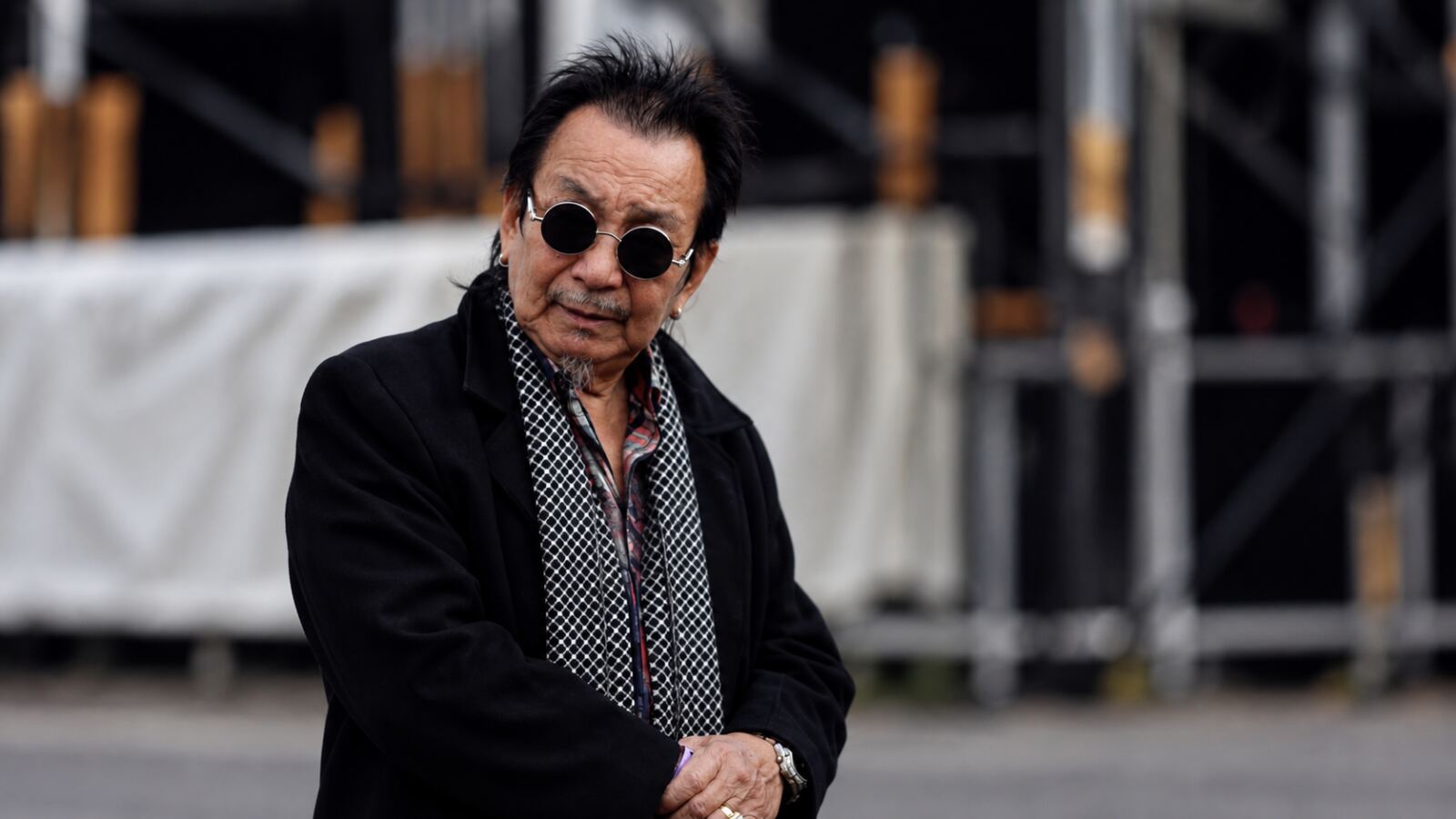
For more than half a century, Dev Rana has occupied a distinctive place in Nepal’s modern music history: not simply as a drummer who stayed on stage for decades, but as one of the musicians who helped make the drum kit, electric guitar and amplified rock performance feel at home in Kathmandu.
His career stretches across very different eras of Nepali music—from a time when live Western-style rock was still unusual, through the hotel-band and club circuits that trained generations of professional musicians, to today’s world of streaming, social media and podcasts. That longevity is why Rana is often described as a pioneer of Nepali rock drumming. The more precise story, however, is richer than a simple “first drummer” label.
Rana’s significance comes from continuity. He played through changing lineups, changing venues, changing technology and changing audiences, while younger musicians increasingly treated the drummer not as a background timekeeper but as a central musical voice.
Before Nepali Rock Had an Industry
To understand Dev Rana’s place in the story, it helps to remember how small Nepal’s modern band scene once was. In the 1960s and 1970s, imported records, radio broadcasts and the musical tastes of people who had studied or lived abroad were introducing young Nepalis to rock ’n’ roll, rhythm and blues and later hard rock. But the infrastructure around that music was minimal.
Rana has spoken in interviews about how limited equipment made playing difficult in those years. There were fewer instruments, fewer technically equipped venues and far less access to the kind of recording and amplification gear that younger musicians now take for granted. Yet he has also remembered that period without bitterness. In a conversation about his musical journey, he described the era as difficult but beautiful—a time when musicians simply worked with what they had.
That attitude helps explain why his generation mattered. They were not entering an established profession. They were helping establish the habits, venues and expectations that later musicians would inherit.
Prism and the Birth of a Rock Audience
Dev Rana is most closely associated with Prism, one of the veteran names in Nepali rock. The history of Prism is sometimes simplified, so the chronology matters.
A history of Prism’s early years records that the band was formed in Kathmandu in April 1978 by Pemba Lepcha, Prahlad Roka, George Subba and Dinesh Rai, with George Subba on drums in the original lineup. Its first concert took place at City Hall later that year, and by 1979 the group had become one of Kathmandu’s leading rock acts. The band also became the first Nepali group signed as a house band by Hotel Soaltee.
Rana became part of Prism’s later history and, over time, one of the musicians most strongly identified with the name. By 1994, a new Prism lineup performing at Casino Royale featured Dev Rana on drums, Dipak Thapa on lead guitar, Mahendra Lama on bass and Dinesh Rai on vocals and rhythm guitar. The band continued to perform in later years, and Rana’s drumming became a familiar element of its live identity.
This distinction matters because Rana’s contribution does not need mythology. He did not have to be the original drummer in 1978 to become one of the figures who carried the band’s sound—and Nepal’s early rock culture—across decades.
The Drummer as a Working Musician
Rock history is often written around singers, hit songs and album covers. Drummers tend to disappear into the background even when they are responsible for the physical energy of a band.
Rana’s career shows another side of music history: the working musician who learns through repetition. Hotel residencies, clubs, private functions and long live sets required stamina, timing and adaptability. A drummer could not simply know a handful of songs; he had to support different singers, react to different arrangements and keep a band together over hours of performance.
A later Republica report on Prism described a lineup with Rana on drums, Subarna Limbu on bass and vocals, Dipak Thapa on guitar and Pemba Lepcha among the performers. The account focused on the precision of the group and the audience response to Rana’s drumming, showing that even decades into the band’s history, the live experience remained central.
That kind of stage apprenticeship was the music school available to many musicians of his generation.
Influence Beyond One Band
Rana’s importance is also visible in the way other musicians speak about him. He appears repeatedly in stories about Nepal’s music scene not simply as a band member, but as a senior figure whose approval carried weight.
One account of a younger drummer’s development remembers Rana serving as a judge at a school performance and offering encouraging feedback. Another profile of singer Pemba Lepcha recalls that Rana and fellow musicians were preparing for a performance at the Hyatt Regency when Lepcha was invited to audition. That opportunity became part of a much longer musical journey in Kathmandu.
These details matter because influence in music is rarely measured only by recordings. A veteran musician can shape a scene through auditions, introductions, rehearsal culture, live collaboration and informal mentorship.
Recognition From Nepal’s Drumming Community
At Drum Jatra, Nepal’s percussion-focused festival, Rana received a Lifetime Achievement Award. The event was designed around percussion in all its forms—from jazz and modern drum-set performance to madal, damphu, African rhythms and experimental percussion.
The significance of the award was not merely ceremonial. Nepali Times reported that Rana’s career had already spanned more than 50 years and described him and Prism as figures associated with the rise of rock music in Nepal. Rana’s own reaction was characteristically modest: he described himself as an average drummer driven by passion and expressed happiness at seeing so many talented younger players emerge.
He had also been honoured by the Nepal Music Festival for his contribution to Nepali art and music.
Why Calling Him “Nepal’s First Drummer” Is Too Simple
Some profiles and videos have called Dev Rana “Nepal’s first drummer.” It is an appealing phrase, but music history rarely works that neatly.
Nepal had percussion traditions long before the Western drum kit arrived, and even within the early rock era there were several drummers and bands active around the same period. Prism’s original 1978 lineup, for example, featured George Subba on drums. Other veteran Kathmandu bands also had percussionists whose work belongs in the same history.
A better description is that Rana became one of Nepal’s pioneering rock drummers—and one of the most durable. His importance comes less from winning a disputed race to be “first” than from sustaining the craft for decades and remaining visible to younger musicians.
A Generation Raised on Western Records
Like many early Nepali rock musicians, Rana grew up listening closely to Western artists. In a long-form conversation on The Deepesh Show, he discussed the influence of international drummers including Ringo Starr, Mitch Mitchell and Dave Weckl.
For musicians in Nepal during the pre-internet era, listening itself was a form of education. Records had to be found, shared, replayed and studied. There were no endless tutorial libraries or instant isolated drum tracks online.
The result was a generation of musicians who often learned by ear, by observation and by performing night after night.
From Covers to a Nepali Musical Identity
Early rock bands in Kathmandu frequently performed English-language material because that was the repertoire audiences associated with rock clubs and hotel venues. Prism was known for Western numbers, and senior bands helped introduce Kathmandu audiences to a sound built around electric guitar, bass and drum kit.
Over time, Nepali pop and rock increasingly developed its own songwriting language. The shift was gradual, and it involved many artists, but the technical foundation built by working bands mattered. They created audiences comfortable with amplified music and gave later musicians a professional reference point.
That evolution eventually produced very different generations of Nepali performers—from the pre-YouTube pop stardom explored in Nima Rumba’s career to the streaming-era pathway represented by Sushant KC.
Rana belongs to an earlier layer of that history: the musicians who helped make the stage itself possible.
Still Performing, Still Participating
Longevity in music is difficult because the profession is physically demanding, particularly for drummers. Yet Rana has remained connected to performance well into later life.
In 2023, when Bihani Social Venture organised a talent show for senior citizens in Kathmandu, Rana was one of the event’s highlights. The Kathmandu Post described him as revered by fans of Nepali contemporary rock and noted that he had remained active in the industry for decades. At that event, he did something audiences might not immediately expect from a drummer: he sang.
The moment reflected a broader truth about veteran musicians. They are rarely only the instrument printed next to their name. Decades of playing produce a wider relationship with songs, audiences and performance itself.
Beat by Dev: Turning Memory Into an Archive
Rana’s most interesting recent move may be less about playing drums and more about documenting the generation that came before Nepal’s digital music era.
In September 2026, Beat by Dev appeared as a new conversation-based music series hosted by Rana. Its first episode revisited the story of Prism with guests Damber Rai and Jyoti Ghimire, positioning the programme as a space for memories, musicians and stories behind Nepal’s music history.
That is a natural role for Rana at this stage of his career. Nepal’s early popular-music history is still poorly archived. Much of it survives through personal recollection, fading photographs, old posters, informal recordings and stories passed between musicians.
If veteran artists begin documenting those memories while the people involved are still able to tell them, the value extends beyond nostalgia. It becomes cultural preservation.
What Dev Rana Represents
Dev Rana’s story is not built around a single hit record or one dramatic breakthrough. It is built around accumulation.
Thousands of rehearsals. Long live sets. Changing bandmates. New generations of listeners. Younger drummers watching from the side of a stage. Venues appearing and disappearing. Equipment improving. Music moving from hotel lounges and cassette culture to YouTube, streaming and podcasts.
Through all of it, the drum kit remained his anchor.
That may be why his reputation has endured so strongly among musicians. A scene needs stars, but it also needs people who keep showing up long enough for a tradition to form around them.
The Beat Beneath Nepal’s Rock History
Nepal’s rock story cannot be reduced to one band or one musician. It developed through overlapping groups, venues and generations, and its history is still being reconstructed.
But Dev Rana belongs firmly inside that story.
He became one of the drummers who gave early Nepali rock its professional pulse, carried the sound through multiple eras and helped normalise a musical role that younger players could later imagine as a serious craft. The awards are part of that legacy, but the stronger evidence is simpler: more than 50 years after he began, people are still asking him about the beat.
And now, through Beat by Dev, he is also asking the questions—turning a lifetime behind the drum kit into a record of the people, memories and music that built the scene around it.