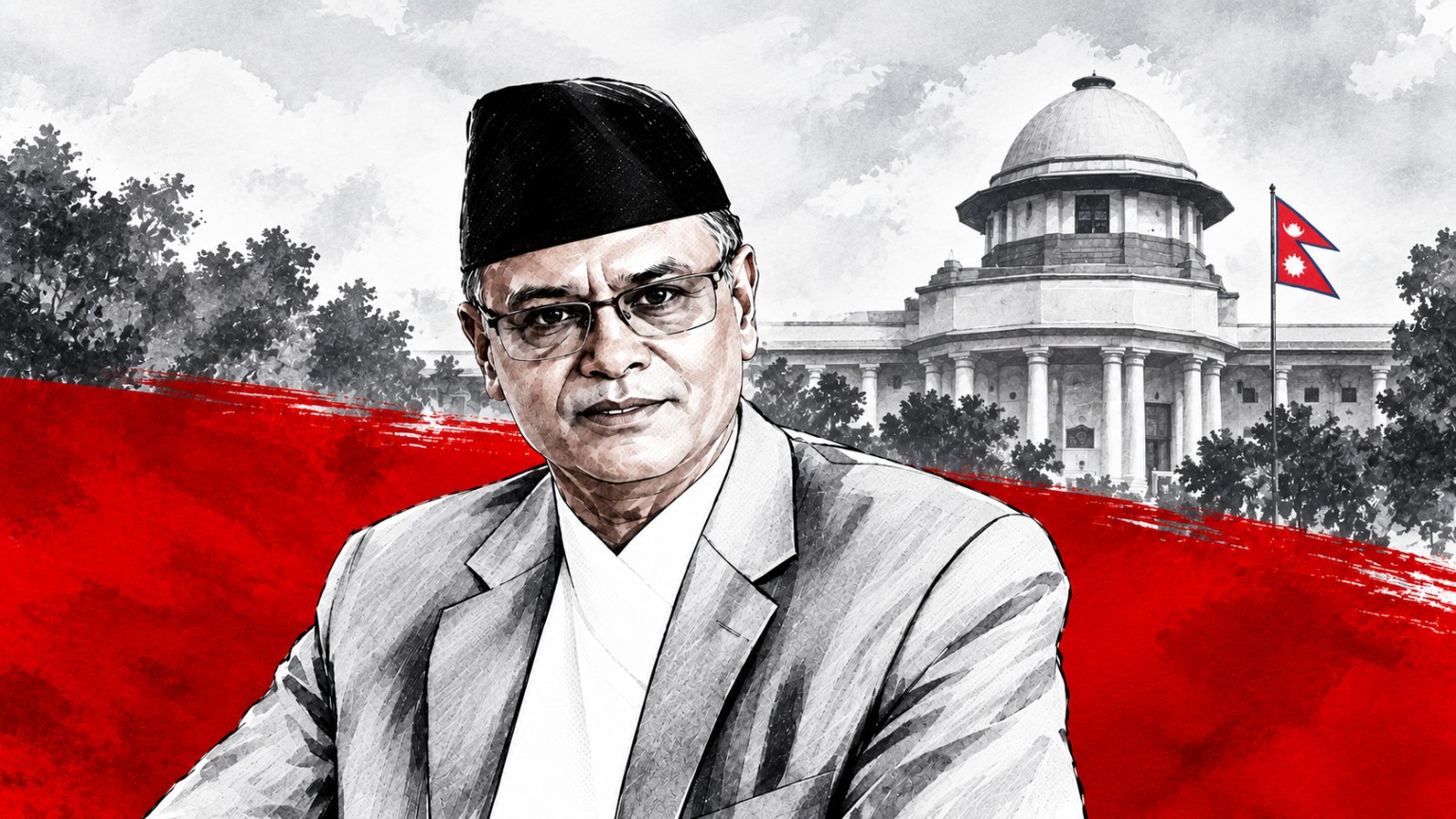
A family name rooted in Nepal’s old ruling order, a career built through its courts, and a tenure that exposed the difficult boundary between judicial power and public accountability.
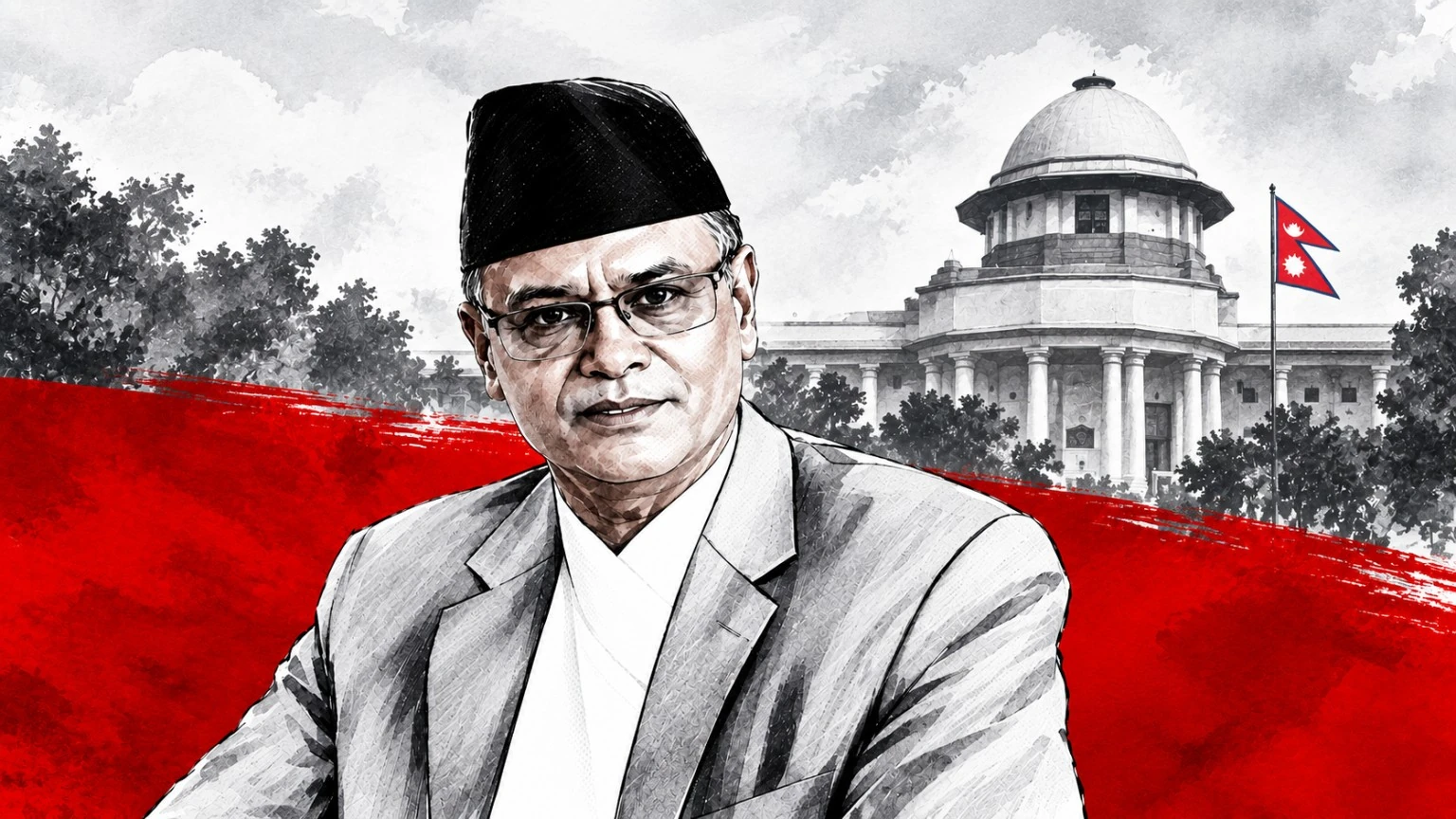
Cholendra Shumsher Rana’s name brings together two very different forms of authority. One belongs to a family associated with hereditary government. The other belongs to a Supreme Court whose legitimacy depends on constitutional limits, legal reasoning and public trust.
That contrast makes his life more than a story of professional advancement. It is a way to examine how Nepal moved from inherited power towards institutions intended to restrain power—and how difficult that transition remains when judges, politicians and the public disagree over accountability.
His ancestry helps explain the historical resonance of his surname. His appointments explain how he reached the highest judicial office. His judgments, disputes and suspension explain why the office became the centre of a national crisis. None of these strands, on its own, supplies a complete portrait.
The family connection: what the record supports
Cholendra is identified in the published record as a great-grandson of former Rana prime minister Bir Shumsher. That is the specific ancestral connection underpinning this profile, rather than an inference drawn simply from a shared surname.
His father was Yuba Raj Shumsher Rana and his mother was Uma Rajya Laxmi. He was born in Kalikasthan, Kathmandu, on December 13, 1957.
These details establish a family background. They do not establish that a particular relative secured a judicial appointment, that every prominent Rana belongs to the same immediate family, or that a judgment was delivered to protect a clan. Those stronger propositions require their own evidence. An extended genealogy cannot responsibly be filled in through assumptions about names.
The distinction matters because lineage is often used as a shortcut in public debate. It can become an explanation for success before the mechanisms of that success have been examined, or a substitute for evidence when controversy follows. A historical profile should make inherited context visible without allowing it to decide the verdict on a person’s career.
Bir Shumsher and the world behind the surname
Bir Shumsher governed Nepal from 1885 to 1901, within the longer era of Rana rule that lasted from 1846 to 1951. During that era, executive authority was concentrated in a hereditary ruling family while the Shah monarchy remained.
The family’s history was also a history of internal struggles. The Shumsher branch’s ascendancy followed the violent transfer of power in 1885. Rivalry, succession disputes and differences within the clan shaped the dynasty, which also included figures who later supported democratic change.
Bir Shumsher’s period is associated with institution-building, including Bir Hospital, as well as the privileges and constraints of the hereditary order. Both belong in the historical picture. Public works do not erase exclusion from political power; authoritarian government does not make every institutional development imaginary.
Cholendra was born after Rana rule had ended. His judicial career therefore cannot be described as the continuation of a hereditary entitlement to govern. Its significance lies in a different question: how does a person carrying the name of an old elite acquire authority within institutions whose stated basis is law rather than descent?
From legal practice to the bench
The early professional record is less dramatic than the later headlines. Rana studied law at Nepal Law Campus, Tribhuvan University. He practised as an advocate from 1979 until 1996 before entering the judiciary as an additional judge at the Appellate Court in Janakpur in April 1996.
His subsequent work included appellate assignments and service at the Special Court, the institution that hears corruption cases. He became a Supreme Court justice in May 2014. These stages show a rise over decades rather than a sudden arrival at the top.
That progression placed him inside the machinery through which Nepal’s courts review state action and settle disputes. It also made his decisions increasingly consequential. A judge’s reputation is built cumulatively: each ruling contributes to expectations about independence, judgment and the use of discretion.
The move to the Supreme Court enlarged both his authority and the scrutiny attached to it. At that level, a disputed judgment is rarely confined to the parties before the bench. It can shape how citizens understand the fairness of an institution that they may eventually need for protection.
The route to chief justice
Rana’s elevation followed a disrupted succession at the top of the judiciary. Deepak Raj Joshee’s nomination had been rejected by the Parliamentary Hearing Committee in 2018. The Constitutional Council then recommended Rana in December, placing him on the path to succeed Om Prakash Mishra.
The parliamentary committee endorsed him unanimously on January 1, 2019, and President Bidya Devi Bhandari administered his oath the following day. His age left room for an unusually substantial tenure of almost four years, providing an opportunity for sustained reform.
A longer tenure offers continuity, but duration is only an opportunity. It does not itself produce transparent administration or stronger courts. Those outcomes depend on decisions about appointments, case management, institutional rules and the willingness to address problems that may be politically uncomfortable.
Nor does unanimous endorsement remove the responsibility of the institutions that approved a candidate. When a chief justice’s leadership later becomes contentious, the selection process deserves examination alongside the conduct of the officeholder.
The constitutional judgments that shaped his public standing
Rana’s tenure included two major confrontations over the dissolution of the House of Representatives. In February 2021, the Supreme Court restored the House after Prime Minister KP Sharma Oli’s December 2020 dissolution.
On July 12, 2021, a Constitutional Bench led by Rana again restored the House and ordered the appointment of Sher Bahadur Deuba as prime minister following a second dissolution. All five justices agreed on the outcome.
These were collective judgments. Describing them as the act of one man would obscure the other judges’ role and the legal arguments before the court. Yet the chief justice’s leadership naturally made him the public face of decisions with immediate effects on government formation.
The episodes demonstrate why simple political labels are inadequate. A court can restrain a government and still face serious questions about its own administration. A judgment welcomed by one political camp is not proof that every later accusation against the judge is false. Equally, later controversy does not automatically invalidate an earlier constitutional ruling.
Judicial discretion and the Ranjan Koirala case
A different decision became a lasting source of criticism. In June 2020, a division bench comprising Rana and Justice Tej Bahadur KC reduced the prison term of former Armed Police Force officer Ranjan Koirala, who had been convicted of murdering his wife, Gita Dhakal, to eight years and six months. Koirala was released in July.
In May 2022, a full bench reversed that reduction and restored the earlier sentence, correcting a decision that had generated widespread controversy.
The episode has importance beyond the reputation of an individual judge. Discretion is necessary because law cannot anticipate every circumstance. But discretion also needs reasons that withstand scrutiny, particularly when a decision changes the punishment for a grave crime.
A reversal establishes that the earlier outcome did not survive review. It does not, by itself, establish a corrupt motive. That distinction allows criticism to remain forceful without turning a contested judicial decision into an unsupported accusation of criminal conduct.
Family ties, political appointments and the crisis of confidence
By late 2021, conflict over Rana’s leadership had spread through the judiciary. Supreme Court colleagues, lawyers and former chief justices pressed for a change. Their objections concerned the administration of the court and allegations of improper influence, not merely disagreement with one constitutional ruling.
One focal point was the appointment of Gajendra Hamal, described in the published record as a relative of Rana, to Deuba’s Cabinet. Critics alleged a political bargain involving the chief justice. Rana denied seeking a ministerial position for his people. Hamal soon resigned.
This was a contemporary family connection, distinct from the historical connection to Bir Shumsher. Its relevance lay in a potential conflict between judicial office and executive patronage. The reported relationship warranted scrutiny; it did not make the alleged bargain a proven fact.
Public confidence depends partly on whether conflicts of interest are handled visibly and consistently. Even an officeholder who disputes wrongdoing needs credible procedures through which the dispute can be tested. Personal insistence on innocence cannot perform the work of institutional accountability.
Impeachment, suspension and retirement
On February 13, 2022, 98 lawmakers registered an impeachment motion against Rana, triggering his suspension. A parliamentary committee later recommended action, but its members were divided and the House did not conclude the process before its term ended.
In December, Parliament Secretariat secretary-general Bharat Raj Gautam issued a letter treating the motion as ineffective after the election of a new House. Lawyers challenged his authority to do so. The Supreme Court issued an interim order preventing implementation of the letter.
Rana retired on December 13, 2022, on reaching the age of 65, while the impeachment question remained unresolved.
Suspension was not a completed impeachment verdict. Retirement was not a parliamentary acquittal. The failure to finish the process left a gap between allegations, institutional action and a conclusive decision on the merits.
The 2026 developments: closure of a dispute, then fresh questions
On September 9, 2026, the Supreme Court dismissed petitions relating to the disputed end of Rana’s suspension. The ruling cleared the way for pension benefits and other facilities. It should not be recast as a criminal trial establishing that every earlier allegation was false.
On September 27, police took Rana from his Maharajgunj residence at around 3am. Initial accounts described an arrest or detention; police subsequently said they had acted because of a security threat. He was released later that day, while the legal status of the operation remained unclear.
The following day, a request signed by his son Sachindra Shumsher Rana sought additional protection for Rana and his family.
Criticism of a former chief justice and scrutiny of police conduct are compatible. Public anger cannot substitute for an explanation of legal authority. A person’s disputed record does not remove the need for due process when the state restricts that person’s freedom.
What his rise tells Nepal about power
Rana’s story is best understood through the difference between obtaining office and sustaining its legitimacy. A historic surname gives the biography depth. A long legal career gives it a professional structure. Neither settles whether the exercise of authority met the standards expected of the institution.
The strongest interpretation of his legacy must accommodate uncomfortable facts in more than one direction. Courts under his leadership delivered major constitutional checks on executive power. His leadership also produced a profound crisis of confidence. Parliament initiated accountability proceedings but failed to bring them to a timely conclusion.
The lesson extends beyond one family and one chief justice. Selection needs meaningful scrutiny; discretion needs defensible reasons; conflicts need credible procedures; accusations need evidence; and accountability needs an ending that institutions can explain.
From the Rana lineage to Nepal’s Supreme Court, Cholendra Shumsher Rana crossed a historical divide between inherited prestige and constitutional office. The unresolved tensions in that journey concern every Nepali who expects the law to constrain the powerful while protecting the rights of those accused.
Editorial note: This historical profile is based on the linked published record available on October 2, 2026. Allegations are identified as allegations and distinguished from judgments and procedural outcomes. The featured portrait is an editorial illustration.