
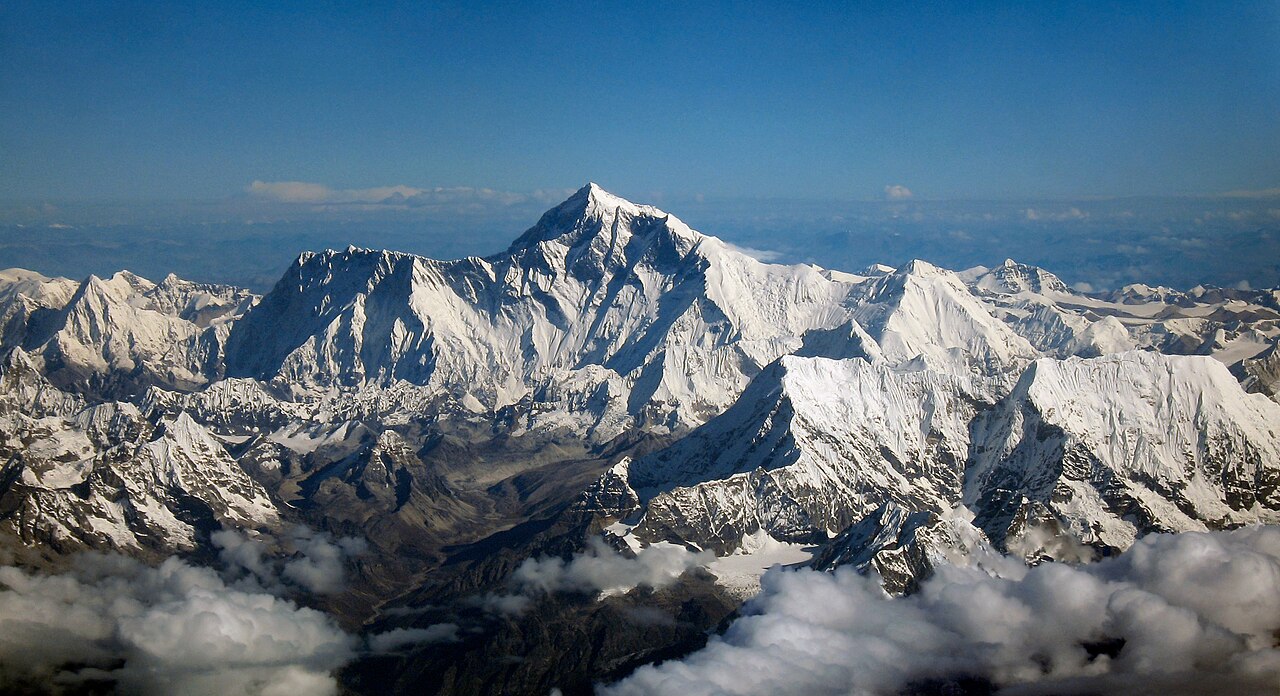
Near the top of Mount Everest on 19 May 2023, there was little room for ceremony. The wind was hard, oxygen was limited, and Hari Budha Magar had spent days moving through ice and thin air without knees. When he finally reached the summit, the tears on his face began to freeze.
He stayed only briefly. A summit is only halfway through a climb, and the descent still demanded every reserve of strength. But those few minutes changed the public meaning of what he had done. Budha Magar became the first double above-knee amputee to reach the highest point on Earth.
The record was extraordinary. The longer story behind it was even more consequential: a life that began in a remote village in western Nepal, moved through the British Army and a battlefield in Afghanistan, and then became a campaign to expand the space available to people with disabilities.
A childhood among hills
Budha Magar was born in 1979 in Mirul, Rolpa, a mountain district that was then far more isolated than it is today. His village stood at roughly 2,700 metres. Walking was part of ordinary life: the primary school was about 45 minutes away, while secondary school required a much longer journey. There was no electricity or cooking gas at home, and children shared in the daily work of collecting wood and grass.
He has recalled learning to write with chalk on a wooden board because paper and pens were scarce. Education nevertheless became his first route beyond the boundaries of the village. He became the first person from his village to pass high school.
Rolpa later became one of the centres of Nepal’s decade-long conflict. For a young man looking for a livelihood at the end of the 1990s, the possibilities were narrow. His father had wanted one of his sons to become a soldier. In 1999, at 19, Budha Magar joined the Brigade of Gurkhas after a highly competitive selection process.
From Rolpa to the Gurkhas
The transition was abrupt. He left rural Nepal for British military life, completed demanding training, and served with the Royal Gurkha Rifles. His career took him across several continents, including deployments connected with peacekeeping and conflict. Over 15 years, the Army gave him a profession, a community and a wider view of the world.
That life changed in Afghanistan in April 2010. During a patrol supporting engineers who were surveying a well, Budha Magar stepped on a pressure-plate improvised explosive device. Nine soldiers had already crossed the same ground. The explosion took both his legs above the knee and injured his right arm.
Fellow soldiers stopped the bleeding and he was evacuated to Camp Bastion. He awoke after surgery to a body and a future he did not recognise. The loss was not only physical. Military work had shaped his adult identity, and the routines that once seemed automatic—moving from a bed, washing, using the toilet—now had to be relearned.
The harder recovery
Rehabilitation repaired what medicine could, but recovery was not a straight line. Budha Magar has spoken openly about depression, shame and drinking too much in the period after his injury. He feared becoming dependent and felt that the useful part of his life had ended.
A turning point came through Battle Back, a programme that uses sport and outdoor activity to support wounded service personnel. He tried skydiving. The jump did not solve his problems, but landing safely gave him evidence that his assumptions about his body were incomplete.
From there he began testing one activity after another: kayaking, skiing, rock climbing, archery, golf and cycling among them. Golf, supported by the On Course Foundation, gave him companionship as well as confidence. Adventure became less about proving toughness than about learning how to adapt.
That distinction would define his mountaineering. A climber without knees cannot simply copy the movement of an able-bodied climber. Prosthetic sockets must withstand pressure without damaging skin. Metal components become dangerously cold. Snow that supports one person may swallow another whose body is closer to the surface. Distance takes more time and energy.
Designing a way upward
Budha Magar and his supporters treated these difficulties as engineering questions. They experimented with shorter prosthetic legs, specialised feet and crampon systems. Heating elements were added to protect his residual limbs from frostbite. Clothing and sleeping arrangements had to be reconsidered around his shape, circulation and movement.
His upper-body strength became an advantage on some steep sections, but the overall cost remained high. On long ascents he could move several times more slowly and use far more energy than other climbers. This meant additional camps, oxygen, equipment and experienced support.
In 2017, he climbed Mera Peak, at 6,476 metres, becoming the first double above-knee amputee to summit a mountain above 6,000 metres. The ascent demonstrated that his Everest ambition was not a slogan. It was becoming a technically serious project.
A barrier written into law
Then Nepal introduced a regulation barring blind climbers and double amputees from Everest. Officials presented the measure as a safety rule, but it judged people by a category of disability rather than their experience, preparation or individual capacity.
For Budha Magar, the restriction was larger than one expedition. He campaigned against it with disability advocates, appealed to public officials and spoke internationally about the rights recognised under the UN Convention on the Rights of Persons with Disabilities. Nepal’s Supreme Court overturned the restriction in 2018.
The legal victory reopened the mountain, but it did not place him on the summit. He still needed years of training, fundraising, design work and smaller expeditions. He climbed Mont Blanc in 2019 and Kilimanjaro in 2020. The pandemic delayed plans, while a later Himalayan attempt ended when illness and dangerous snow threatened the team.
Each interruption reinforced a lesson that is often hidden inside accounts of record-breaking climbs: persistence also means stopping when conditions are wrong.
The Everest attempt
For Everest in 2023, Budha Magar joined a 12-person team led by former Gurkha and experienced mountaineer Krishna Thapa. The expedition was structured around the time he needed to cover distance safely. The team carried extra oxygen and equipment and planned more stopping points than a conventional ascent.
The original intention was to begin the climb on 17 April, 13 years after the Afghanistan explosion. Weather postponed the departure. At base camp and above it, the team waited, acclimatised and recalculated.
When they eventually moved up the mountain, soft snow repeatedly complicated Budha Magar’s progress. Without knees, he could not lift himself through it in the usual way. Some sections demanded that he pull and push his body forward with his arms. At other points the team adapted the route or the rhythm of movement.
On 19 May, they reached the summit. There was no illusion that he had climbed alone. Sherpa expertise, military comradeship, prosthetic design, sponsorship and the labour of a large team had made the ascent possible. Budha Magar’s achievement did not diminish that collective work; it made it visible.
The descent was exhausting. He slid over parts of the snow and damaged his suit in the process. Only after returning safely could the record be understood for what it was: not a conquest of disability, but a demonstration that disability and exceptional ability can exist in the same person.
Beyond one summit
Everest might have been a natural ending. Budha Magar instead widened the project. In June 2024 he reached Denali, the highest mountain in North America. He climbed Aconcagua in South America in February 2025 and Puncak Jaya in Oceania in October that year.
On 6 January 2026, he reached the summit of Mount Vinson in Antarctica after a three-day push in extreme cold. Together with Everest, Denali, Aconcagua, Kilimanjaro, Puncak Jaya and Mont Blanc, the ascent completed his version of the Seven Summits. He became the first double above-knee amputee to complete the project.
The sequence matters because each mountain required a different adaptation. Denali brought long distances and load-hauling. Aconcagua brought altitude and exposed terrain. Puncak Jaya demanded technical rock movement. Vinson added the severe cold and remoteness of Antarctica. There was no single prosthetic solution or fixed method that worked everywhere.
What the record changes
Budha Magar’s public message is often compressed into four words: “No legs, no limits.” His own experience, however, suggests something more precise. Limits exist. Weather, money, law, equipment, health and human endurance all impose them. The question is whether a limit is inherent, or whether it has been created by poor design, prejudice or a failure of imagination.
That is why his campaign has always been about more than mountains. In Nepal and elsewhere, people with disabilities still face inaccessible buildings, limited transport, restricted employment and social attitudes that treat dependence as destiny. A summit photograph cannot remove those barriers. It can, however, disturb the assumptions used to justify them.
His achievement also resists the familiar idea of the lone hero. The decisive force in his story is a network: soldiers who saved his life, medical and rehabilitation teams, charities that reintroduced sport, engineers who modified equipment, campaigners who challenged a discriminatory rule, and climbers who shared the risk.
Budha Magar climbed through his own discipline, but also because other people agreed that access could be designed rather than denied.
A different view of strength
The path from Rolpa to Everest did not restore the life Budha Magar had before Afghanistan. It produced another one. He became a mountaineer, a disability campaigner and a public speaker because the injury forced him to reconstruct everyday movement and, eventually, his idea of purpose.
In that reconstruction, the mountain is both real and symbolic. Everest demanded years of preparation and carried genuine danger. But the argument made from its summit was directed back toward ordinary life: a classroom, a workplace, a pavement, a public office and any other place where a person is excluded before being assessed.
Hari Budha Magar’s records will remain in mountaineering history. Their deeper value lies in the question they leave behind. How many barriers described as natural are simply systems that nobody has yet bothered to redesign?
Featured image: Mount Everest viewed from the south. Photograph by shrimpo1967; edited by Papa Lima Whiskey 2, via Wikimedia Commons. Licensed under CC BY-SA 2.0.