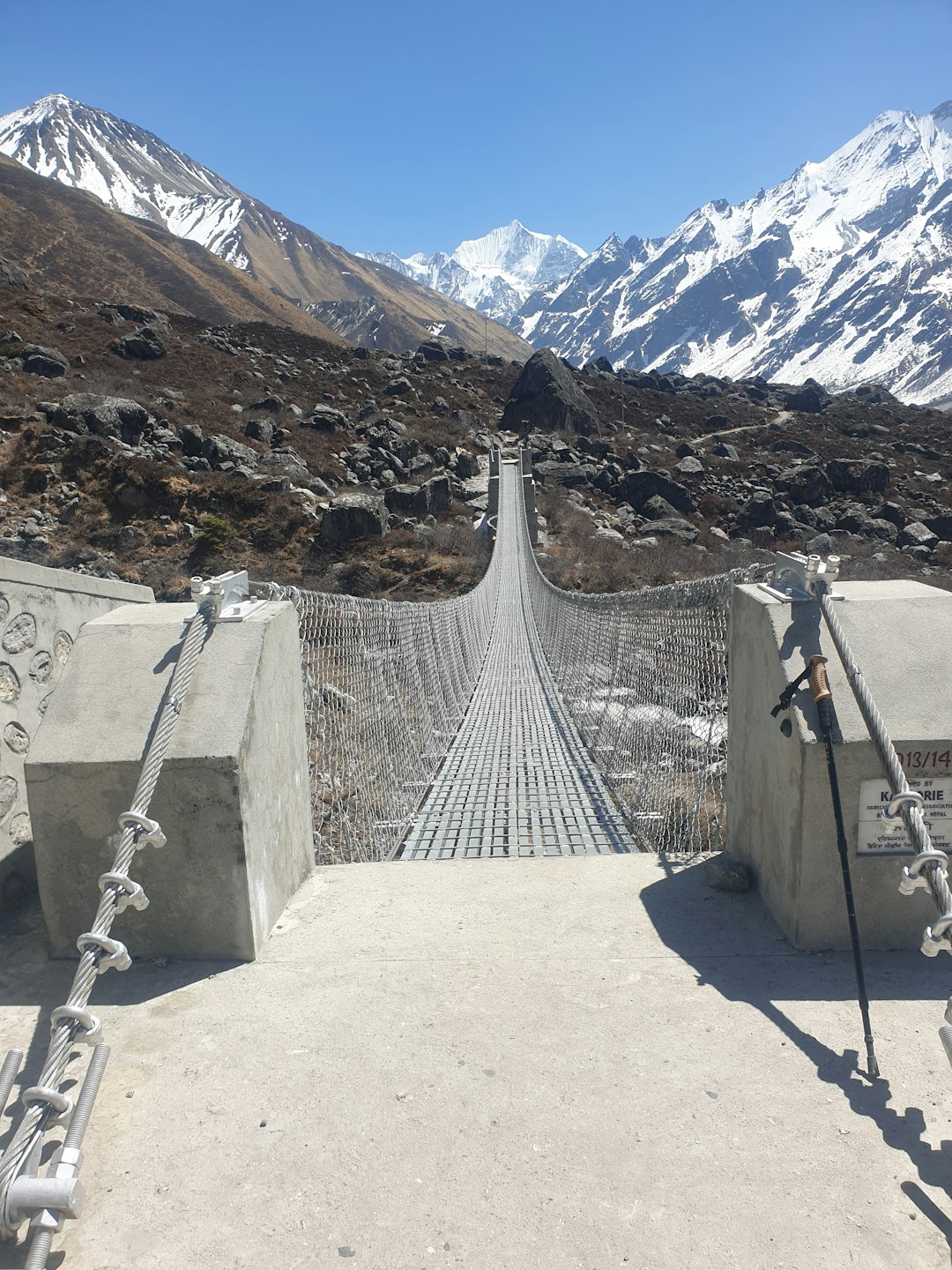
Trekking routes beyond Nepal’s most familiar itineraries can begin with a different question: what kind of journey do you want, and what support will make it workable? A community-focused walk, a longer mountain itinerary and a short holiday require different plans, even when a brochure describes all three as rewarding.
Tamang Heritage, Ganesh Himal–Ruby Valley and Helambu are useful names to investigate. This is a route-selection guide, not a live trail-status report or a promise that a named trail will be quiet, easy or open on your travel dates.
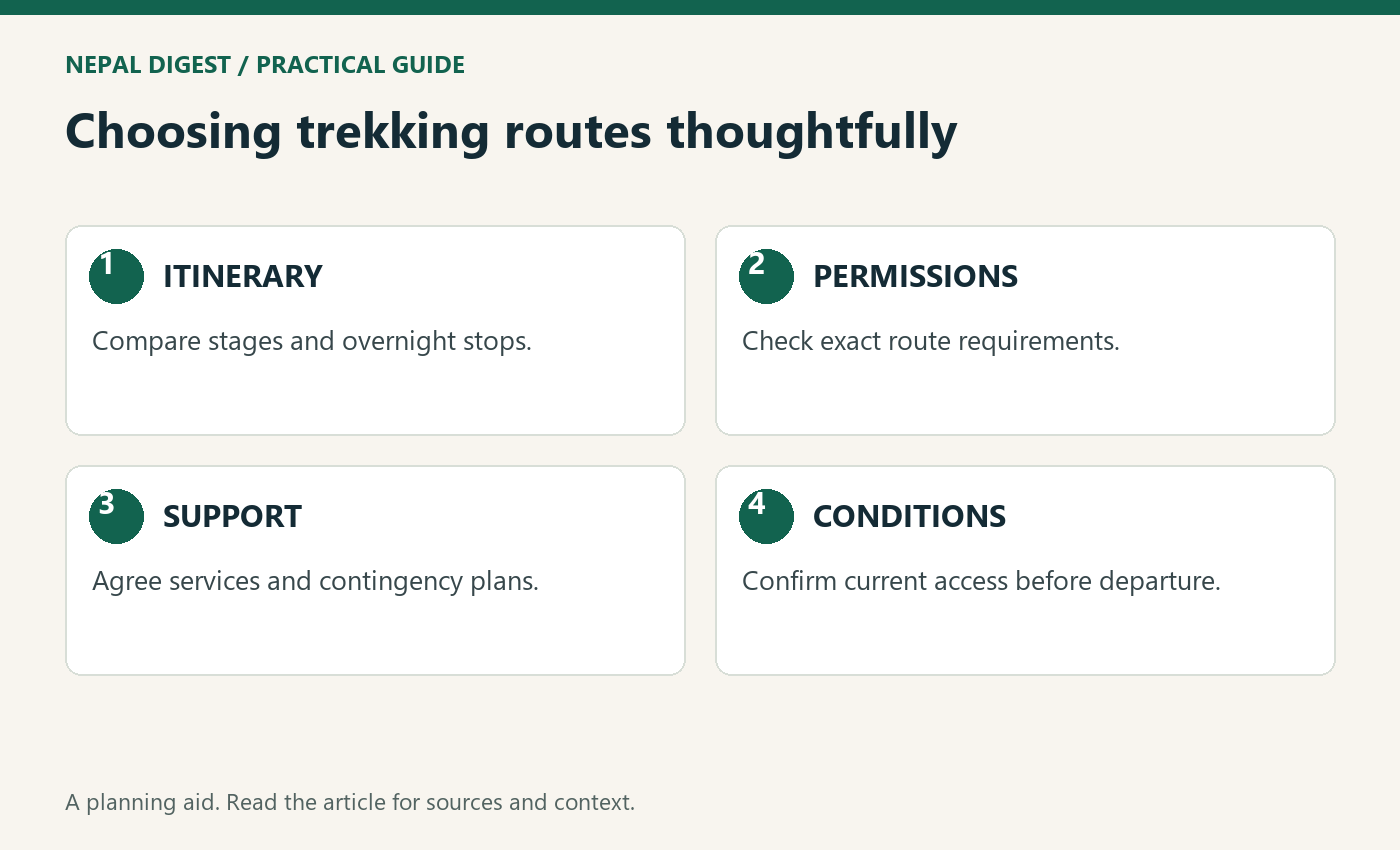
Table of Contents
Compare trekking routes by their real demands
The Nepal Tourism Board’s trekking overview identifies Everest, Annapurna and Langtang as traditionally popular regions and discusses heritage trails that combine walking with encounters with local communities. That provides context for looking beyond the best-known itineraries, without turning lesser publicity into a guarantee of solitude.
Ask for the proposed route in full, including the approach and return journey. A name on a map may cover several variations. The number of walking days alone does not describe the effort, the overnight elevations, the terrain or the consequences of a delayed road connection.
Compare the proposed stages with your own experience and the needs of everyone in the group. A route should be selected with a competent licensed operator or guide who can explain its demands and current conditions. A label such as beginner-friendly is too vague to settle the question.
Tamang Heritage as a starting point
The Tourism Board’s TIMS guidance names the Tamang Heritage Trek within the Langtang region. The name offers a starting point for discussing an itinerary that pays attention to communities as well as landscape. It does not establish that every advertised version follows the same stages or has the same services.
Ask a prospective operator which settlements and overnight stops are included, how much time is allowed between them and what arrangements have been confirmed. A village encounter is more meaningful when the schedule leaves room for ordinary hospitality rather than a hurried stop for photographs.
Discuss respectful participation before arriving. A home, a religious space and a public path have different expectations. Ask before entering, photographing people or joining an activity. The fact that a place appears on an itinerary does not make every part of community life available to visitors.
Ganesh Himal and Ruby Valley questions
Ganesh Himal–Ruby Valley is another route named in the Tourism Board’s TIMS list. Treat the name as the beginning of planning rather than a complete description of the trip. Request a day-by-day proposal and ask how the operator has checked accommodation, supplies and transport for your dates.
Find out what happens if a planned overnight stop cannot be used. Are there confirmed alternatives, and how would they change the walking day? A workable contingency is more useful than a general assurance that arrangements can always be made.
Ask how the trip’s spending reaches local providers. The answer should identify actual accommodation, meals, guiding or other services rather than rely on a broad claim that all tourism automatically benefits a community. Clear arrangements also make it easier to understand what your quoted price includes.
Helambu needs a specific itinerary too
The same official list includes Helambu Trek and Goshaikunda Trek under the Helambu region. Similar regional labels can conceal substantial differences between itineraries. Confirm precisely which route is proposed and avoid assuming that one traveller’s account applies to every journey sold under the name.
Ask about the sequence of overnight stops, the longest stages and the parts most affected by weather or access changes. If your available days are fixed, explain that constraint before booking. An operator should be able to discuss whether the plan includes a realistic margin.
A shorter holiday is not a reason to compress every stage. If the proposed journey leaves no room for disruption or the group’s pace, consider a different route. A trip that matches the time available can be more rewarding than an ambitious itinerary completed under constant pressure.
Check permissions and responsibilities
The Tourism Board describes revised TIMS provisions effective from 31 March 2023 for specified protected-area routes, including licensed-guide and agency-issued TIMS requirements. Its list includes the three starting points discussed here. Check the current requirements for your exact itinerary with the relevant authorities and licensed agency before travelling; other permissions or entry charges may also apply.
Ask who obtains each document, what identification is needed and whether the quoted price includes the relevant charges. Keep a record of what has been arranged. Do not assume that a general trekking package automatically includes every permission needed for a particular variation.
Clarify the guide’s role, communication arrangements and the operator’s procedure if the journey cannot continue as planned. Discuss insurance coverage and exclusions directly with the insurer and operator. A general article cannot determine whether a policy covers your route or activities.
Plan for the journey around the walk
Approach roads and return connections belong inside the itinerary. Confirm the transport provider, meeting point, luggage arrangements and likely alternatives if a connection changes. Keep an appropriate margin before an international departure rather than making the trek’s final transfer the only possible route to the airport.
Accommodation questions should be concrete. Ask about room arrangements, meals, drinking-water provision, charging and communication. Explain relevant dietary or access needs before the trip so the operator can give an honest answer about what is possible.
Use current local information and official weather or travel notices close to departure. An old itinerary is useful background, but it cannot verify a bridge, road or trail section today. Be willing to change the plan when the people responsible for the journey advise that conditions require it.
Choose a relationship with the place
A less familiar route should not be sold as an untouched place waiting for discovery. People already live, work and travel there. Use established access, respect private spaces and leave waste arrangements as a practical part of planning rather than an afterthought.
After the journey, describe the route and dates you actually experienced. Avoid turning a single pleasant stay into a claim that the same conditions are guaranteed for everyone. Helpful feedback names the service, the arrangement and any issue the next traveller should confirm.
Trekking routes become rewarding through a good match between place, preparation and attention. Nepal Digest’s guides to homestays and Pokhara beyond Lakeside offer related ways to plan a considerate visit.