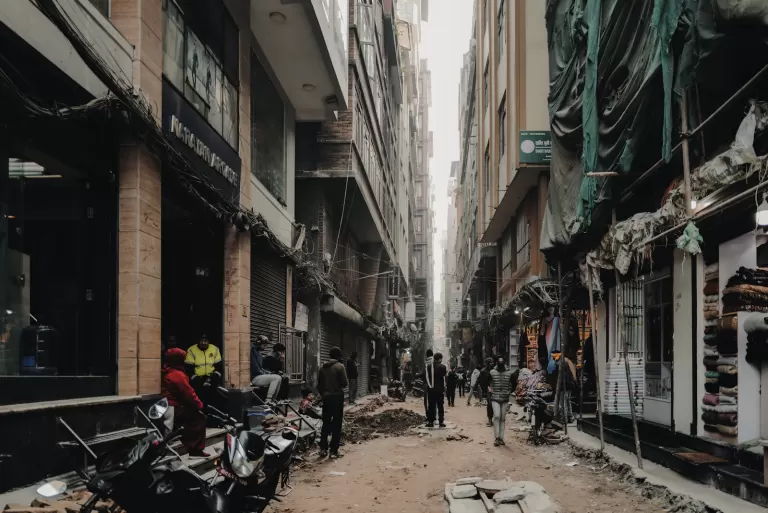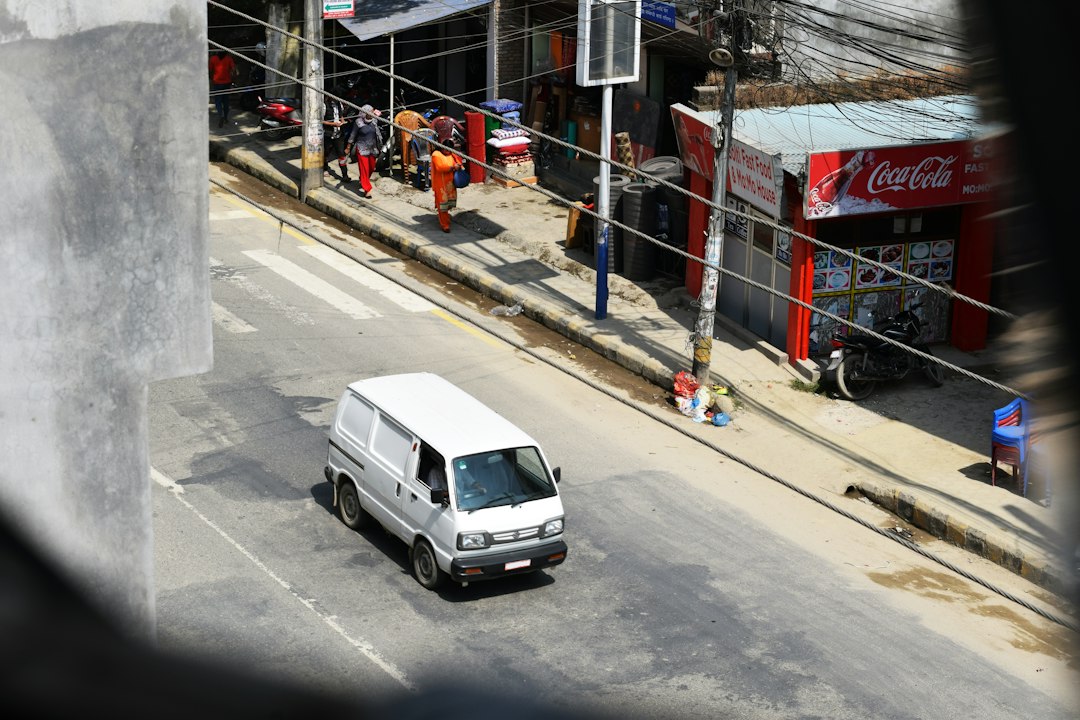
Local markets offer a way to understand Kathmandu through the things people need every day: vegetables, spices, cooking utensils and household goods. An early start is useful because it gives a visitor time to look, ask and find a route without trying to fit every stop into a hurried sightseeing schedule.
This is a practical planning guide, rather than a claim that every shop opens at dawn. Opening times, deliveries and festival routines vary. Choose a small area, check conditions locally and leave room for the market to be a working neighbourhood rather than a backdrop for photographs.
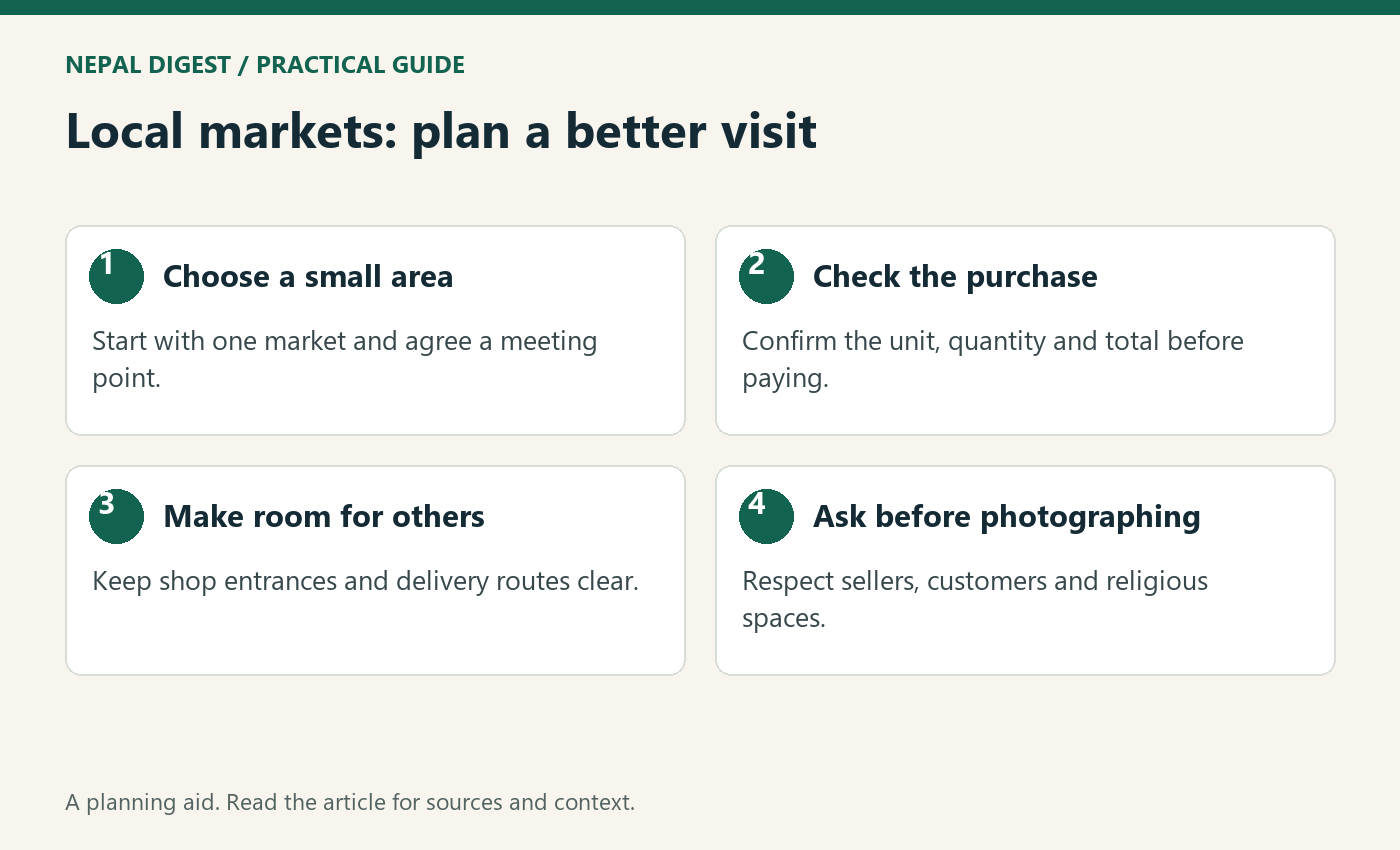
Table of Contents
Start with the local markets around Asan
The Nepal Tourism Board’s Asan guide identifies the square as an important shopping centre in old Kathmandu, with six roads meeting around it. It describes goods ranging from spices and vegetables to groceries, kitchenware, hardware and clothing. The Annapurna Temple gives the square a religious presence alongside its commercial life.
That combination makes Asan a useful starting point. Instead of searching for a single attraction to tick off, select one kind of everyday activity to follow. You might compare cooking utensils, identify unfamiliar ingredients or notice how a shop uses the narrow space between a counter and the street.
Do not assume that a stall selling a familiar ingredient has the same variety, origin or use as the one beside it. Ask the seller what the item is called and how it is normally prepared. A short answer can turn an anonymous purchase into something you can recognise on a family table.
Plan a morning with room to change direction
Keep the first visit modest. Pick a meeting point that everyone can locate, agree how long you want to walk and save the name of your accommodation before leaving. A small group is easier to move through a busy lane than a group spread across several shopfronts.
Carry a manageable bag and keep your phone secure when stopping to navigate. If someone in your party needs frequent rests or accessible routes, ask a local contact about surfaces, steps and current obstructions. An attractive route on a map is not proof that every section will work for every walker.
Leave the return journey flexible. Rain, a festival procession, a delivery or a change in someone’s energy can alter the plan. The value of an early start is the time it leaves for adjustments; it does not create a guarantee of quiet streets or uninterrupted access.
Shop at local markets with better questions
Before agreeing a purchase, establish the quantity and unit being priced. Ask whether the quoted amount is for one piece, a packet or a stated weight. Check the final total before paying, and look at what is being packed rather than relying on a display sample.
If you want to compare prices, compare like with like. Material, size, freshness, workmanship and quantity can all change the value. Bargaining is not a substitute for understanding what you are buying, and a visitor does not need to turn every small transaction into a contest.
For food to carry home, think about the whole journey. A delicate or perishable purchase has to survive the walk, the journey to your accommodation and any later travel. For international flights, check the destination’s actual food and customs rules before buying something specifically to take abroad.
Observe without interrupting someone else’s working day
Local markets are workplaces and places of worship as well as destinations. Stand where you are not blocking an entrance, a customer or a delivery. Let people finish transactions before asking questions, and accept that a seller may not have time for a long conversation.
Ask before making a close photograph of a person or the inside of a shop. Permission to photograph one display is not permission to record every customer nearby. If a conversation is mainly about getting a portrait, be clear about that rather than presenting yourself as a buyer.
Treat temple spaces with the same care. Watch the movement around an entrance, respect any restriction and avoid turning a religious activity into a staged scene. People should not have to change their routine to accommodate a visitor’s camera.
Bring back something more useful than a full shopping bag
A good visit to local markets can end with a very small purchase. Write down the name of an ingredient, a preparation suggestion or a question you want to ask a relative. If you cannot identify an item confidently, keep the uncertainty in your notes instead of attaching a guessed label to a photograph.
For a food-focused next step, read Nepal Digest’s guide to Kathmandu’s street-food culture. It offers a different way to think about the relationship between local food, public space and the people working in it.
The best reason to return is familiarity. Visiting local markets more than once lets you ask better questions and notice differences without declaring that one short walk explains the whole city. Start early if it suits your plans, move considerately and leave with a clearer understanding of a few ordinary things.