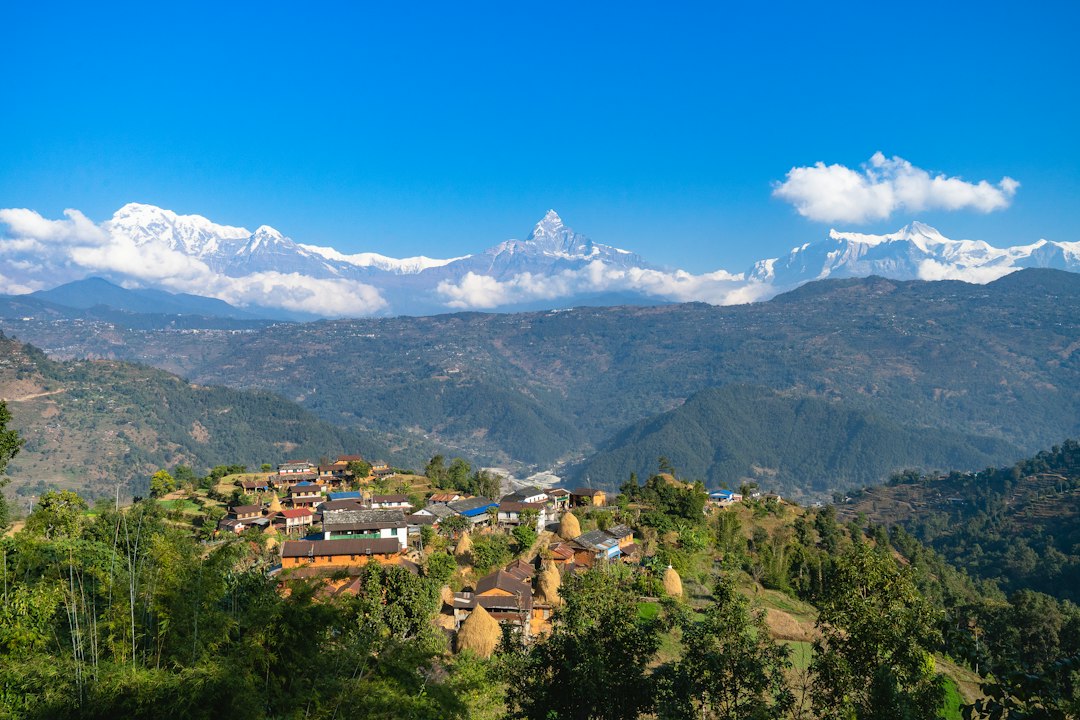
Homestays change a village visit by placing the relationship with a household near the centre of the journey. A room, a meal and a conversation can make a place easier to understand, but only when hosts and guests have clear expectations about what is being offered.
A community label alone does not prove that income is shared fairly or that every household benefits. This guide explains how to examine the arrangement, prepare for a stay and describe the experience without turning ordinary village life into a performance.
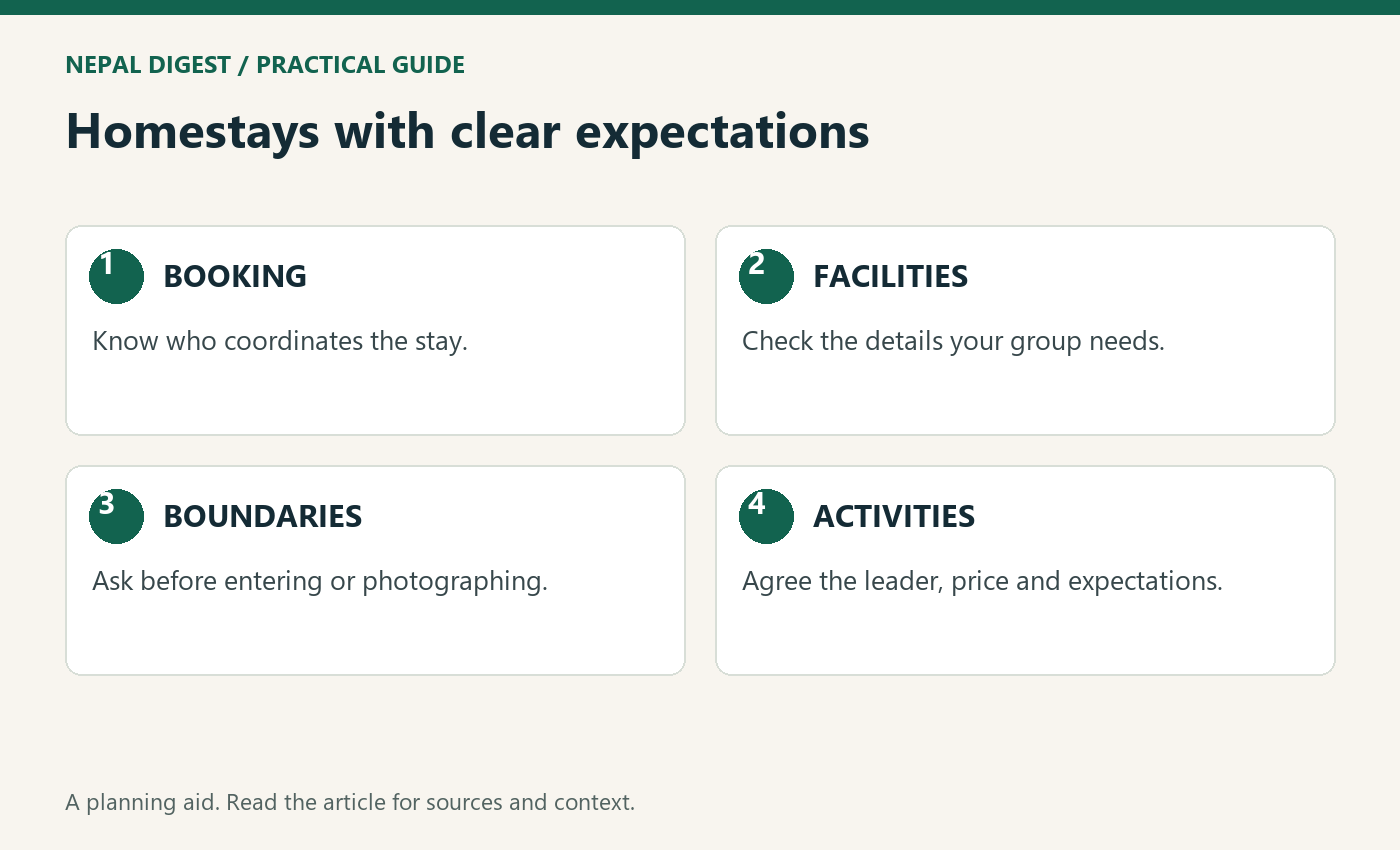
Table of Contents
Homestays offer different kinds of experience
The Nepal Tourism Board’s homestay overview names places including Panauti, Bardiya, Shree Antu, Palpa, Nuwakot and Nagarkot. It describes stays that can connect guests with local food, guided activities and community life. The range is a reason to ask about the particular host and programme, rather than expect one standard experience across Nepal.
Some visitors to homestays want time with a household, while others are looking mainly for a base for nearby walks or activities. Explain what matters to you before booking. A host can give a more useful answer to a specific request than to a general wish for an authentic experience.
Ask who manages the booking and who provides each part of the stay. A central coordinator, an individual household and an outside travel company may have different responsibilities. Knowing the arrangement helps you understand where to direct questions and whom to contact if plans change.
A community model needs a clear explanation
Tourism Board records describe homestay orientation and observation activities in 2021, including visits to Amaltari and Sirubari. These are dated examples of organised learning around village tourism. They should not be used as evidence that every present-day operator follows the same system or achieves the same results.
If a stay is promoted as community-based, ask how households participate and how work is allocated. Is there a shared booking arrangement? Are guiding, meals or other services provided by different people? The answer should describe a process rather than only repeat a slogan about local benefit.
Be careful with claims about the share of income retained in a village. Such a figure requires actual accounts and a defined method. Without them, it is better to identify the services purchased locally than to invent a percentage or assume that every payment reaches the same group of people.
Confirm the room and facilities before arrival
Ask about the sleeping arrangement, bathroom access, water, electricity and charging. Explain any practical need that will affect whether the stay works for you. A photograph may show an attractive room while leaving the most important access question unanswered.
If travelling with someone who needs step-free access or particular assistance, ask about the full route from vehicle to room, bathroom and dining area. A general assurance that a property is comfortable does not establish that the layout is suitable for a particular person.
Agree the booking terms in a form you can refer to later. Confirm the dates, number of guests, included meals, price and what happens if arrival is delayed or the booking changes. Clarity supports a friendly stay by reducing the chance of an awkward disagreement at the end.
Meals are a conversation, not an assumption
Tell the host about dietary restrictions before the visit and ask what can be accommodated. A household meal may require planning and ingredients bought in advance. Do not assume that every request can be met at short notice or that a familiar dish will contain the same ingredients everywhere.
Ask when meals are normally served and how changes should be discussed. If you will be away during a planned meal, give notice. Hospitality involves work, and a guest’s changing schedule can affect food preparation and the household’s own day.
A cooking activity should be agreed separately if it is offered. Ask whether it is a demonstration, a lesson or an invitation to help with a particular task. Follow the host’s instructions and do not treat a working kitchen as a place to rearrange equipment for photographs.
Respect the household’s ordinary boundaries
Ask which spaces are shared and which are private. Booking homestays does not make a household’s possessions, family conversations or religious practices available for inspection. Let hosts decide what they wish to explain and what they prefer to keep within the family.
Photography needs permission, especially when children or private activities are involved. Explain where an image may appear rather than asking only whether you can take it. Someone may be comfortable with a personal photograph but not with a public promotional post.
Allow people to be busy. Farming, school, employment and household care continue during a guest’s visit. A meaningful encounter does not require constant conversation or a scheduled cultural display. Time spent quietly and considerately can be part of the experience.
Choose activities with clear responsibilities
If a walk, workshop or local visit is included, ask who leads it, what it involves and how long it is expected to take. Confirm any separate fee before starting. A short village walk and a more demanding outdoor activity require different preparation and support.
Use current advice about weather and access, and explain the group’s experience and needs to the organiser. Do not assume that an activity is suitable simply because it is offered near the accommodation. A host should have the opportunity to recommend an alternative.
Ask how to buy locally made goods without creating pressure on the household. If a maker offers a demonstration, respect their time and agree the arrangement. A purchase should be based on the item and its clear price, rather than an expectation that every encounter must end in a sale.
A useful visit leaves a fair account
At the end of the stay, check the agreed charges and thank the people who provided the work. Raise any practical concern directly with the responsible person while there is a chance to understand or address it. A clear conversation is usually more useful than a vague public complaint afterwards.
When reviewing homestays, name the arrangement you experienced and the date. Distinguish a personal preference from a failure to provide something promised. Do not describe a household as representative of all village life or imply that a single visit establishes the impact of tourism on the whole community.
Homestays work best when guests understand the offer and hosts retain control over their home and time. For related planning, read Nepal Digest’s guides to trekking routes and regional food.