
Sanduk Ruit grew up in a Himalayan village without electricity, a school or a health post. He went on to build a system that made modern cataract surgery affordable far beyond Nepal.
In the first minutes after a cataract operation, a patient may see a face that had disappeared into blur years earlier. A hand moves into focus. Light separates into shapes. For the surgical team, it is a familiar sequence. For the person sitting up, it can feel like a life being returned.
Dr Sanduk Ruit has witnessed that moment thousands of times. It is the part of his work most often captured by cameras: the bandage coming away, a patient recognising family, the sudden emotion in a crowded eye camp. Yet the larger achievement lies behind the scene. Ruit helped make that moment available to people who had long been excluded by distance and cost.
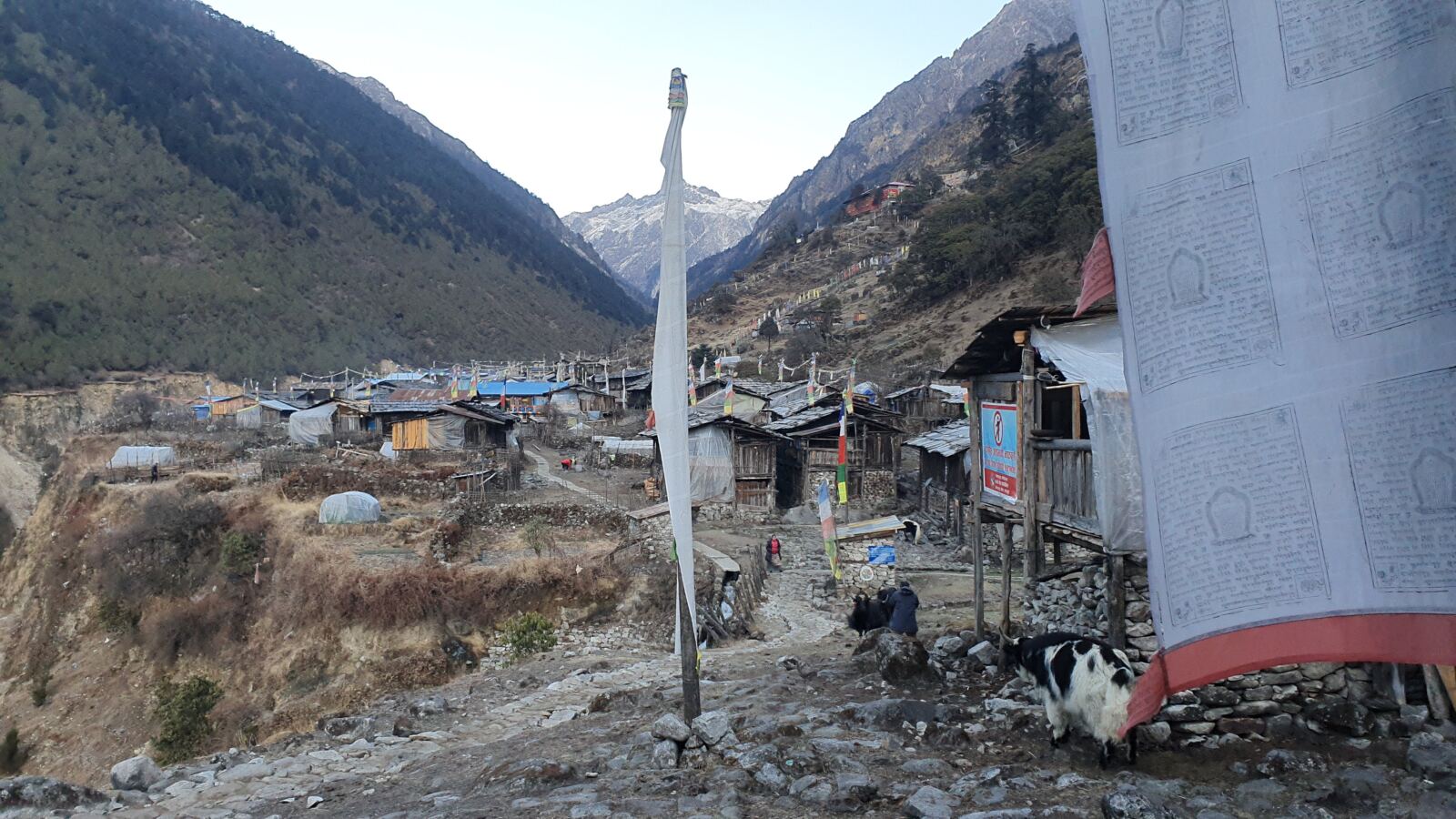
His story begins in Olangchung Gola, a settlement high in Taplejung near Nepal’s border with Tibet. When Ruit was born in 1954, the village had no electricity, school or modern health facility. Winter could isolate it for months, and reaching the wider world meant days on foot.
His father, Sonam, traded across the mountains and understood that education could offer his son a different future. At seven, Ruit was sent to school in Darjeeling. The journey took about two weeks on foot, and the separation from home lasted years at a time.
Illness shaped the family as powerfully as geography. Ruit lost three siblings while young. The death that marked him most deeply was that of his sister Yangla, his close childhood companion, from tuberculosis. Treatment existed, but it was beyond the family’s reach.
The loss gave medicine a personal meaning. Becoming a doctor was no longer only a path out of a remote village. It was a way to confront the distance between a cure and the people who could not obtain it.
Ruit completed school in Kathmandu and studied medicine in Lucknow on a scholarship. After returning to Nepal, he worked as a general physician at Bir Hospital before specialising in ophthalmology at the All India Institute of Medical Sciences in New Delhi.
Eye care presented a problem that was both medical and economic. Cataracts are a common cause of blindness, and surgery can restore sight. In poorer countries, however, the procedure and the artificial lens placed inside the eye were often too expensive. For rural patients, the journey to a hospital added another barrier.
In the mid-1980s Ruit met Australian ophthalmologist Fred Hollows, who became a mentor and collaborator. Training in Australia exposed Ruit to modern cataract techniques, but it also sharpened the question he would spend his career answering: how could the same standard of care reach someone with very little money in a remote part of Asia or Africa?
Ruit could have remained abroad. He returned to Nepal.
The choice placed him in a health system with limited resources, but it also put him close to the people for whom the existing model did not work. He refined a form of small-incision cataract surgery that could be performed efficiently without lowering the quality of the outcome. The procedure mattered, but the lens remained a problem.
At the time, imported intraocular lenses could cost far more than many Nepali families could afford. Ruit and his colleagues helped establish local production so the lenses could be made for a fraction of the prevailing price. A component that had kept surgery beyond reach became inexpensive enough to support high-volume treatment.
This was more than a cheaper medical product. It changed who could be considered a patient. Someone did not need to be wealthy, live near a major hospital or travel abroad to receive modern cataract care.
In 1994, Ruit helped establish the Tilganga Eye Centre in Kathmandu, which grew into the Tilganga Institute of Ophthalmology. It combined treatment, training, research, manufacturing and outreach. Patients able to pay helped support care for those who could not.
The institution also took medicine outside its own walls. Teams travelled to districts where people had lived with avoidable blindness because reaching Kathmandu was difficult or unaffordable. Temporary operating theatres were set up in whatever suitable space was available, and patients were screened, treated and followed up close to home.
Such camps require more than a surgeon arriving with equipment. Local health workers identify patients. Supplies must reach places connected by uncertain roads or trails. Sterile conditions have to be maintained. A large number of people must move safely through examination, surgery and recovery.
Ruit became known as the “barefoot surgeon,” a name that reflected his willingness to take sophisticated medicine into difficult terrain. The romantic image can hide the discipline underneath. High-volume surgery works only when the clinical process is consistent and the team around the surgeon is trained.
Training therefore became central to the model. Doctors from Nepal and other countries came to Tilganga to learn, while Nepali specialists travelled abroad to build expertise in cornea, retina and other fields. The aim was multiplication: each trained professional could treat patients and teach the next group.
Ruit also co-founded the Himalayan Cataract Project, now known as Cure Blindness Project, with American ophthalmologist Geoff Tabin. What began with work in the Himalaya expanded into partnerships in Asia and sub-Saharan Africa.
The model travelled because it addressed a problem shared by many low-income health systems. It paired affordable technology with local capacity. A visiting team could restore sight for a few days; a trained surgical service could continue after the visitors left.
By 2025, Cure Blindness Project reported that more than 21,500 training opportunities had been provided since 1995, many of them at Tilganga. Kathmandu had become a place where specialists from other countries came to learn techniques developed for settings with limited resources.
That reversal carries particular significance. Nepal is frequently described through what it lacks: infrastructure, specialists, equipment and money. Ruit’s work made it an exporter of medical knowledge.
His outreach extended to Bhutan, India, Bangladesh, Cambodia, Indonesia, Ethiopia, Ghana and other countries. In North Korea in 2006, he operated on cataract patients and trained local doctors during a rare medical visit documented internationally.
Awards followed. Ruit received the Ramon Magsaysay Award for International Understanding in 2006, an honorary appointment in the Order of Australia in 2007, the Padma Shri from India in 2018 and Bahrain’s Isa Award for Service to Humanity in 2023. The honours recognised both surgical skill and the system built around it.
They also risk reducing a long institutional effort to the story of one exceptional man. Ruit is the best-known figure, but Tilganga’s work depends on nurses, technicians, lens manufacturers, administrators, outreach workers and generations of surgeons. Its durability comes from the fact that it no longer rests on one pair of hands.
That may be Ruit’s most consequential legacy. A single operation transforms one person’s day. A hospital, manufacturing facility and teaching network can alter the possibilities available to entire health systems.
His life has travelled an extraordinary distance from Olangchung Gola, yet the problem he set out to solve remains close to the place where it began. Geography and poverty still decide whether many people receive care. The answer he built was to shorten that distance: lower the cost, take surgery closer to patients and train others to continue the work.
When a bandage is removed at an eye camp, the result appears immediate. Behind that instant are decades of choices—by a father who sent a seven-year-old away to school, by a young doctor who returned to Nepal, and by teams that turned an affordable operation into a system.
The patient sees again. The harder achievement is making sure the next patient can too.
Featured image: Olangchung Gola in Taplejung, Dr Sanduk Ruit’s birthplace (illustrative landscape). Photograph by PankajTh, dedicated to the public domain under CC0 1.0. View the original photograph.