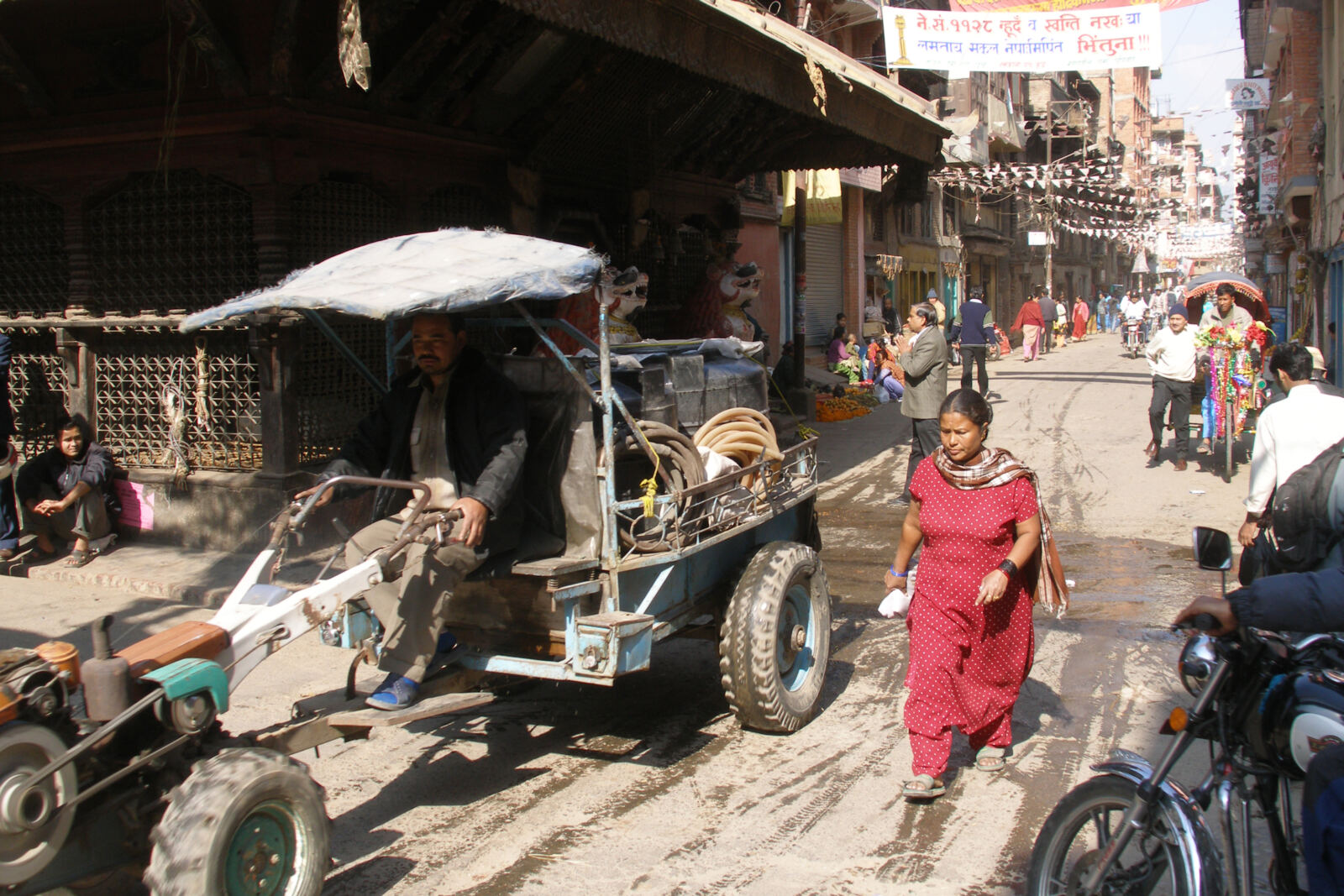
Most foreigners arrive in Nepal with an exit date.
The visa has an expiry. The trekking itinerary ends. The return flight is booked. Kathmandu is supposed to be a stop, Pokhara a pause, the Himalaya an experience to carry home.
And yet some visitors begin doing something tourists rarely do. They learn which vegetable seller charges fairly. They stop photographing every temple. They know when the water comes. They acquire a favourite chiya shop, a doctor, a mechanic, a landlord and eventually people who would notice if they disappeared.
Nepal stops being a destination and starts becoming ordinary.
That transition—from visitor to resident—is one of the more interesting forms of migration into Nepal. It is also easy to romanticise. Long-term life in Nepal can offer community, landscape, manageable everyday costs and a slower relationship with time. It can also involve bureaucracy, pollution, infrastructure gaps, legal restrictions and a labour market in which a foreign passport does not automatically create a right to work.
So why do some foreigners stay after the holiday should have ended?
The tourist version of Nepal has a time limit
Tourism statistics give us a useful baseline. Nepal recorded about 1.15 million tourist arrivals in 2024, with an average stay of roughly 13.3 days, according to government tourism statistics.
That is enough time to see Nepal. It is not enough time to understand how living here works.
A tourist experiences hotels, guides, restaurants and attractions designed partly around visitors. A resident encounters rent negotiations, power cuts, school choices, air pollution, traffic, banking, neighbourhood relationships, healthcare and immigration paperwork.
The difference is not simply duration. It is responsibility.
Once a person has to solve ordinary problems in Nepal, the country becomes less exotic and more real. Paradoxically, that can deepen attachment rather than weaken it.
Community is often the first reason people give—and the hardest to measure
Foreign residents frequently describe Nepal through relationships rather than amenities.
This can sound sentimental, but there is an economic and social structure underneath it. Dense neighbourhood life, extended-family culture, local shops, repeated face-to-face interactions and relatively informal social networks can create a feeling of participation that some people find difficult to reproduce in more anonymous cities.
That does not mean every foreigner is automatically welcomed into Nepali society. Language, class, nationality and social circles matter. Some expats remain inside insulated international communities for years.
But foreigners who learn Nepali, work alongside local colleagues, marry into Nepali families or build long-term community relationships often experience the country differently from those who remain primarily within an expatriate bubble.
The distinction matters. Living in Nepal is not necessarily the same as living with Nepal.
Cost matters—but “Nepal is cheap” is an incomplete explanation
For someone earning or receiving income in dollars, euros, pounds or other stronger currencies, many everyday expenses in Nepal can appear inexpensive.
But that advantage is conditional.
A foreign resident who chooses a modern apartment in central Kathmandu, imported groceries, frequent restaurants, international schooling, private healthcare and regular flights abroad can build a surprisingly expensive lifestyle. Someone living more locally can spend much less.
The same affordability principle examined in Kathmandu’s income-versus-cost equation applies in reverse. Nepal may feel affordable to someone whose income is generated abroad precisely because local prices are being compared with foreign purchasing power.
That creates an important ethical tension. What feels inexpensive to an expat may be expensive to the Nepali professional living next door.
Long-term residents who understand that difference tend to speak about affordability more carefully.
Remote work has changed who can imagine staying
Historically, living long-term in another country usually required local employment, retirement, investment, marriage or substantial independent wealth.
Remote work has complicated that model globally. A designer, consultant, software developer or online business owner may be physically in Nepal while earning from clients elsewhere.
But practical possibility should not be confused with legal permission.
Nepal’s Department of Immigration states clearly that only foreign nationals holding a working visa are allowed to accept employment and work in Nepal. A working visa requires, among other things, a recommendation from the relevant government agency and a labour permit. Nepal also has separate business, study, relationship, NRN and residential visa categories.
A tourist visa is therefore not a blanket work permit simply because someone’s laptop can connect to an overseas company.
Foreign residents should verify their specific immigration, employment and tax position rather than relying on expat-forum assumptions.
Nepal does have routes for genuinely long-term residence
The idea that every foreigner living in Nepal is endlessly extending a tourist visa is inaccurate.
The immigration system provides several non-tourist routes depending on circumstances. Foreign nationals employed in Nepal can qualify for working visas when the required approvals are obtained. Investors can use business visas. Foreign spouses and qualifying relatives of Nepali citizens can use relationship visas, although relationship status alone does not automatically confer permission to work.
Nepal also has a residential visa category. The Department of Immigration lists eligibility for certain people of international reputation or outstanding contribution, qualifying investors, and foreigners intending to spend their lives in Nepal without conducting business. For the non-business retirement-style route, current requirements include being at least 60 or retired, demonstrating a regular annual income of at least US$20,000 and meeting additional documentary requirements.
These routes matter because the practical meaning of “moving to Nepal” depends heavily on legal status. A lifestyle that works for six months as a visitor may not constitute a sustainable immigration plan for ten years.
Marriage changes the experience, but not every rule
Some of Nepal’s longest-established foreign residents are connected to the country through marriage and family.
That changes almost everything socially. Nepal is no longer simply where someone chooses to live; it is where a spouse’s family lives, where children may grow up and where obligations accumulate.
Immigration rules recognise qualifying relationships through relationship visas. But the Department of Immigration explicitly notes that relationship-visa holders are not permitted to work without obtaining a work permit.
This is an important example of the difference between belonging socially and having particular legal rights economically.
Pokhara and Kathmandu offer different versions of long-term Nepal
Kathmandu concentrates jobs, embassies, international organisations, specialist healthcare, schools, universities, cultural institutions and professional networks. It also concentrates traffic, air pollution, noise and high urban costs.
Pokhara offers another equation: a smaller city, dramatic landscape, easier access to outdoor life and a tourism economy accustomed to foreigners. But it has a narrower professional ecosystem and fewer specialist services.
Beyond those two cities, foreign residents live in places as different as rural development-project communities, Buddhist centres, trekking regions and towns connected to Nepali spouses or businesses.
The “best” location therefore depends less on scenery than on what a resident actually needs every Tuesday morning.
The landscape matters more after it stops being a spectacle
Nepal’s mountains attract visitors, but long-term residents often experience landscape differently.
The Himalaya may become something visible from a rooftop after rain rather than the objective of an expedition. Hills become weekend walks. Monsoon becomes an inconvenience and a season rather than a travel warning.
This everyday proximity to nature is difficult to price. For people leaving highly urbanised environments, the ability to reach trails, forests, rivers or mountain landscapes relatively quickly can materially affect quality of life.
But Nepal’s environment has another side. Kathmandu’s air pollution can become severe. Monsoon flooding and landslides disrupt travel. Earthquake risk is part of life. Water supply and waste management remain uneven.
A credible account of expat life has to hold both realities at once.
Infrastructure teaches residents what convenience was worth
People moving from countries with highly reliable public systems often discover how much invisible infrastructure shaped their previous lives.
Address systems, public transport, pedestrian infrastructure, online government services, emergency response, disability access and consumer protections may operate differently or less predictably in Nepal.
Private solutions fill some gaps: water tanks, inverters, ride-hailing apps, private hospitals, generators, international schools and delivery services.
Money can reduce friction, but it cannot remove all of it.
This is one reason a short visit can create a misleading impression. Tourists outsource many logistical problems to hotels and travel companies. Residents eventually inherit them.
Language determines how deep Nepal becomes
It is possible to live for years in parts of Kathmandu or Pokhara using mostly English.
It is also limiting.
Even imperfect Nepali changes daily interactions. It allows a foreign resident to understand humour, negotiate directly, follow local conversation and participate in relationships that are not mediated by English-speaking professionals.
Language also reduces dependence. A resident who can speak for themselves at a neighbourhood shop, taxi stand, government counter or family gathering inhabits a larger Nepal.
For long-term expats, learning Nepali may offer a greater improvement in quality of life than upgrading an apartment.
Foreign residents can misunderstand their own privilege
There is an uncomfortable part of the expat story.
A foreigner earning internationally may be able to afford housing, restaurants, domestic help and leisure that would be difficult for a similarly educated Nepali worker earning locally.
That can produce a distorted interpretation: “life is simpler here” may partly mean someone else is doing low-paid work that the foreign resident could not afford at home.
This does not make expat life illegitimate. It does mean the economics deserve honesty.
Long-term residents become part of local housing markets, workplaces and communities. Their choices have consequences beyond their own lifestyle.
Some people stay because Nepal gives them room to build
Foreign residents have contributed to Nepal through conservation, tourism, education, healthcare, social enterprise, hospitality, research and cultural work.
The strongest examples tend not to begin with the assumption that Nepal is an empty canvas awaiting foreign expertise. They begin with local relationships and institutions.
The difference is important. A foreigner can bring capital, networks or specialist knowledge while still misunderstanding the context in which those resources operate.
Long-term contribution usually requires listening long enough for the original plan to change.
Others stay because leaving becomes harder than staying
After enough years, the question can reverse.
A person who originally asked, “Could I live in Nepal?” may eventually ask, “Where exactly would I go back to?”
Friendships, marriages, businesses, pets, routines and memories accumulate. Children may consider Nepal home even when their passports say otherwise. Parents abroad age. The resident themselves changes.
This is migration in its ordinary form: not one dramatic decision, but thousands of small commitments that gradually make one place harder to leave.
Nepal is not an escape from ordinary life
Some people first encounter Nepal during a period of transition: after university, between careers, following a relationship, during burnout or while searching for something that feels different.
Nepal can appear to offer an alternative to the pressures they left behind.
But countries cannot permanently function as personal therapy.
Eventually there are bills, deadlines, illnesses, arguments and boring Wednesdays. A resident who needs Nepal to remain mystical will probably be disappointed by living here.
The foreigners who build sustainable lives tend to accept the opposite: Nepal becomes valuable precisely when it no longer needs to be extraordinary every day.
The test is not whether you love Nepal
Many tourists love Nepal. That does not mean they should move here.
A more useful long-term test asks whether someone can build a lawful, financially sustainable and socially connected ordinary life in the country.
Can the visa status support the intended life? Is the income reliable? Does the family have appropriate healthcare and schooling? Can the resident tolerate infrastructure friction rather than treating it as temporary? Are they building relationships beyond transactional expat networks? Are they learning enough about Nepal to understand what they still do not understand?
If those answers hold up, the transition from visitor to resident begins to make sense.
When the destination becomes home
The most interesting foreigners living in Nepal are often those who stopped describing themselves primarily as people who “fell in love with Nepal.”
Love is too uncomplicated a word for long-term residence.
Home includes affection and irritation, privilege and responsibility, belonging and distance. It is the place where the extraordinary eventually becomes familiar.
That may be the real reason some foreigners stay.
They came looking for Nepal as an experience. Somewhere along the way, they acquired something less dramatic and more durable: a life.
Practical note: Immigration and employment rules can change and depend on individual circumstances. Current visa descriptions in this article were checked against Nepal’s Department of Immigration. Foreign residents should verify their own visa, work-permit and tax obligations with the relevant authorities rather than treating general information as individual legal advice.