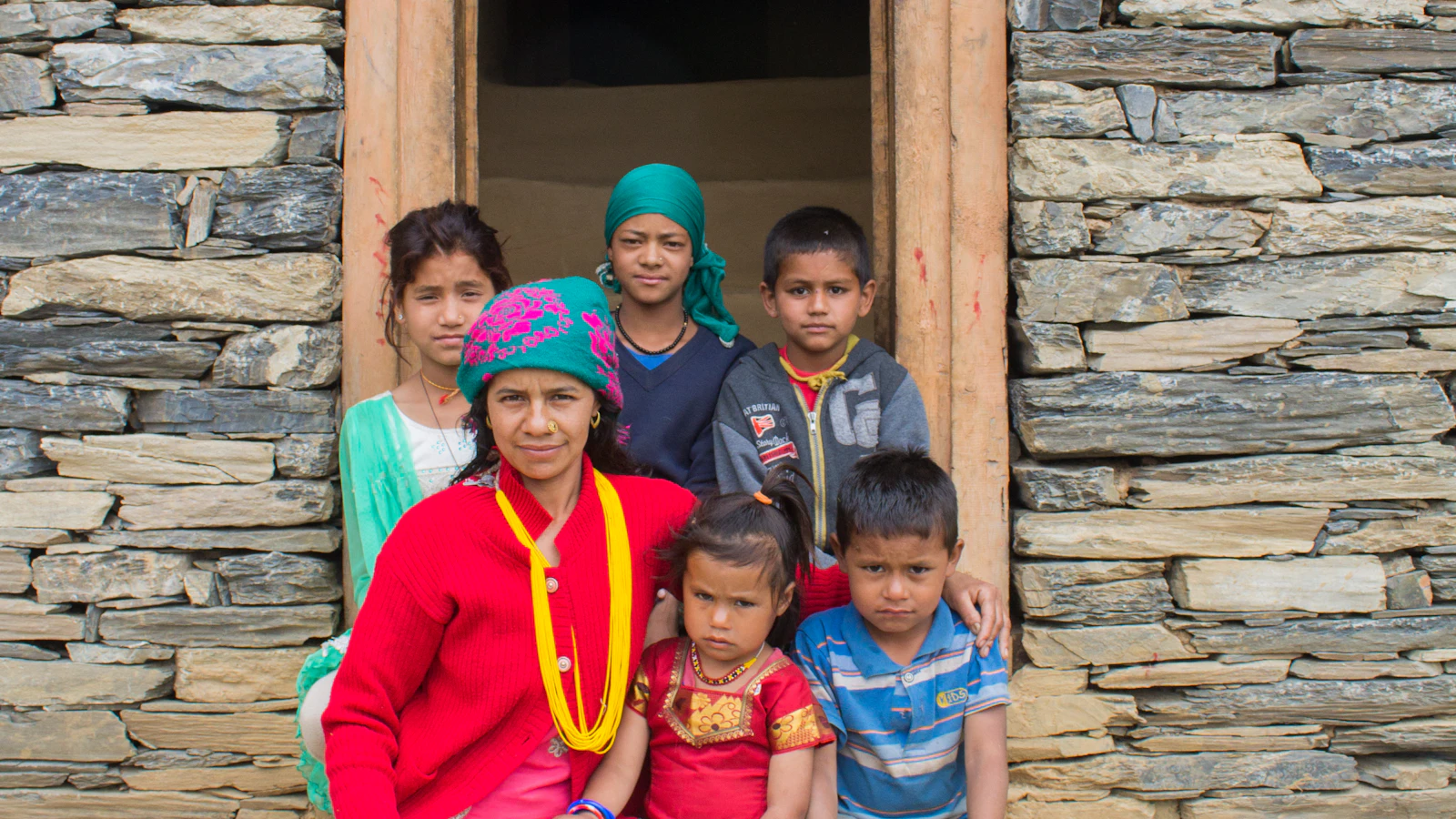
A family need not share a roof to make decisions together. A parent in Kathmandu may discuss a child’s school fees with a spouse in Doha. An adult daughter overseas may organise medicine for a parent in a village. A grandparent may become the everyday caregiver while a younger generation earns its living in another country. That growing burden of care is explored further in what happens when ageing parents stay behind.
These arrangements are often described as temporary. But if temporary contracts, short visits and remote decisions continue for years, they become the architecture of ordinary family life.
Nepal’s family structure is not changing in one uniform direction. Joint families, smaller urban households, migration-linked caregiving and transnational marriages coexist. The useful question is not whether the traditional family has vanished. It is how responsibility is redistributed when people who belong together live apart.
A household wider than its walls
The home has historically been a place where money, unpaid care, authority and social obligations meet. Migration can pull these functions into different locations. Income may be generated abroad, spent in Nepal and managed collectively over the phone. A property decision may depend on someone who has not visited for months.
That can expand a family’s possibilities. Overseas earnings may improve housing, provide education and reduce immediate financial stress. The same arrangement can also create disagreement about who gets to make decisions. The person sending money may believe financial responsibility gives them the final say; the person doing the daily caregiving may reasonably expect their work and judgment to carry equal weight.
These tensions are not uniquely Nepali. But they become especially consequential when movement across borders is central to household economic strategy.
Parenting across distance
The phrase ‘long-distance parenting’ covers different realities. One parent may remain in Nepal, or children may live with grandparents and other relatives. Communication can be frequent and supportive; in other cases employment conditions or family conflict make contact irregular.
UNICEF’s work on children separated from migrant parents makes a fundamental point: labour and migration policies should be assessed alongside child wellbeing. Financial support is important, but it does not remove the need for an accessible adult when a child needs protection or care.
A UNICEF Nepal account from Surkhet described a grandmother raising her granddaughter after both parents migrated to India. It is a particular case, not evidence that grandparents across Nepal experience identical burdens. It reveals, however, the need to support caregivers who can easily disappear from migration statistics.
When school forms, medical appointments and daily discipline are handled by relatives, those relatives are doing substantive parenting work. A family system that overlooks it is only partially described.
Marriage and the negotiation of roles
Migration alters the practical life of a marriage even when the relationship remains strong. Couples may spend long periods apart, make plans over messaging applications and arrange important milestones around leave allowances. A spouse at home may have more day-to-day autonomy than before, while still carrying much of the invisible labour of maintaining family relationships.
For some women, control of remittance spending can expand decision-making authority. For others, money sent to an extended household may be controlled by relatives, limiting independent choice. It would be inaccurate to claim that migration automatically empowers or disempowers women. The outcome depends on legal rights, assets, family dynamics and the actual distribution of labour.
The same caution applies to claims about divorce, infidelity or marital conflict. Anecdotes and social-media discussion do not establish a national trend. Strong reporting on these sensitive subjects requires reliable administrative data and interviews that respect privacy.
Ageing parents and the distance of obligation
As migration continues, more families have to plan for elderly relatives who live without nearby adult children. Sending money can help pay for treatment, transport or domestic support. But someone still needs to recognise that a parent’s health has changed, accompany them to an appointment or respond quickly during an emergency.
The common assumption that relatives nearby will step in can hide uneven expectations, particularly on daughters, daughters-in-law and women living near the family home. Their time and responsibilities should be part of any serious discussion of ageing and migration.
Families can reduce uncertainty by agreeing on emergency contacts, medical records, access to funds and who may make practical decisions. Those arrangements cannot guarantee care, but they make dependence on informal goodwill less precarious.
Technology has changed contact, not geography
Video calls give families a new kind of daily presence. A parent can help with homework from overseas, an elderly grandparent can see a newborn growing up and siblings can remain involved in decisions that previously required letters or expensive calls.
But proximity on a screen is not physical availability. Shift work, unstable connectivity and the emotional difficulty of discussing problems at a distance can all affect communication. Some households find new closeness online; others experience greater pressure to explain every decision.
Technology solves a communications problem, not every problem created by separation.
The paradox of greater resources
The World Bank’s latest Nepal assessment places workers’ remittances at 35.8 percent of GDP for FY2025/26. Such flows help sustain household spending and Nepal’s external economy. Yet their scale also reveals how much domestic wellbeing depends on opportunities beyond national borders.
For individual families, a new income stream can support school, housing and health. It can also encourage a longer migration cycle: one contract pays off debt, another finances construction, another supports a child’s education. What began as a short period of separation may become a family arrangement lasting much of a generation.
Counting only financial gains or only emotional costs does not explain why these choices persist. The same household may be materially more secure and emotionally stretched.
What does a family need now?
Public services have not always been designed around households spread across borders. Schools can improve communication with both parents and resident caregivers. Social protection and child-support services can recognise diverse guardianship arrangements. Local health systems can help older people and relatives managing chronic conditions. Employers abroad can improve workers’ opportunities to stay in meaningful contact with family.
There is no single ideal household model to restore. Families should be able to decide how to live without being compelled by lack of work to separate for years, and without being penalised when their practical arrangement differs from convention.
Nepal’s family is not simply becoming smaller, weaker or more modern. It is stretching across distance, asking people to share responsibilities without always sharing a place.
The question is whether institutions will stretch with it.
The financial counterpart is explored in Nepal’s remittance paradox; the caregiving questions continue in the children growing up while their parents work abroad.
Reporting note: Structural interpretation is separated from verified institutional findings. The article does not claim national prevalence for specific family arrangements without suitable survey data.