Old Kathmandu is easiest to misunderstand when a photograph is treated as the whole history of a place. A temple, courtyard or shopfront can look familiar across decades while the people using it, the work done around it and the pressures on the neighbourhood have changed.
The useful question in a then-and-now comparison is therefore more precise than whether the city has become better or worse. What survives? What has been rebuilt? Which activities still give a space meaning? And what can a photograph actually establish without a date, a location and a reliable account of its origin?
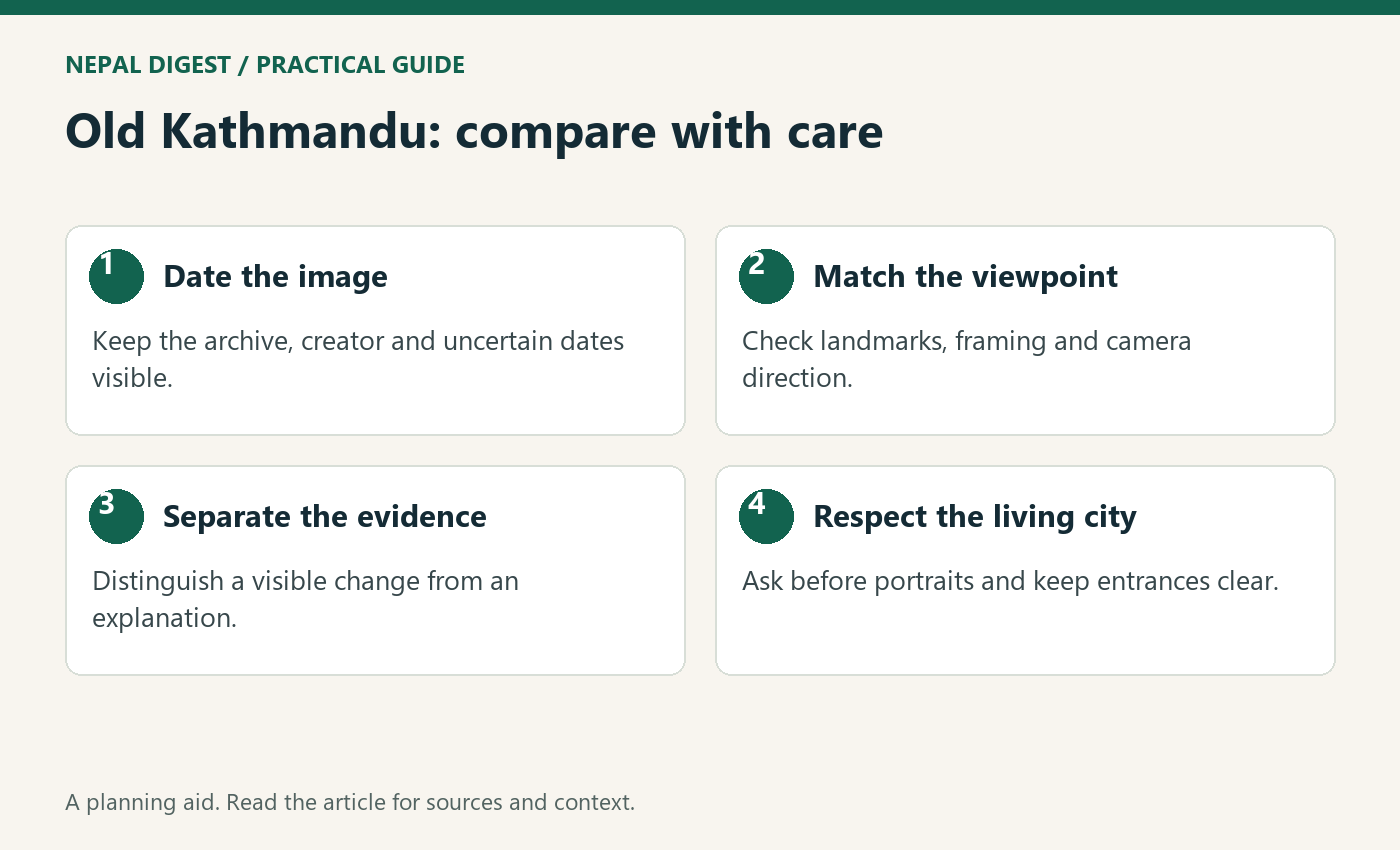
Table of Contents
Old Kathmandu is part of a living heritage landscape
UNESCO’s Kathmandu Valley listing brings together seven monument zones, including the historic centres of Kathmandu, Patan and Bhaktapur, and four religious ensembles. The property was inscribed in 1979. Its significance includes the relationship between architecture, urban settlements, craftsmanship and religious traditions, rather than a collection of isolated objects.
For a walk through the old city, that distinction matters. A building is not fully understood by counting its roof tiers or photographing its windows. Look at how a courtyard connects to a lane, where people pause and whether a space functions as a route, a meeting place or an entrance to worship.
Daily use also complicates the idea of an untouched past. A neighbourhood that still works has to accommodate maintenance, trade and ordinary domestic needs. Protecting its character involves decisions about those uses, not simply removing every sign of contemporary life.
Then and now needs a date and a place
Begin any comparison of Old Kathmandu by establishing what is known about the older image. Record its holding institution or creator, the date or approximate period given in the catalogue, the caption and any uncertainty about location. A reposted picture with a confident social-media caption is not equivalent to an archival record.
For a contemporary photograph, note where you stood and what direction the camera faced. A different lens or camera position can make a street look wider, a building taller or a public space emptier. Compare stable landmarks before interpreting the difference as physical change.
Make three separate notes: what is visibly present, what another source confirms and what remains a possibility. A missing shop sign may mean a business changed, but it could also be hidden by the framing. A new-looking facade may indicate repair, replacement or simply a fresh surface.
Reconstruction is part of the city’s recent history
The 2015 Gorkha earthquake is an essential part of this comparison. In its account of a 2025 heritage-recovery programme, UNESCO describes work spanning emergency response, reconstruction, disaster risk reduction and community resilience. Recovery should therefore be read as a continuing process of decisions and care, rather than a single moment when everything returned to normal.
A structure visible in an older photograph may have gone through several interventions before the present image was taken. Without a conservation record, appearance alone cannot tell a visitor which pieces are original, which were repaired and which were newly made.
That does not make a rebuilt structure meaningless. It changes the questions to ask. Who documented the earlier fabric? Which skills were used? How is the site maintained? What arrangements allow people to continue using the place while respecting its cultural importance?
Read the street beyond the monument
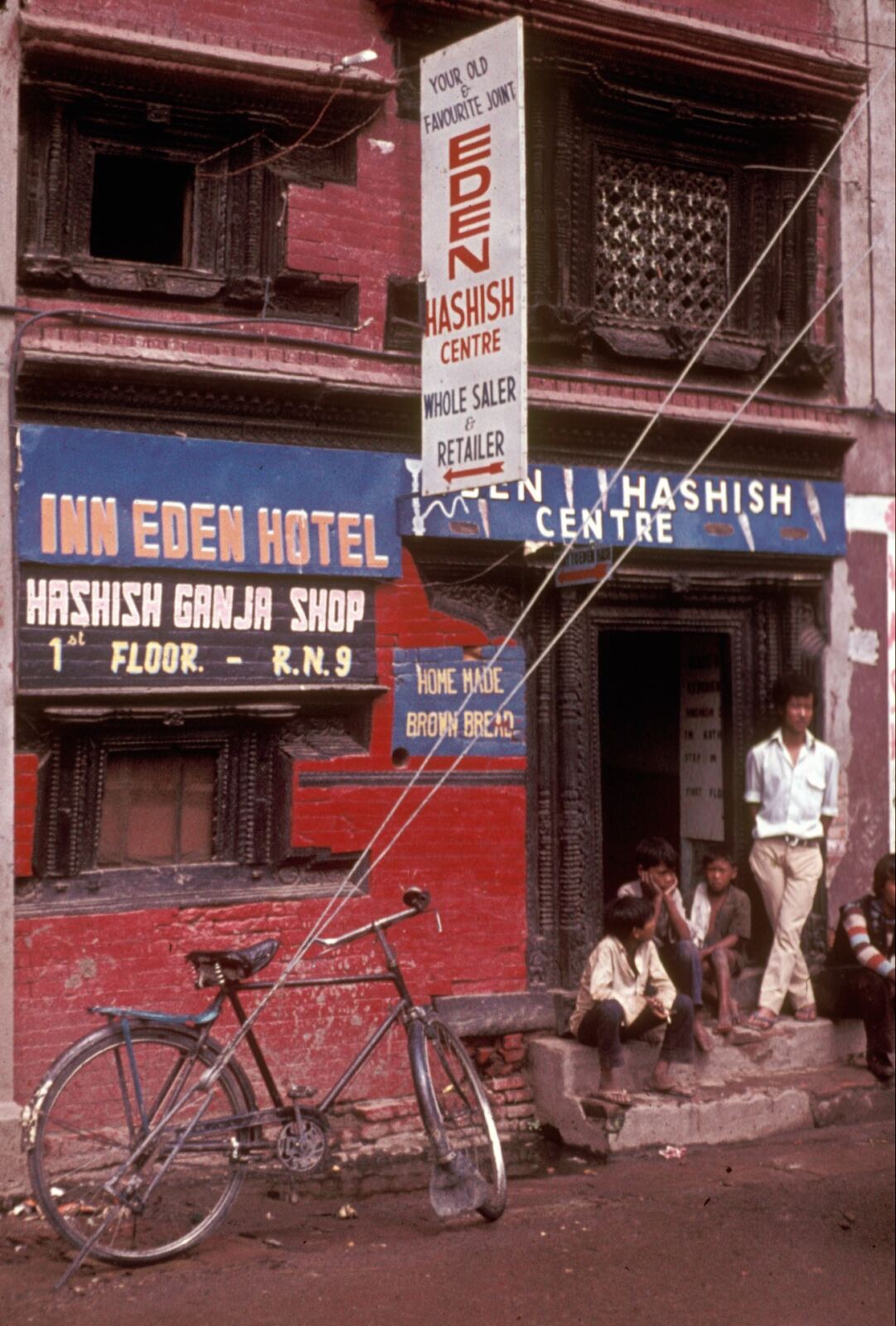
A careful comparison of Old Kathmandu also pays attention to what happens around celebrated buildings. Shopfronts, wires, drainage, vehicles, signs and walking space can shape daily life as strongly as a landmark itself. A photograph can help identify those details, but it cannot establish everyone’s experience of them.
If you want to understand a change in use, ask a specific question rather than requesting a general verdict on modern life. A shopkeeper might clarify what a particular premises sells; a resident may explain a route through the neighbourhood. Attribute any account you later publish and distinguish an individual memory from an official chronology.
For visitors, the guide to local markets offers a practical way to approach an active neighbourhood with more attention to working life. It encourages smaller routes and better questions instead of treating the city as an uninterrupted sightseeing set.
Keep Old Kathmandu useful to the people who live there
Photographing Old Kathmandu carries responsibilities. Ask before making a close portrait, do not block an entrance and respect restrictions around religious spaces. A resident’s home is not public access simply because its doorway has historic interest.
When sharing a then-and-now pair, keep both images’ dates and credits visible. Do not present a reconstruction as an untouched survivor, invent the name of an unknown photographer or remove uncertainty from an archival caption to make a stronger story.
Preservation is easier to discuss when its practical choices are visible. A repaired roof needs continuing care. A courtyard needs people able to use it. A historic street must support a present-day community. These are questions to investigate, not reasons to assume that every change is either progress or destruction.
The most revealing comparison ends with a more accurate description of one place. Old Kathmandu can hold memory and adaptation at the same time. Understanding that relationship requires the photograph, the record and the living neighbourhood to remain in conversation.