Analysis. The Nepal Premier League gives supporters more than a score to follow. It offers regional belonging, a connection with home and a public stage for Nepali ambition. Its lasting value will depend on whether that enthusiasm becomes accessible, inclusive and useful beyond tournament weeks.
When Nepal plays international cricket, the invitation is straightforward: support the country. The Nepal Premier League asks a more personal question. Within that country, which place feels like yours?
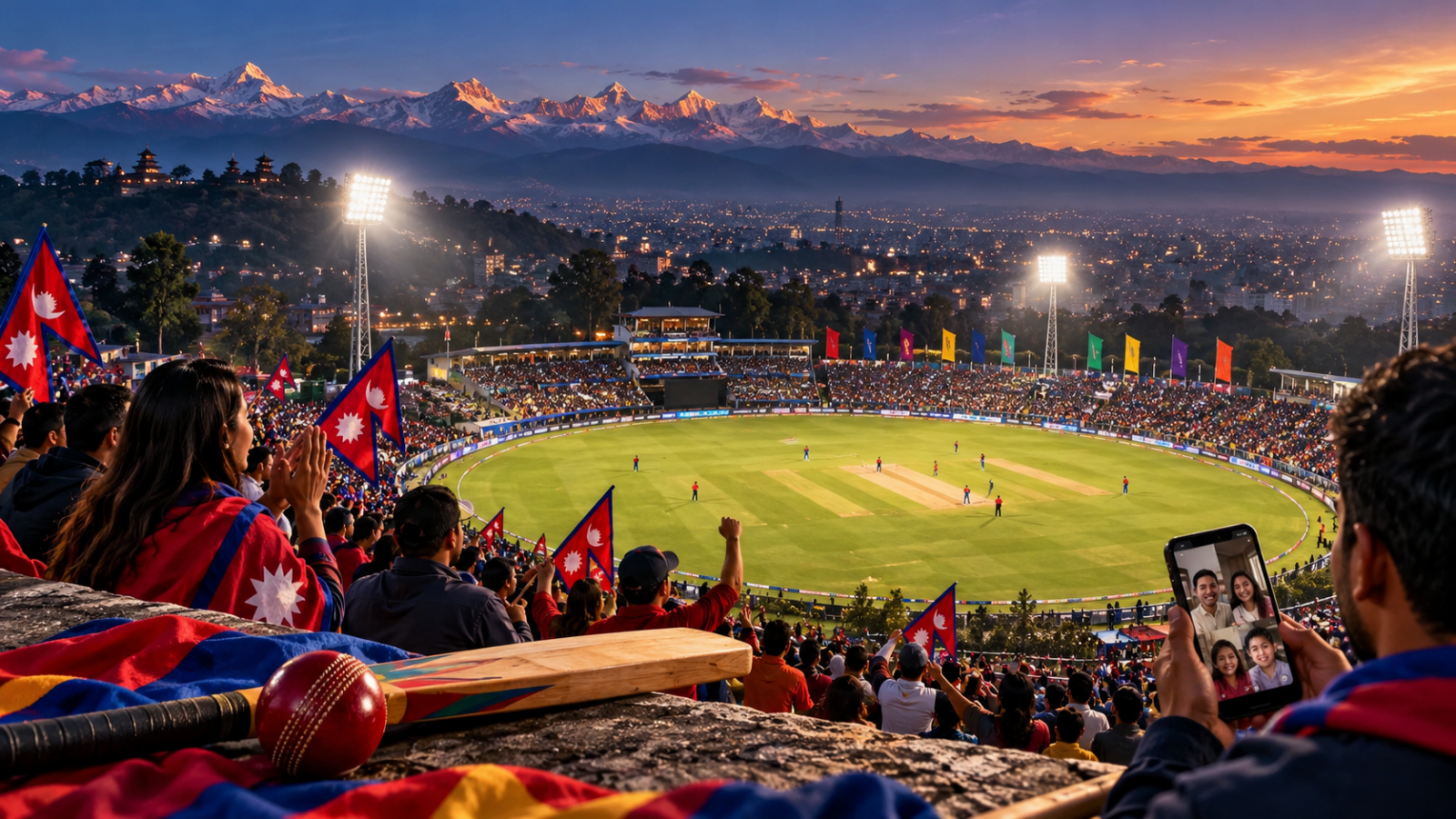
A team name can supply the answer. Karnali, Janakpur, Pokhara or Sudurpaschim carries associations that a league table cannot capture: family origins, a childhood home, a place left for work or study. Supporting a franchise can turn those associations into something shared with other people, even when the supporter lives far from the ground.
That is one way to understand the NPL’s significance. It makes room for local loyalties inside a national sporting experience. But belonging is only the beginning. The league also raises harder questions about who can watch, who benefits from its popularity and what responsibility comes with turning public affection into a commercial product.
The announced third season runs from October 26 to November 21, 2026, at the TU International Cricket Stadium in Kirtipur. Eight franchises are scheduled to compete. As another season approaches, the wider question is what this competition can mean for people who may never hold a bat professionally.
2026 schedule update: On 20 October, the Cricket Association of Nepal announced that the Decision Review System (DRS) would operate throughout the season and revised match times. Double-header days now start at 12:30 and 17:00 Nepal time, while single-match days start at 17:00, replacing the earlier 16:30 evening slot. For supporters abroad, using the revised local match time matters more than assuming an old fixture graphic is still accurate. Radio Nepal reported the official change.
A map people can cheer for
The league’s eight franchises are Biratnagar Kings, Chitwan Rhinos, Janakpur Bolts, Karnali Yaks, Kathmandu Gorkhas, Lumbini Lions, Pokhara Avengers and Sudurpaschim Royals. Their names offer different points of entry into the same competition. A viewer does not need a detailed understanding of bowling variations to recognise a place that matters to them.
This is not evidence that every resident identifies with a franchise, or that a privately owned team speaks for an entire community. Support is voluntary, and affiliations can follow favourite players as readily as geography. Nevertheless, regional names give the competition an emotional vocabulary beyond celebrity signings and results.
Reporting by Sapan News on the league’s social and economic footprint included sports journalist Binod Pandey’s observation that supporters were expressing ownership of their regions through teams. That is an interpretation of the crowds rather than a nationwide survey, but it identifies a useful distinction: people can experience a tournament as a public occasion even when the franchises themselves are businesses.
The challenge is to make that connection more than a name on a shirt. A franchise can earn deeper loyalty through accessible community events, relationships with local clubs and sustained communication outside the season. Regional representation becomes more convincing when people encounter a team in their own area, rather than only on a screen.
A different connection with home
For Nepalis abroad, connection with Nepal can involve a demanding mixture of family responsibilities, practical concerns and news followed across time zones. Sport offers another possibility: something to enjoy together without every conversation becoming a discussion about obligations or problems.
The NPL can provide that opening. A match gives relatives a reason to exchange predictions, discuss a player or disagree about a captain’s decision. These are possibilities the format creates, not measured claims about how all migrant households spend their evenings.
There is particular potential for families whose children are growing up outside Nepal. A team provides a concrete way to introduce a place that might otherwise exist mainly in a parent’s memories. The question “Where is Janakpur?” or “Why do you support Karnali?” can lead naturally into geography, language and family history.
That connection should remain an invitation. Supporting an NPL team is not a test of cultural authenticity, and a child who prefers another sport has not become less Nepali. The value lies in creating an additional route to belonging, rather than another expectation to meet.
Access matters here as much as emotion. Overseas supporters need clear information about legitimate viewing services, territorial availability, prices and match times. A globally interested audience is not the same thing as a globally accessible broadcast. Leagues build trust when watching is straightforward and the information is dependable.
Nepali players as the main attraction
International recruitment can introduce new audiences to a competition. The more durable opportunity is for viewers to keep returning because they care about its Nepali players. Familiarity grows when audiences can follow a career through setbacks and improvement rather than encounter an athlete only during an international tournament.
A league gives that process a regular setting. Domestic players can become protagonists in their own right: the bowler trusted in a difficult over, the batter rebuilding after a poor match, the newcomer trying to establish a place. Such storylines do not need invented hardship or exaggerated claims of discovery.
For younger audiences, this changes what sporting ambition can look like. A successful athlete becomes someone whose preparation and progress can be followed nearby, rather than only an international star performing in another country. Nepal Digest’s feature on Andrew Leonard’s connection with Nepali cricket supporters also explores the importance of continuity in how people follow the game.
Visibility, however, should not become intrusion. Athletes deserve scrutiny of their performances without their private lives becoming public property. Responsible coverage can explain technique, preparation and decision-making while resisting the temptation to manufacture heroes and villains after every result.
The crowd and the people working around it
A sporting event needs more than players. It needs production crews, transport, security, catering, cleaning, design and organisation. Those activities create possible routes into sport for people whose skills have nothing to do with batting or bowling.
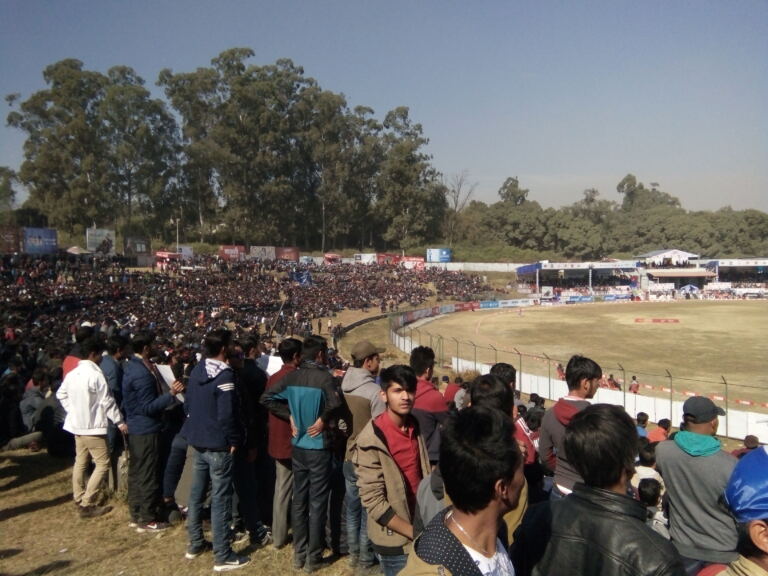
Yet a large crowd is not a reliable measure of how well every nearby business is doing. Sapan News’s reporting described markedly different experiences among flag sellers and food vendors around Kirtipur. Their accounts caution against treating the energy outside a stadium as proof of broadly shared prosperity.
The distinction matters when evaluating claims of a sports economy. Revenue, profit, temporary sales and dependable employment describe different things. Without consistent data, they should not be collapsed into one impressive headline.
A more useful assessment would ask whether suppliers receive clear contracts, workers are paid on time and small traders have understandable rules. Predictable access arrangements and fair treatment can matter more to a vendor than another promotional claim about the tournament’s economic potential. These are standards to examine, not allegations that a particular organiser has breached them.
The same scrutiny should include neighbours. Matchday traffic, noise, waste and pedestrian safety are part of the event’s footprint. A tournament earns local support when the experience of people living and studying near its venue receives attention alongside the experience of those buying tickets.
Belonging needs an affordable entrance
A league promoted through regional pride should consider who finds it difficult to participate. Ticket prices, travel costs, queues, viewing subscriptions and inaccessible facilities can all place distance between a willing supporter and a match.
Commercial income is necessary to stage professional cricket. That does not settle every decision about access. Organisers still need to balance revenue with the long-term value of attracting students, families and supporters with different budgets.
For women and girls, a welcoming experience also depends on ordinary details: safe transport, usable toilets, respectful treatment and a clear route for reporting harassment. These should be practical considerations in event planning rather than decorative statements about inclusion.
A men’s franchise competition also cannot stand in for the whole of Nepali cricket. Girls’ participation, women’s competition and community sport need their own attention and resources. The NPL’s visibility could help widen interest, but the benefit depends on deliberate choices; enthusiasm does not distribute itself automatically.
What remains when the season ends
The strongest argument for the NPL is that it can make cricket a recurring part of public life: something people anticipate, discuss and build relationships around. That cultural value deserves recognition even when it cannot be reduced to a commercial return.
The strongest caution is that emotional investment can make scrutiny harder. Supporters may be encouraged to treat difficult questions about access, spending or community benefit as disloyalty. A successful league should welcome those questions. Affection and accountability can reinforce each other.
Nepal Digest’s earlier analysis of the NPL’s cricket-development potential examines facilities, coaching and lasting player careers. This wider social test sits alongside it: do people feel connected to the competition, and can they participate on reasonable terms?
Some signs will be visible after the final. Teams can maintain community relationships. Supporters abroad can keep following emerging Nepali players. Organisers can explain outcomes clearly and use the quieter months to improve the next experience. None requires pretending that one league can solve Nepal’s larger economic or social challenges.
For a few weeks, eight teams will offer eight different answers to the question of whom to support. The larger opportunity is shared: to create an occasion that feels rooted in Nepal and open to Nepalis wherever they live.
The boundary marks where the playing field ends. It need not mark where the league’s value stops.