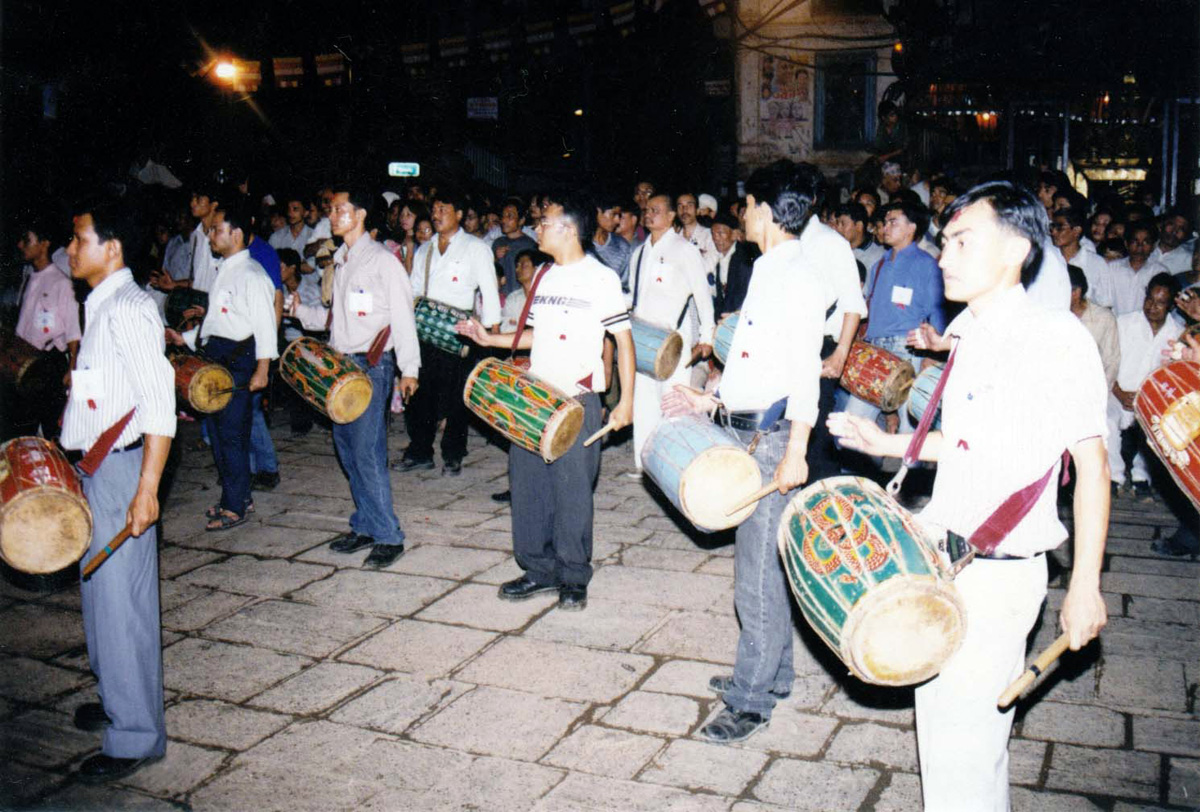
Nepali music can now reach a listener through several routes at once: an official video, a streaming catalogue, a live performance, a record ordered abroad or a song passed between relatives. Each route creates a different kind of connection, from a first encounter to a memory revisited years later.
The wider stage is not explained by a view count alone. Distribution, the work of performers and the choices of audiences all matter. Two documented examples show how access can cross borders, while also showing why availability should not be confused with proof of who is listening.
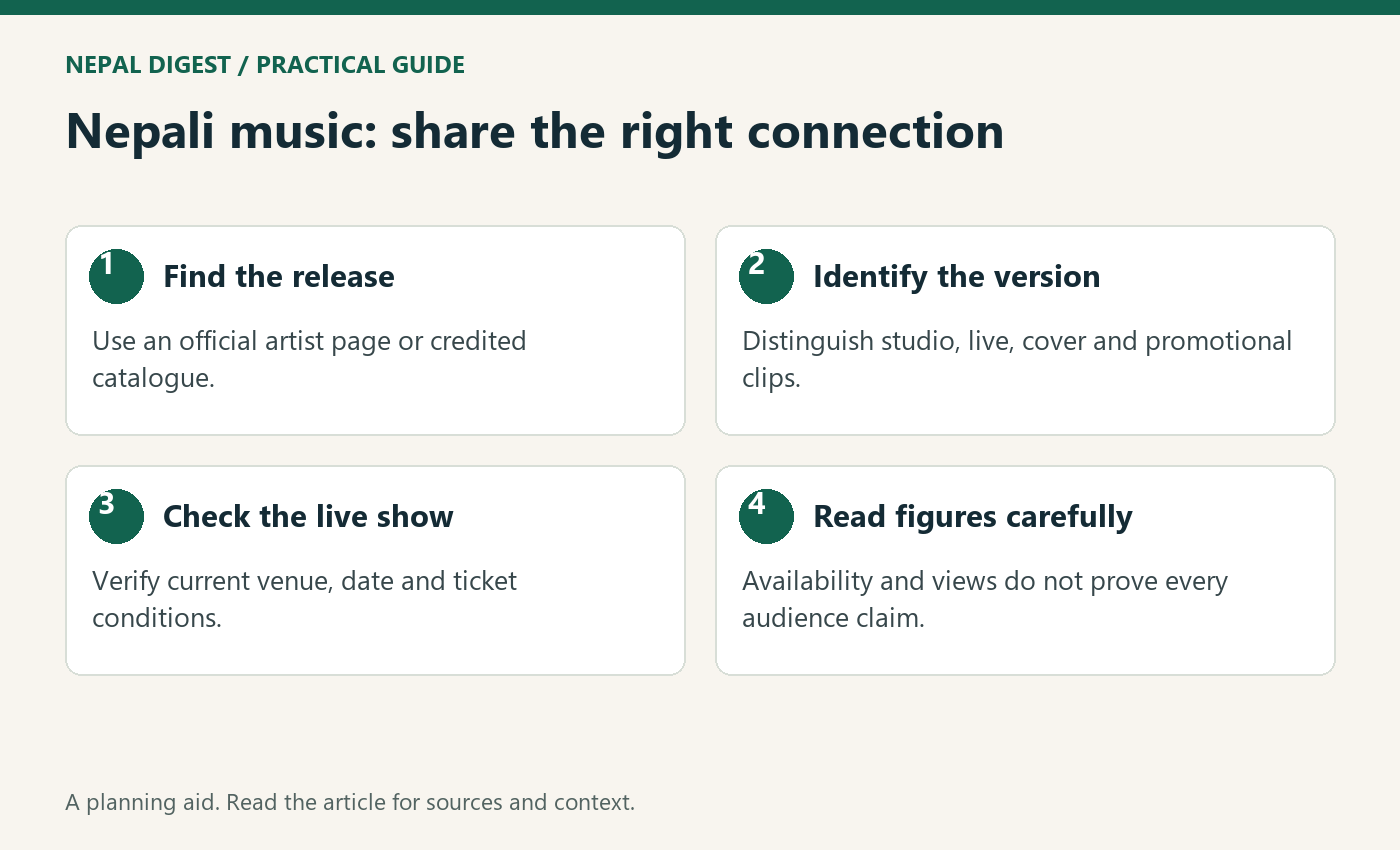
Table of Contents
Nepali music reaches beyond a single distribution route
Bipul Chettri’s official website brings together music, performance information and merchandise. Its presentation of the album Maya includes routes for orders or collection associated with the United States, India and Nepal. That is a concrete example of music being offered through more than one market and more than one format.
The Apple Music artist page for Sajjan Raj Vaidya provides another kind of access: a digital catalogue listing releases such as Chitthi Bhitra and Sasto Mutu. A catalogue helps a reader locate a recording and identify the artist’s work without relying on an uncredited repost.
These examples establish available routes, not a complete measure of international demand. To claim that listeners in a particular country have grown by a certain amount would require the relevant platform or ticketing data, with a period and a definition.
Language, location and nationality are different questions
Nepali music is not confined to one listener profile. A song in Nepali can be heard by someone in Nepal, a migrant worker, a person raised abroad or a listener learning the language. Those possibilities should not be collapsed into a claim that everyone hears the song in the same way.
Some people follow lyrics closely; others first connect with a melody, a performance or a memory associated with the recording. A family conversation about a song can reveal those differences without turning musical taste into a test of belonging.
The same care is useful in describing artists. Place of residence, citizenship, language and cultural influence are separate facts. Coverage should establish them accurately instead of assuming one from another or treating a cross-border career as an exception that needs to be explained away.
A live show is a different relationship with the audience
A recording can be heard repeatedly in private. A performance brings people together at a particular time and place, with arrangements for entry, sound, travel and the running of the event. Those practical details help determine whether the audience has a good experience.
For a planned concert, check the artist’s and organiser’s current information rather than an undated poster. Confirm the city, venue, date, ticket conditions and any stated age or access requirements before making travel plans.
Nepal Digest’s guide to concert ticket costs explains why ticket receipts, event expenses and profit are different things. It is a useful companion to the excitement of seeing Nepali music on a larger stage.
Give the recording a clear identity when sharing it
Sharing an official link makes it easier for another listener to find the intended version. A live performance, studio recording, cover and short promotional clip may all carry a similar song title while offering a different piece of work.
Identify the artist and the version where possible. If you are recommending a particular performance, say why: the arrangement, the vocal delivery, an instrumental passage or the setting. A specific recommendation gives the next listener something to notice.
Avoid attaching a guessed translation or an invented account of the song’s origin. If a line is unclear, use a credited lyric source or discuss the uncertainty. A confident but inaccurate explanation can travel alongside a song as easily as an accurate one.
Shared listening can connect generations without assigning tastes
A household does not need one approved definition of Nepali music. Someone may prefer an older film song, another an acoustic release and another a track discovered through a short video. The useful starting point is curiosity about the choice rather than a judgement about the generation making it.
Try a small listening session in which each person selects one recording and explains a detail. Keep room for someone to dislike a track without dismissing the person who chose it. The aim is to learn what a song carries for another listener.
Make a small listening record together. Write the artist, the song, the version and the official link, then add one sentence explaining the choice. A relative can contribute a memory, a younger listener can identify an instrument or production detail, and someone learning Nepali can choose a phrase to discuss. Keep the exercise short enough that everybody gets a turn. On the next occasion, return to one earlier selection before adding another. Over time, the record becomes a family account of Nepali music that preserves individual preferences instead of assigning one taste to an entire generation.
Wider reach should be described with better evidence
To assess a claim about growth, ask what is being counted. Followers are not the same as listeners, views are not necessarily unique people and a sold ticket does not explain every cost of a tour. Meaningful comparison requires like-for-like records.
For an artist story, interviews and official releases can explain intentions and creative decisions. For commercial performance, use the appropriate records and attribute the figures. For audience meaning, allow listeners to describe their own experience instead of assuming it from their location.
Nepali music can create a shared space across distance without needing every song to set a statistical record. Its wider possibilities are visible in the ways people can discover, purchase, attend and share it. The task for coverage is to make those connections understandable while keeping claims proportionate to the evidence.