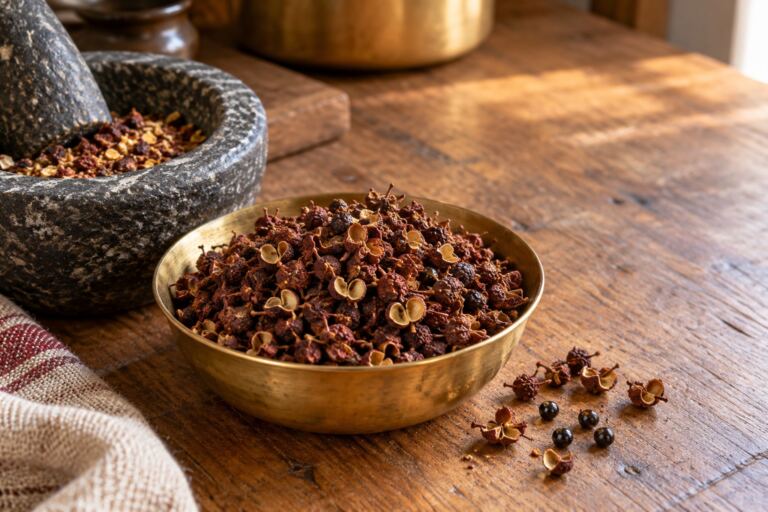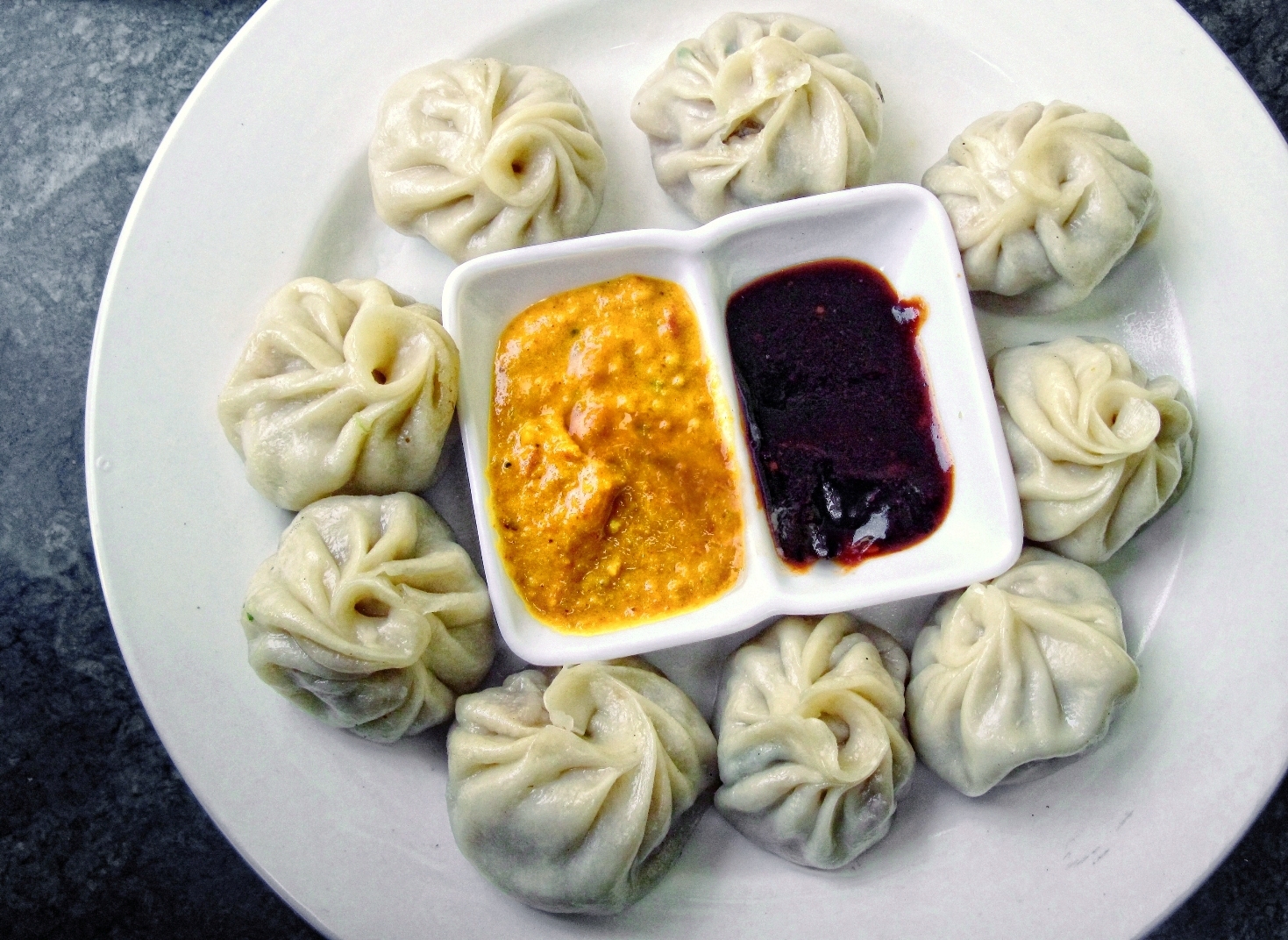
Regional cuisines return to the restaurant menu most meaningfully when the kitchen can explain the particular food it serves. A region or community name is a starting point, not a complete recipe. Ingredients, household practice, season and the purpose of a meal can all shape what arrives on the table.
For a restaurant, the challenge is to turn that complexity into an understandable and repeatable offer. For a diner, it is to remain curious without expecting one meal to summarise an entire community. The questions below help both sides make the encounter more useful.
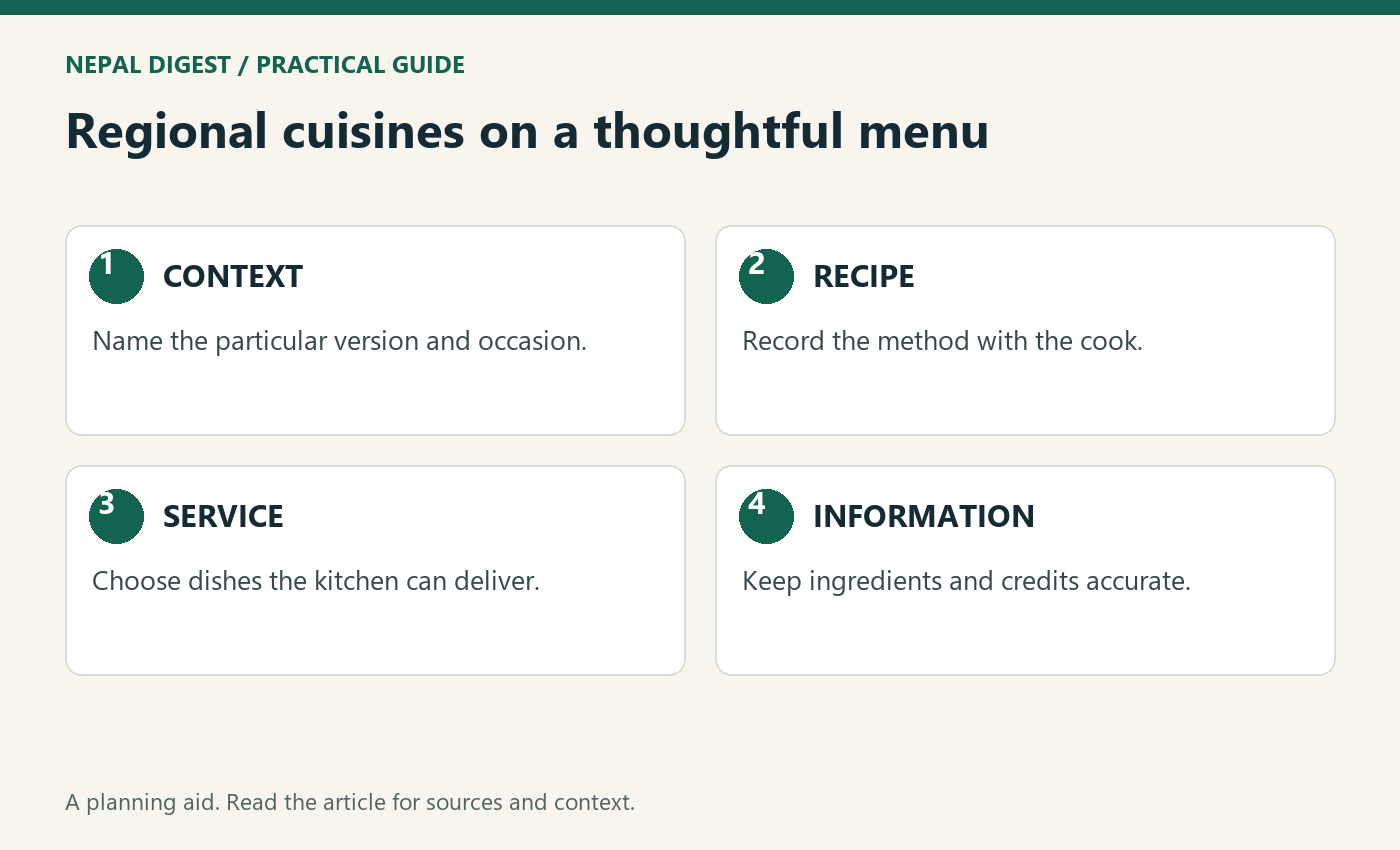
Table of Contents
Regional cuisines need particular examples
The Nepal Tourism Board’s account of FoodTreX Kathmandu records a food-travel event held in May 2019. Its programme included a food trail and chefs presenting different preparations, among them bhakka from eastern Nepal and a Sherpa dish described as rildhuk. The dated account provides examples of food being introduced through explanation and demonstration.
It is not evidence of a current nationwide restaurant trend or a guarantee that a named venue still serves the same menu. The useful point is the method: introduce a particular preparation, identify who made it and explain the ingredients and technique rather than rely only on a broad regional label.
A menu can use the same discipline in a small space. Name the dish, give a short explanation and identify the version being served. If the kitchen has adapted it, describe the adaptation honestly. A clear account helps diners understand the food without demanding a lengthy lecture before ordering.
Separate a festival preparation from an everyday dish
The Tourism Board’s Yomari Punhi overview connects yomari with a Newar festival context. Such a connection is a reminder that food can carry a calendar, a household memory or a social purpose as well as a flavour. A restaurant description should recognise that context when it is relevant.
Ask the person teaching a preparation when and why it is usually made in their experience. Record the community and place they are describing. Avoid turning one account into a claim that every household follows the same practice.
Serving a festival-associated food at another time may be a deliberate restaurant choice, but it should not erase the original association. A short note can explain the context while making clear that the customer is encountering a restaurant preparation rather than participating in the festival itself.
Build the recipe record with the cook
A useful kitchen record includes ingredients, quantities, preparation stages, serving size and the signs that tell the cook a stage is complete. It should be prepared with the person who knows the method, rather than reconstructed later from a photograph of the finished plate.
Record acceptable substitutions and the changes they produce. If an ingredient is seasonal or difficult to obtain, decide whether to pause the dish or offer an explicitly described variation. Quietly replacing an important ingredient can undermine both the food and the story used to sell it.
Agree how knowledge will be credited and used. A paid consultation, an ongoing collaboration and a family member sharing a method are different arrangements. Discuss permission for written recipes, photographs and promotional material before those materials are produced.
Choose a menu the kitchen can deliver
Regional cuisines do not need to be represented by a very long menu. A smaller selection prepared consistently can give a diner a clearer introduction. Choose dishes that fit the kitchen’s equipment, preparation time and reliable supply of ingredients.
Test the service sequence as well as the recipe. How much can be prepared in advance, what must be finished to order and which accompaniments need to arrive together? A dish that works in a quiet demonstration may need a different service plan during a busy meal.
Train staff with the actual food in front of them. Ask them to describe its main ingredients, texture, serving style and the questions they cannot answer without checking. Confidence should come from knowing the preparation, rather than from memorising an exaggerated cultural story.
Ingredient information must be dependable
A customer with a dietary restriction needs an answer about the actual recipe and preparation process. Do not assume that a dish is suitable because of its regional name or because another restaurant makes it differently. Check with the kitchen when uncertain.
Keep the description current when ingredients or methods change. The person taking the order should know about a substitution before the customer asks. If the kitchen cannot meet a particular requirement, explain that clearly and help the diner choose an appropriate alternative where possible.
The same care applies to origin claims. If the restaurant identifies a grain, vegetable or spice as coming from a particular place, keep enough supplier information to support the description. A broad claim about local sourcing should not conceal uncertainty about a key ingredient.
A diner can ask better questions
Begin with what will help you enjoy the meal. Is the dish intended to be shared? Which accompaniment is part of the preparation? What flavour or texture should you expect? These questions are practical and give the server a clear way to help.
If interested in the background, ask which version the kitchen serves or how the cook learned it. Accept that a busy service may not allow a long conversation. A separately arranged meal, workshop or discussion may offer more space for detailed questions.
When sharing the experience, distinguish the restaurant’s explanation from your own response. Describe one version you tasted at a particular place. Avoid declaring that a single dish proves what all regional cuisines are like or that one restaurant is the final authority on a community’s food.
Make the relationship last beyond a special event
For regional cuisines to remain on a menu, the work needs to be viable. Review ingredient availability, preparation time, customer understanding and repeat orders. A launch event can create attention, but ordinary service reveals whether the kitchen can sustain the offer.
Invite the contributing cook or adviser to review changes when appropriate. If the restaurant’s version evolves, update the description and credit rather than allowing an old story to remain attached to a substantially different preparation.
A thoughtful menu gives regional cuisines room to be specific, varied and contemporary. Nepal Digest’s articles on food reaching new audiences and Kathmandu street food explore related encounters between everyday cooking and a wider public.