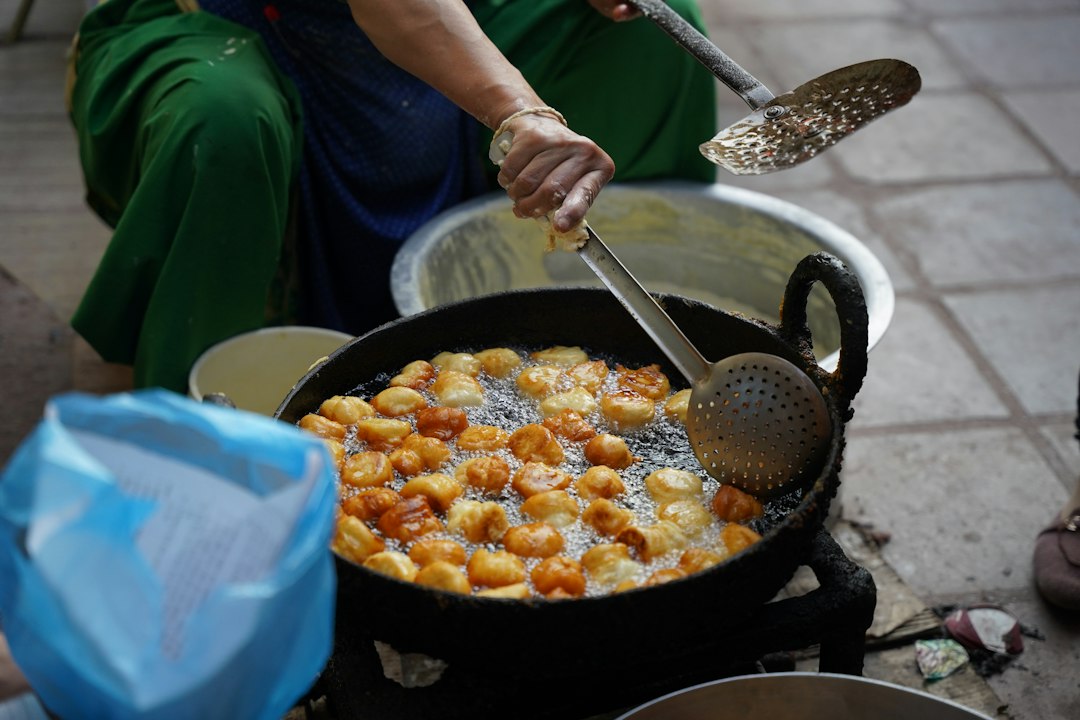
Street food in Kathmandu has never needed permission to be popular. Students eat it between classes, office workers stop beside carts on the way home, and whole neighbourhoods develop reputations around one momo shop, one sekuwa stand or one plate of chatpate. The question for Kathmandu is how to value street food as part of the city’s identity while improving the conditions in which it is prepared and sold.
That confidence deserves attention—but not romanticism. Street food can be affordable, inventive and deeply local while still facing serious problems with water, waste, storage and hygiene. Kathmandu’s next food story is therefore not simply about celebrating the street. It is about making the street safer without destroying the economic life that depends on it.
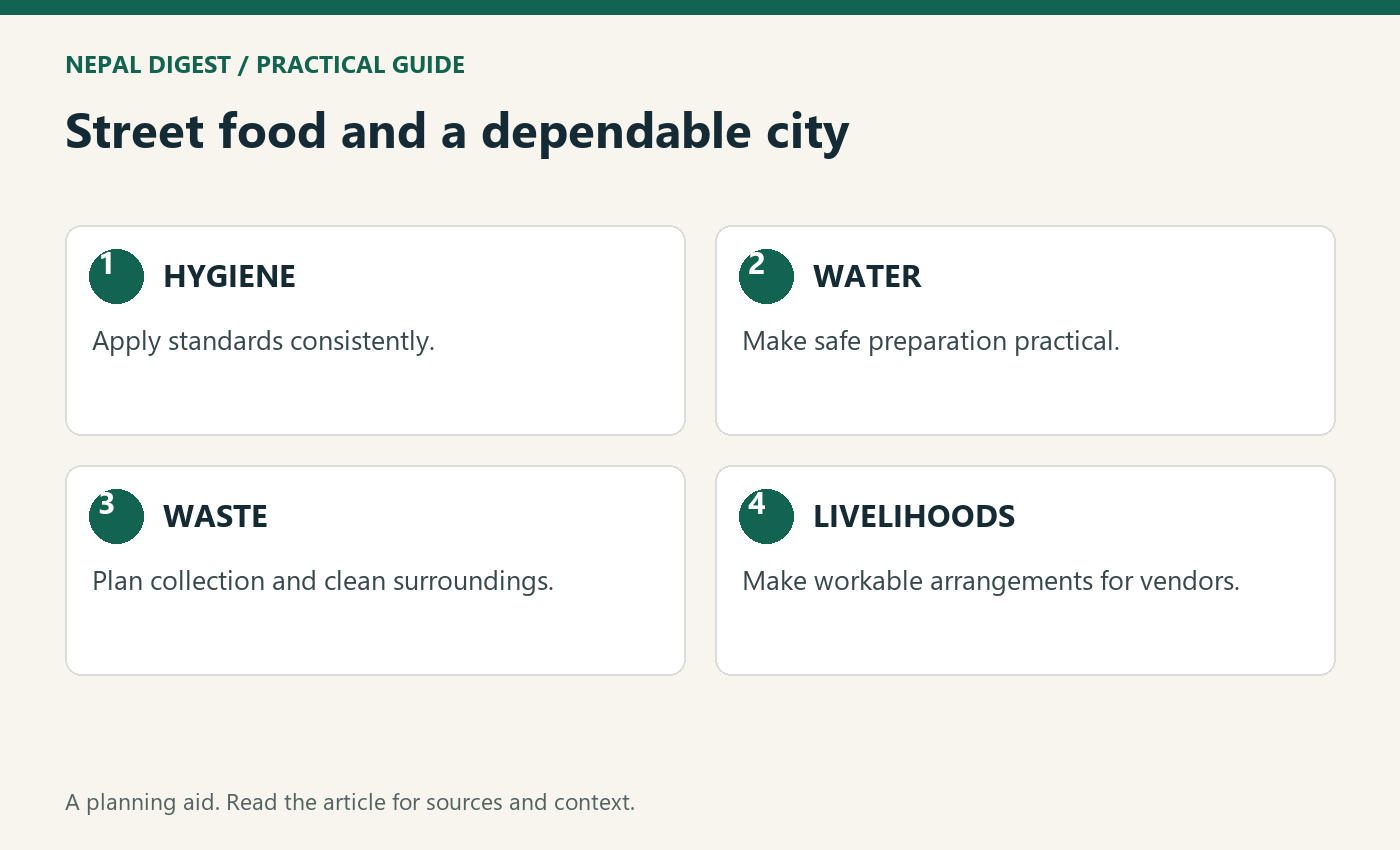
Table of Contents
Street food is part of the city’s everyday life
Kathmandu’s food culture does not belong only to restaurants.
Momo steam rises from narrow kitchens and roadside counters. Chatpate is mixed to order in metal bowls. Panipuri vendors build quick queues around school gates and commercial streets. Sekuwa smoke marks evening corners. Tea shops feed commuters long before formal cafés open.
This food works because it fits the rhythm of the city. It is fast, relatively inexpensive and social. A street snack does not ask the customer for a reservation or an hour of free time. It meets people where they already are.
Why Affordability Matters
The economics are central.
For many workers and students, street food is not an occasional cultural experience. It is part of the daily food budget.
A city can celebrate high-end restaurants while forgetting that much of its population eats under very different financial constraints. Vendors survive because they offer small portions, flexible hours and prices that formal dining spaces often cannot match.
That makes street food a form of urban infrastructure.
The comparison is visible in other parts of Nepal Digest’s food coverage, including the story of Santosh Shah’s journey through Nepali cuisine. Fine dining can elevate national food internationally, while everyday vendors keep the cuisine affordable and continuously in use at home. Both matter, but they serve different parts of the food ecosystem.
The New Confidence Is Cultural
Kathmandu diners increasingly recognise that local food does not become more valuable simply because it moves indoors.
A plate of momo can be culturally important without being plated like tasting-menu cuisine. A roadside snack can carry migration, regional ingredients and neighbourhood memory without needing a formal restaurant narrative.
This is part of a wider shift in Nepali food culture: local foods are being photographed, reviewed, discussed and shared with the same attention once reserved for international restaurant trends.
Nepal Digest’s feature on local food finding a new audience traces the same movement—familiar dishes becoming visible again not because they are new, but because younger consumers are looking at them differently.
But Popularity Does Not Solve Hygiene
The weak point is obvious.
Street vending often happens where access to clean running water, refrigeration, drainage and waste collection is inconsistent. That creates risks that cannot be solved by nostalgia.
During the monsoon, the problem becomes sharper. Contaminated water, stagnant drainage and exposed food increase the danger of food- and water-borne illness.
Public-health warnings in Kathmandu have specifically highlighted open display, repeated use of cooking oil, poor sanitation and contaminated water as recurring concerns around outdoor food.
These are practical failures, not arguments against street food itself.
What Recent Inspections Show
The problem extends beyond informal carts.
Government inspection figures for fiscal year 2025–26 showed that 59 of 261 hotels and restaurants inspected—mostly in Kathmandu—were found selling unhygienic food. Those businesses were fined a combined Rs4.2 million.
That matters because food safety is often discussed as though informality alone were the problem. It is not.
A licensed restaurant can fail hygiene standards. A street vendor can operate carefully. The important distinction is not indoor versus outdoor; it is whether food is being handled safely.
Regulation Is Becoming More Visible
Kathmandu Metropolitan City has begun treating food safety more systematically.
A municipal report describes the city and the Department of Food Technology and Quality Control agreeing to conduct joint monitoring, sample collection and inspection with support from a mobile food laboratory. The arrangement is designed to make enforcement more evidence-based and improve coordination between municipal and national food-safety authorities.
That is a better direction than occasional crackdowns. Food safety requires routine systems: testing, licensing, education, waste management and access to clean water.
The Vendor’s Side of the Problem
Regulation can also fail when it treats vendors only as obstacles to urban order.
Many street sellers operate with tiny margins. A requirement that is easy for a restaurant chain to meet may be impossible for someone working from a cart unless the city provides basic infrastructure.
If authorities want safer street food, they need more than fines.
Designated vending zones, clean water points, waste collection, drainage, food-handling training and realistic licensing can raise standards without eliminating livelihoods.
That is the second-order effect that matters. A city that removes vendors without creating legal alternatives may simply push them into less visible and less sanitary spaces.
Street Food as a Tourism Asset
Kathmandu also has an opportunity here.
Travellers increasingly look for food experiences that feel local rather than generic. Street food is naturally suited to that demand—but only if safety and trust improve.
A visitor who becomes sick does not distinguish between one careless vendor and the city’s entire food culture. Reputation travels faster than regulation.
For tourism, hygiene is therefore not separate from authenticity. It protects it.
What Should Not Be Standardised Away
The danger on the other side is excessive uniformity.
Street food is valuable partly because it is flexible. Recipes vary. Portions change. Vendors experiment. Regional tastes enter the city through migration.
Formalising the sector should not mean forcing every cart to look like a franchise.
The goal should be to standardise safety while allowing food culture to remain diverse.
A Better Definition of Progress
Kathmandu’s food scene is often measured by the arrival of international chains, new cafés or expensive restaurants.
Those are visible signs of change, but they are not the whole picture.
A stronger food city is also one where a student can buy a safe, affordable snack; where a vendor can earn a living without operating in constant fear of eviction; where local dishes are respected; and where hygiene enforcement applies consistently from street cart to hotel kitchen.
Kathmandu does not need to turn its street food into restaurant food. It needs to make street food safer, cleaner and secure enough that the city can value what it already has. The momo counter, tea stall and chatpate cart are not leftovers from an undeveloped food culture. They are part of the culture itself.