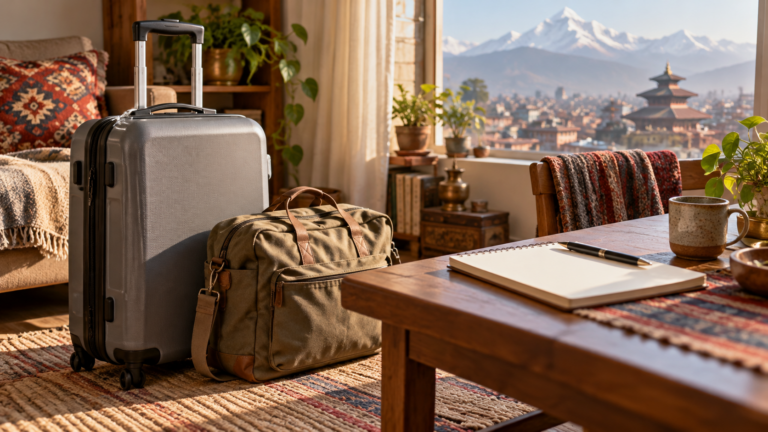
Everest may be Nepal’s most recognisable landmark, but it should not become the border of a traveller’s imagination. The country changes dramatically from east to west and from the plains to the middle hills. Historic trade towns look across terraced valleys. Wetlands shelter migratory birds. Pilgrimage sites bring multiple countries and faiths into conversation. In the far west, lakes and forests remain distant from the busiest visitor routes.
The ten places below are not “hidden” from the people who live there, and several are well known within Nepal. They are remarkable because each offers a different way to understand the country. Travel slowly, verify road and permit conditions, and give local communities more than a hurried photo stop.
Table of Contents
1. Bandipur: a ridge town made for walking
Bandipur sits above the Marsyangdi River corridor between Kathmandu and Pokhara. Once connected with the Tibet–India trade route, the town is known for its pedestrian bazaar, Newa architecture, nearby Magar and Gurung communities, temples, caves and wide Himalayan views.
Its value lies in pace. Spend a night after day visitors leave. Walk beyond the central street toward farms and viewpoints, visit Siddha Gufa with an appropriate guide, and pay attention to how restored buildings serve new tourism businesses. Bandipur offers a useful lesson in heritage economics: preservation works best when residents can continue to live and earn within the town.
Allow: two nights. Good for: architecture, short walks, mountain views and a break between major cities.
2. Tansen: history on the slopes of Palpa
Tansen’s steep lanes, old bazaar and Newa-influenced houses create a townscape distinct from Pokhara or Kathmandu. The surrounding Palpa hills are strongly connected with Magar culture, while the town’s history reflects its role as an administrative and trading centre.
Climb to Shreenagar Hill for the landscape, explore craft traditions associated with Palpa, and use Tansen as a base for Rani Mahal and nearby villages. The pleasure is not a checklist of monuments but the texture of an inhabited hill town: schoolchildren on stairways, small shops opening onto carved facades, and views appearing between roofs.
Allow: two or three nights. Good for: urban heritage, hill scenery, crafts and overland travel between Pokhara and Lumbini.
3. Lumbini: a global sacred landscape
Lumbini is revered as the birthplace of Siddhartha Gautama, the historical Buddha. The Maya Devi Temple, archaeological remains and Ashoka Pillar anchor the Sacred Garden, while monasteries built by Buddhist communities from many countries extend across the wider master-plan area.
Do not reduce Lumbini to a quick photograph at the marker stone. Arrive early, walk or cycle between monastic zones, and allow silence into the visit. The contrast between architectural traditions—from Theravada to Mahayana and Vajrayana communities—shows how a site in Nepal belongs to a global religious geography.
Allow: two nights. Good for: pilgrimage, archaeology, architecture and contemplative travel.
4. Janakpurdham: Mithila colour and living devotion
Janakpurdham is one of the great cultural centres of the eastern Tarai and a major pilgrimage city associated with Sita and the Ramayana tradition. Janaki Mandir dominates the visual imagination, but the city’s ponds, lanes, ritual calendar and Mithila artistic heritage deserve equal attention.
Look beyond the temple facade to painting, textiles, food and the Maithili language. Festivals such as Vivah Panchami and Chhath bring intense crowds and extraordinary public devotion; they also require careful planning and respect for worshippers. A visit can be paired with community-based experiences in the surrounding Madhesh landscape.
Allow: two nights. Good for: pilgrimage, Mithila art, regional food and Tarai city life.
5. Rara Lake: distance as part of the experience
At roughly 2,990 metres in north-western Nepal, Rara is the country’s largest lake, surrounded by conifer forest and high ridges. Its blue surface changes with weather and light, while nearby viewpoints reveal the scale of Rara National Park.
Reaching Rara requires more planning than visiting the central tourism corridor. Flights and roads are vulnerable to weather and disruption, services are limited, and cold conditions can arrive quickly. That difficulty is not a reason to rush. Walk the shore, learn about the surrounding communities and carry out waste that local systems cannot manage.
Allow: at least four or five days including connections and buffer time. Good for: remote landscapes, hiking, birdlife and travellers comfortable with simple facilities.
6. Bardiya National Park: the quieter western jungle
Bardiya protects sal forest, grassland and river habitat in western Nepal. It is home to Bengal tigers, one-horned rhinoceroses, wild elephants, gharials and rich birdlife. The Karnali river system adds opportunities to understand freshwater wildlife and the connections between park, buffer zone and surrounding settlements.
Wildlife sightings are never guaranteed. Choose trained naturalists, follow distance rules and reject operators that pressure animals. Make time for the cultures of Tharu communities around the park, ensuring visits and performances are community-led rather than staged without local control.
Allow: three or four nights. Good for: naturalist-led walks, jeep safaris, birdwatching and a less crowded alternative to Nepal’s busiest park.
7. Ilam: tea hills and eastern horizons
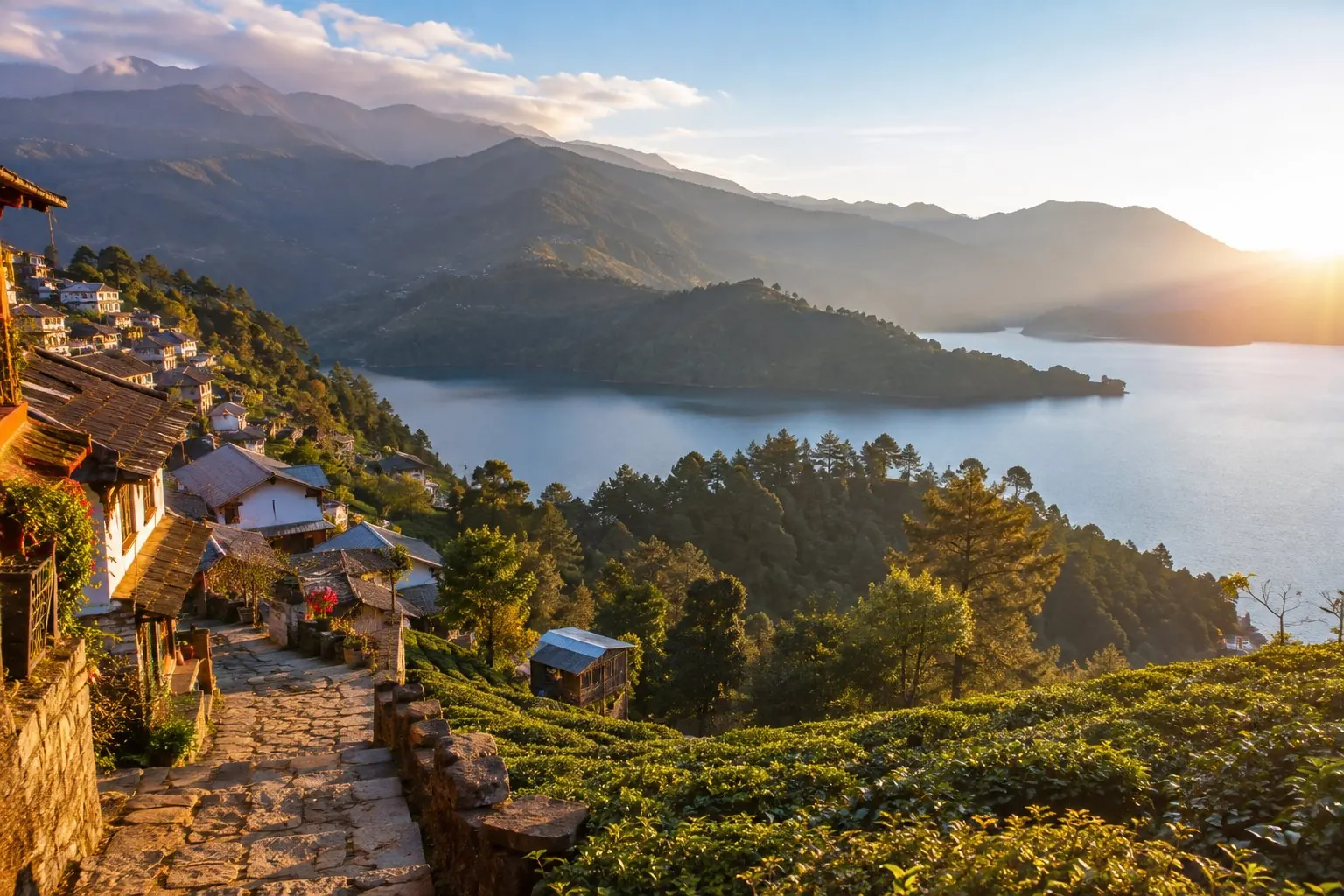
Ilam’s green slopes have become visual shorthand for Nepali tea. The district offers more than a plantation photograph: small towns, forests, diverse communities and routes toward high viewpoints such as Sandakpur shape a broader eastern journey.
Visit a tea producer when possible and ask how leaves are plucked, withered, rolled, oxidised and dried. Buy from businesses that can explain origin and processing. Weather can obscure the famous views, but mist moving through tea gardens creates its own atmosphere.
Allow: three nights or longer for outlying areas. Good for: tea, gentle landscapes, eastern food and slow road travel.
8. Koshi Tappu: Nepal at the scale of wings and water
Koshi Tappu Wildlife Reserve protects wetlands, grasslands and riverine habitat in the eastern plains. It is especially important for birds and for Nepal’s wild water buffalo, known as arna. The Koshi river system also supports fish, reptiles and, in the wider river, endangered Gangetic dolphins.
Visit with a knowledgeable bird or wildlife guide, particularly during the cooler migratory season. A quiet morning with binoculars can reveal more than a rushed vehicle tour. Wetlands may look less dramatic than a mountain skyline, but they are among the country’s most productive and threatened ecosystems.
Allow: two nights. Good for: birdwatching, wetlands, photography and pairing with an eastern Nepal itinerary.
9. Gorkha: a hill of national history
Gorkha is closely associated with the formation of modern Nepal and with King Prithvi Narayan Shah. Gorkha Durbar occupies a commanding ridge above the bazaar, combining palace, fortress and sacred space with expansive views toward the surrounding hills and Himalaya.
The climb to the Durbar is part of the visit. Go slowly, observe religious etiquette and leave time for the museum and old bazaar. Gorkha also opens routes toward the Manaslu region, though trekking there involves separate planning and permit requirements.
Allow: one or two nights. Good for: political history, architecture, hill walking and breaking the Kathmandu–Pokhara journey.
10. Khaptad: meadow, forest and spiritual retreat
Khaptad National Park in far-western Nepal is known for rolling highland meadows, forest, seasonal flowers and sites associated with Khaptad Baba. The landscape feels different from both the high Himalayan trekking corridors and the tropical parks of the plains.
Access requires time and local information. Weather, road conditions and limited accommodation can reshape the route, so confirm arrangements before departure and carry appropriate equipment. The reward is not a single landmark but a pattern of grassland, forest, silence and pilgrimage.
Allow: five days or more including access. Good for: trekking, spiritual travel, botanical interest and experienced independent travellers working with local guidance.
Choosing between the ten
The most useful question is not which of these places is “best,” but which type of journey you actually want. Bandipur, Tansen and Gorkha reward travellers who enjoy walking through inhabited towns where architecture, food and landscape sit together. Lumbini and Janakpurdham make more sense for people interested in pilgrimage, ritual and the relationship between religion and public space. Bardiya and Koshi Tappu belong to a different rhythm entirely, where patience matters more than sightseeing lists because wildlife does not appear on schedule.
Rara and Khaptad require the greatest tolerance for uncertainty. Their appeal is inseparable from distance, thinner infrastructure and the possibility that weather changes the plan. Travellers who become anxious when transport is delayed or accommodation is simple may enjoy a different region more. Remote does not automatically mean better; it simply demands a different style of travel.
Three regional itineraries that make more sense than one grand circuit
A central-western journey can connect Kathmandu with Gorkha, Bandipur, Pokhara, Tansen and Lumbini over roughly ten to fourteen days. The route works because each place adds something different without requiring extreme logistics. Gorkha introduces national history, Bandipur offers a slower hill-town stay, Tansen adds Palpa’s urban and craft traditions, and Lumbini shifts the journey into the plains and a global religious landscape.
An eastern itinerary can combine Janakpurdham, Koshi Tappu and Ilam. This route reveals a Nepal far removed from the common mountain-only image: Mithila culture, wetlands, tea landscapes and the multilingual plains and hills of the east. Travel times can still be long, so adding fewer stops often produces a better trip than trying to include every nearby attraction.
The far west deserves its own journey. Bardiya can be combined with Khaptad or, with more time and careful logistics, Rara. These places are spread widely enough that travellers should think in terms of days rather than quick transfers. The reward is a very different sense of Nepal’s scale and regional diversity, particularly for visitors whose previous experience has been limited to Kathmandu, Pokhara and the Everest or Annapurna corridors.
Transport is part of the experience
Nepal’s road map can make distances look short. Travel time is shaped by road condition, traffic, weather, landslides, construction and the number of mountain curves between two points. A journey that appears modest in kilometres can occupy most of a day. Travellers should therefore build itineraries around realistic travel time rather than map distance alone.
Domestic flights can reduce some long overland journeys, especially toward remote western regions, but they add another uncertainty: weather. Mountain and regional airports may experience delays or cancellations even when conditions appear acceptable in Kathmandu. The most resilient itinerary treats flights as useful tools rather than guarantees and keeps buffer time around important international connections.
Season changes each destination differently
Autumn is popular because skies are often clear after the monsoon and mountain views can be excellent. That same popularity increases demand for transport and rooms in well-known towns. Winter can be very rewarding in the plains, particularly for wildlife and birdwatching, while higher places such as Rara and Khaptad may become much colder and more logistically demanding.
Spring brings warmer days and flowers to many hill areas, though haze can reduce distant mountain views. Monsoon travel transforms the landscape into deep green and can make places feel quieter, but roads are more vulnerable to landslides and flooding. The right season therefore depends on the destination rather than a single rule for the whole country.
Altitude is not limited to famous treks
Travellers sometimes associate altitude risk only with Everest Base Camp or Annapurna Circuit. Rara sits close to 3,000 metres, and routes around Khaptad or high eastern viewpoints can involve substantial elevation. Even without a technical trek, some visitors may notice headache, fatigue or poor sleep after arriving quickly from lower ground.
Move gradually where possible, stay hydrated and avoid treating mild symptoms as something to “push through” automatically. Anyone with significant symptoms or medical conditions should use appropriate professional advice rather than relying on a travel article. Remote travel is more enjoyable when the body has enough time to adapt.
Respect religious places as working institutions
Lumbini, Janakpurdham and Gorkha are not museum landscapes. People pray, perform rituals, make offerings and visit for reasons that have nothing to do with tourism. Dress, photography and movement should reflect that reality. A visitor should not block worshippers for a photograph or assume every ritual is public simply because it occurs outdoors.
Asking before photographing people is especially important during festivals. Crowds can create the false impression that individual consent no longer matters. The best photographs often come from stepping back enough to understand the event rather than treating proximity as the only measure of access.
Wildlife tourism needs patience and boundaries
Bardiya and Koshi Tappu can produce extraordinary encounters, but the absence of a tiger, rhino, dolphin or rare bird does not mean the visit failed. Wildlife tourism becomes unhealthy when guides feel pressured to chase animals because visitors expect a guaranteed sighting after paying for a tour.
Choose guides who explain habitat and behaviour, not only the possibility of a dramatic encounter. A morning identifying tracks, river movement and bird calls can be more informative than a hurried search for one famous species. Good wildlife tourism leaves animals enough space to continue behaving naturally.
Community visits should not become performances on demand
Many itineraries include village visits or cultural programmes. These can be valuable when communities choose how the encounter works and receive fair payment. They become uncomfortable when visitors expect people to perform identity on command or when an outside operator captures most of the income.
Ask who organised the activity, who is paid and whether photography is welcomed. A community is not an attraction in the same sense as a viewpoint or cave. Hospitality is strongest when the relationship is reciprocal and visitors understand they are entering somebody else’s everyday environment.
Spend in ways that remain local
Tourism distributes more value when visitors buy meals, crafts, guide services and accommodation from locally rooted businesses rather than purchasing every element through an outside intermediary. This does not mean avoiding larger hotels or national operators completely; they may provide safety, standards and logistics that smaller businesses cannot.
The goal is balance. A traveller can use a reputable national operator and still eat locally, hire local specialists, buy regional products and stay long enough for spending to reach more than one business. One extra night often contributes more to a destination than one extra photograph.
Carry waste farther than local systems can
Remote destinations often have the least capacity to process the waste visitors bring. Plastic bottles, snack packaging, batteries and hygiene products can remain in places where collection or recycling barely exists. Travellers should assume that whatever they carry into a remote region may need to be carried back out.
This is particularly important around lakes, national parks and pilgrimage routes. “Leave no trace” is not a slogan about aesthetics; it recognises that tourism adds material pressure to places whose infrastructure was designed for much smaller populations.
Accessibility varies sharply
Historic hill towns are visually beautiful and physically demanding. Tansen, Gorkha and Bandipur involve slopes, stairs and uneven stone surfaces. Lumbini is flatter but spread over a large area, which can create distance challenges for older visitors or people with limited mobility.
Travellers who need accessible transport, step-free rooms or other accommodations should ask properties and operators for specific details rather than relying on broad labels such as “accessible.” Infrastructure can vary significantly even within the same destination.
Budget for uncertainty, not only bookings
Remote trips need a small financial margin for delays, changed vehicles, extra meals or an unplanned hotel night. This does not mean travellers should expect problems constantly. It means the itinerary remains less stressful when one disruption does not immediately become a financial emergency.
Cash may still be useful outside major urban centres, particularly for small purchases or when digital payment systems depend on weak connectivity. Carrying a reasonable amount securely is more practical than assuming every remote business can accept the same payment methods available in Kathmandu.
How to connect the places without racing
Few travellers should attempt all ten in one trip, and none should treat the list as a challenge to complete quickly. Build a regional route instead. Bandipur, Gorkha, Tansen and Lumbini can form a central-western overland journey. Ilam, Janakpurdham and Koshi Tappu reveal the east and Tarai. Bardiya, Rara and Khaptad deserve a separate western itinerary with generous transport buffers.
Season changes the experience. Autumn often offers clear skies and busy trails. Winter brings good wildlife viewing in the plains but cold at altitude. Spring adds flowers and warmer mountain days. Monsoon travel can be lush and rewarding, yet landslides, floods, leeches and flight disruption demand flexibility.
Let the destination set the pace
One of the easiest ways to weaken a Nepal itinerary is to treat every day as a transfer toward the next famous place. These ten destinations reward a different approach because much of their value appears between headline attractions: an evening bazaar, a conversation over tea, a quiet wetland morning or a hill walk without a formal monument at the end.
Build enough empty time that weather, a local recommendation or simple fatigue can change the day without feeling like failure. Slow travel is not only more comfortable; it distributes spending more widely and creates more opportunities to understand how a place actually functions.
Travel beyond the landmark
For most visitors, the real opportunity is depth rather than accumulation. The phrase “beyond Everest” should not become another marketing slogan. Its purpose is to widen attention. Nepal’s tourism future will be stronger when visitors stay longer, distribute spending across regions and value guides, farmers, craftspeople, conservation workers and religious communities as much as scenery. The most meaningful journeys often begin when travellers stop asking only what is famous and start asking what makes one place different from the next.
Choose fewer places and know them better. Eat what is grown nearby. Learn the correct name of a community rather than calling every custom “Nepali culture.” Ask where park and heritage fees go. Stay long enough to notice ordinary life as well as headline attractions. The country’s most remarkable journeys begin when a destination stops being a backdrop and becomes a living place with its own rhythms, limits and responsibilities that deserve time, attention, curiosity, patience and respect from every visitor who passes more slowly through them.
Planning sources
- Rara, Nepal Tourism Board.
- Bardiya National Park, Nepal Tourism Board.
- Tansen, Palpa, Nepal Tourism Board.
- Lumbini, Nepal Tourism Board.
- Koshi Province, including Ilam and Koshi Tappu, Nepal Tourism Board.
- Gorkha, Nepal Tourism Board.
- Bandipur and Nepal’s hill towns, Nepal Tourism Board.
Access, fees and permit rules can change. Confirm current information with Nepal Tourism Board, the Department of National Parks and Wildlife Conservation, local authorities and registered operators before departure.