
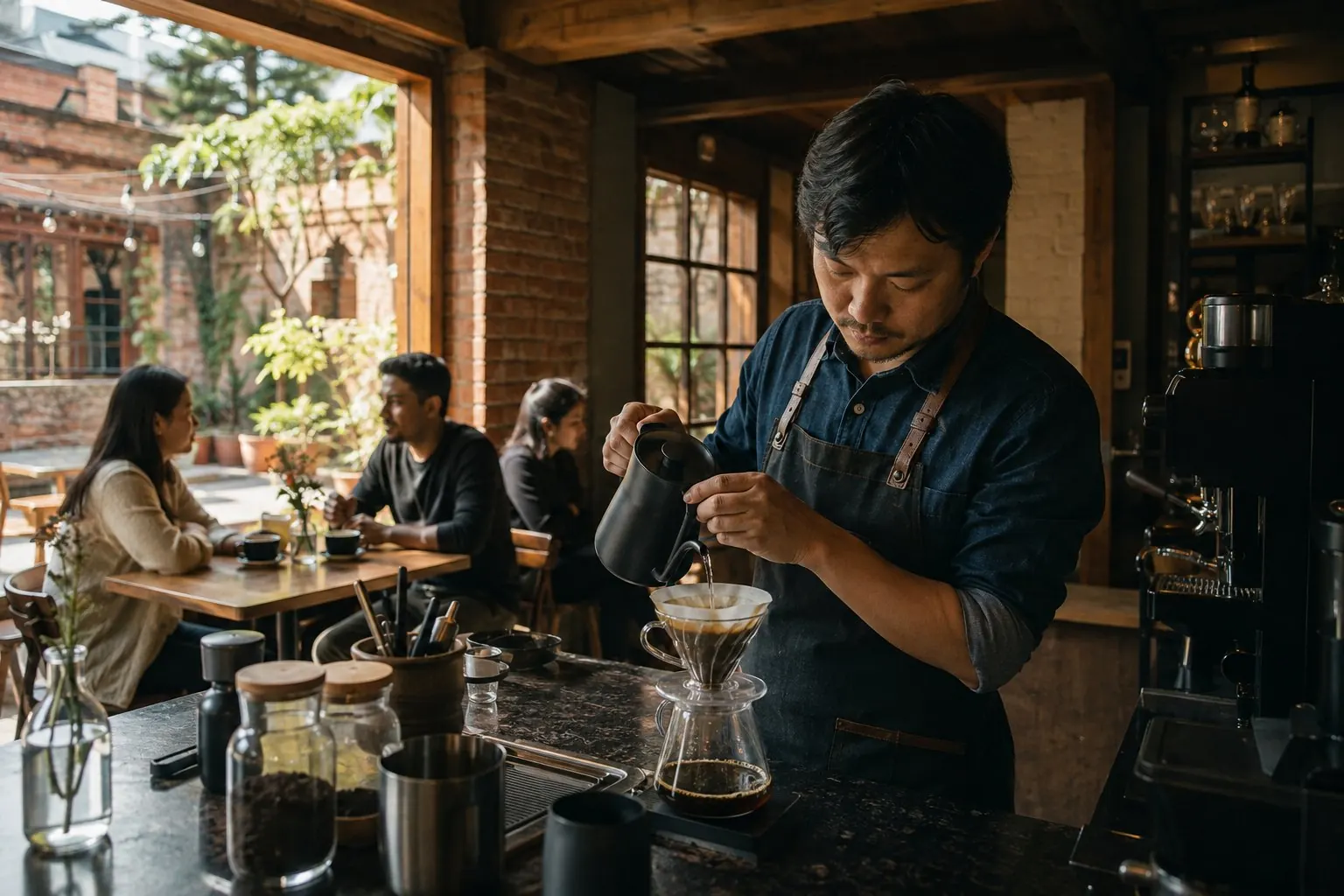
Morning in Kathmandu used to be described through the steam of chiya. Tea remains woven into homes, offices, roadside stops and every kind of conversation, but the city’s daily soundtrack has acquired another note: the hiss of an espresso machine, the click of a grinder and the slow pour of hot water over freshly ground coffee.
Cafés have multiplied across the Valley, from compact neighbourhood counters to polished specialty bars and large work-friendly rooms. Coffee is no longer only an imported lifestyle symbol. Increasingly, the cup links urban drinkers with Nepali farms, local roasters and a generation interested in where flavour comes from.
From instant coffee to a menu of methods
For many Kathmandu drinkers, the first café coffee was sweet, milky and social. That tradition has not disappeared, nor should it. What has changed is the range. Menus now distinguish espresso from Americano, cappuccino and flat white. Some cafés offer V60, AeroPress, French press, cold brew or a rotating single-origin bean.
The vocabulary can sound exclusive, but its basic purpose is simple. Different methods reveal different qualities in the same coffee. Espresso concentrates flavour and texture; a paper-filtered pour-over can emphasise aroma and clarity; immersion methods tend to create a fuller body. A good barista should explain these differences without making a new customer feel tested.
Nepali coffee has moved closer to the centre of the story
Coffee is grown across Nepal’s middle hills. Government trade material has identified districts including Gulmi, Palpa, Syangja, Kavre, Nuwakot, Kaski, Lalitpur, Lamjung and Sindhupalchok among important producing areas. The country’s altitude, shade and varied microclimates create the potential for distinctive Arabica coffee, while small plots connect production closely with household farming.
For years, a café could advertise “Himalayan coffee” without telling the customer much more. The specialty movement is pushing toward traceability: a district, cooperative, washing station, processing method or harvest. That information helps drinkers understand flavour, but it can also make the farmer visible within a chain that often celebrates the final roaster or barista.
The long journey from cherry to cup
A coffee cherry must be picked, sorted, pulped or dried, fermented, washed, dried again, hulled, graded, transported, roasted and brewed. Mistakes at any stage can flatten the final cup. Nepal’s national coffee export strategy has emphasised how processing and quality control add value beyond selling fresh cherries.
This is where Kathmandu’s roasters play a critical role. Roasting transforms dense green beans through heat, developing sweetness, acidity and aroma. Lighter roasting can preserve origin characteristics but expose defects; darker roasting can create familiar bitterness and body while masking subtle flavour. Neither approach is automatically superior. The question is whether the roast suits the bean and the drinker’s purpose.
The café as a new kind of public room
Kathmandu’s coffee growth is also about space. Students meet over shared notes. Freelancers open laptops between meetings. Couples find relative privacy. Diaspora Nepalis return with habits formed in Sydney, Seoul, London or the Gulf and recognise parts of those routines in a local setting. A café can function as office, studio, meeting room and refuge within the same afternoon.
This flexibility has commercial value, but it creates tension. A customer occupying a table for hours after buying one drink can strain a small business. Cafés respond with power outlets, time-limited Wi-Fi, communal tables or menus designed for longer stays. The most successful spaces communicate their rhythm without hostility.
Design has become part of the product
Exposed brick, indoor plants, local wood, quiet courtyards and carefully lit counters appear across Kathmandu’s café landscape. Some businesses restore old buildings; others adopt a clean international style. Social media has made visual identity commercially important, turning a cup and a wall into an advertisement produced by customers.
Atmosphere can attract the first visit, but consistency earns the second. A beautiful room cannot compensate for stale beans, burnt milk or indifferent service. The strongest cafés treat design as a frame for hospitality rather than a substitute for it.
Baristas are becoming skilled interpreters
A barista manages grind size, dose, water, temperature, timing and milk texture while also reading the person at the counter. That combination of technical and social skill is demanding. Training opportunities, competitions and peer learning have helped make the profession more visible, although wages and career paths do not always match the skill involved.
As customers learn, their questions become more precise. Is the coffee washed or naturally processed? When was it roasted? Why does one cup taste fruity and another chocolate-like? These questions push businesses toward better information and quality. They should also lead to a more important question: how much of the final price reaches producers and workers?
Growth brings environmental costs
Takeaway culture creates cups, lids, sleeves and delivery packaging. Coffee brewing consumes water and energy. Roasting produces emissions, and imported equipment travels a long way. Cafés can reduce harm through durable dine-in ware, incentives for reusable cups, careful purchasing, grounds composting and efficient machines.
Waste claims should be specific. A paper cup with a plastic lining may not be recyclable in the local system. “Biodegradable” packaging may require industrial conditions that are unavailable. The responsible choice is often to prevent a disposable item rather than replace it with a greener-sounding one.
The farm must share in the value
A premium urban coffee culture can support rural livelihoods only when purchasing relationships are fair and durable. Farmers face disease, erratic rain, labour shortages and the delay between planting a coffee tree and earning a harvest. Quality incentives help, but producers also need technical support, reliable buyers and transparent grading.
Traceability should therefore mean more than a district name printed on a bag. It should describe a relationship. Roasters can publish sourcing information, pay differentials for quality, invest in processing and return feedback to producers. Customers can reward businesses that make those commitments clear.
Travellers exploring coffee alongside a wider trip can use our Nepal travel guide for practical preparation.
How to explore Kathmandu coffee without the jargon
- Ask which Nepali coffees are available and when they were roasted.
- Try the same bean as espresso and filter coffee to notice the difference.
- Order without sugar first, then adjust it to your taste. There is no prize for drinking coffee a particular way.
- Talk to the barista when the counter is quiet. Most are pleased to explain a method.
- Buy a small bag from a local roaster and note the farm, district or process.
- Choose dine-in cups or carry a reusable cup when practical.
Kathmandu will remain a tea city. Coffee does not need to replace that identity. Its significance lies in the new connections it creates: between hills and streets, craft and commerce, global technique and local taste. The city’s next coffee chapter will be judged not by the number of photogenic cafés, but by the depth of those connections and the livelihoods sustained along the way.
Sources and further reading
- Nepal National Sector Export Strategy: Coffee, Trade and Export Promotion Centre.
- Tea and coffee export overview, Trade and Export Promotion Centre.