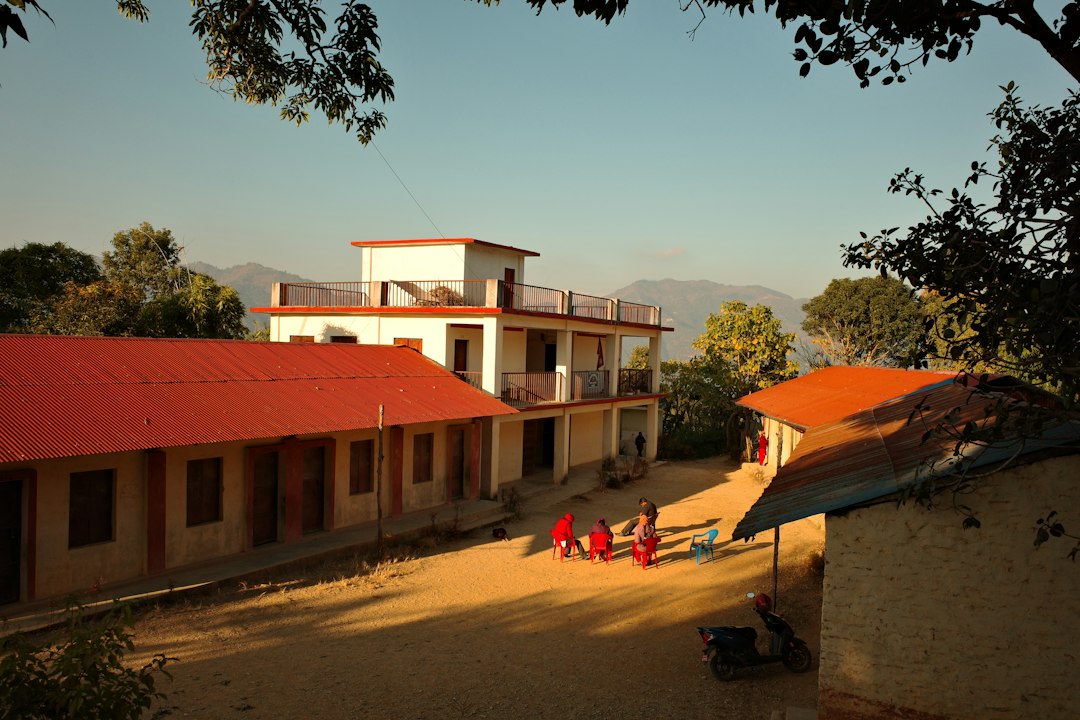
Schools are learning to look beyond exams when they ask what a result actually tells them about a child’s understanding. A total mark may be useful, but it cannot by itself explain why a pupil struggles with a passage, how they solve a problem or which kind of support would help.
The practical challenge is to collect evidence that teachers can use without turning every classroom activity into another high-pressure test. This article separates a documented assessment initiative in Nepal from suggestions that schools and families can adapt to their own circumstances.
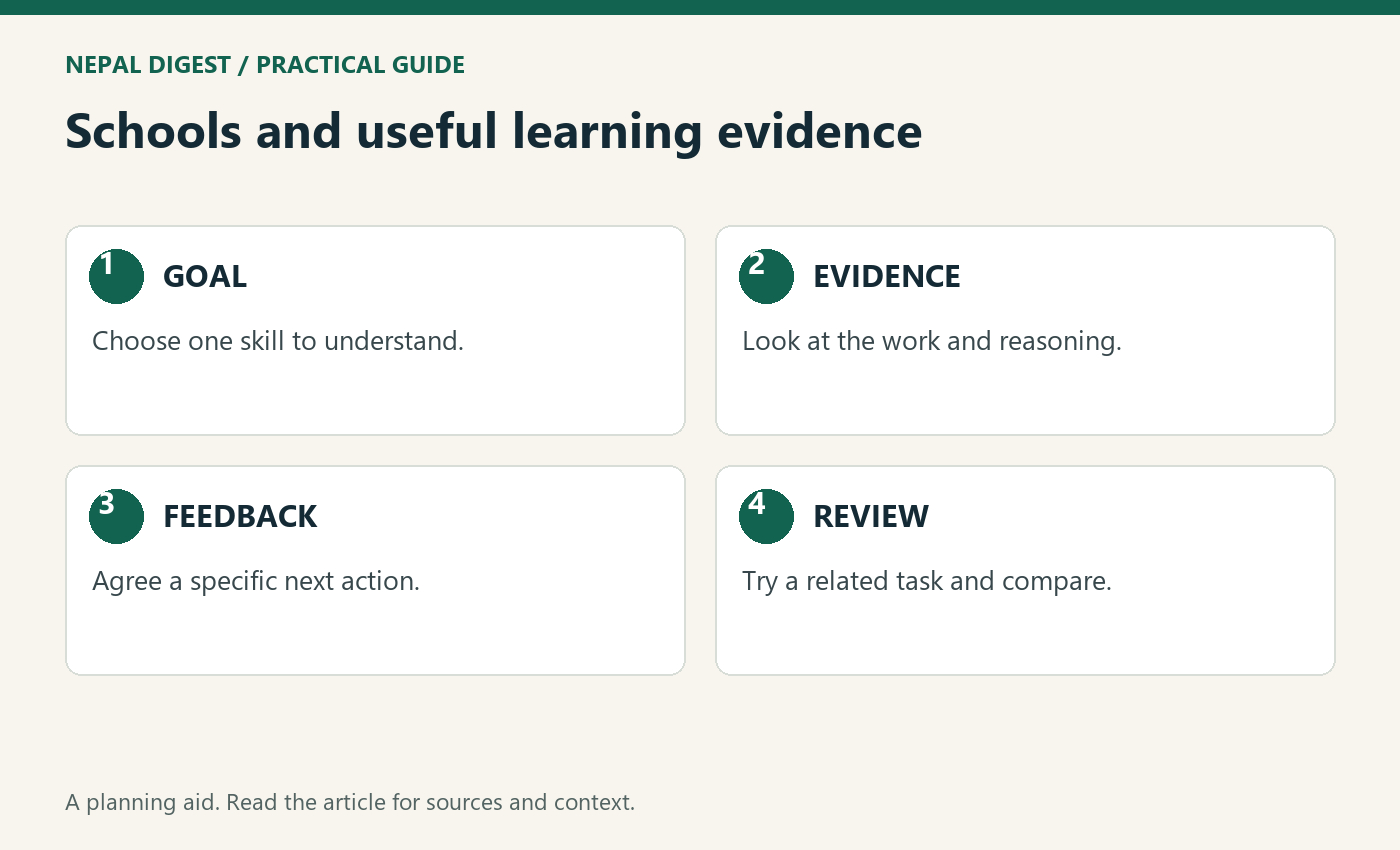
Table of Contents
What schools can learn from better evidence
In an update dated 13 October 2026, UNESCO’s Institute for Statistics reported that Nepal’s Education Review Office had piloted Assessments for Minimum Proficiency Levels materials in 37 schools across 12 districts. The main administration was planned for March 2027, with work under way on linking the approach to the Grade 3 National Assessment.
The update explicitly cautioned that observations during visits to two schools were not findings for the whole pilot or evidence of children’s learning outcomes. That distinction is essential. A well-organised assessment process and an improvement in learning are different things, and one should not be reported as proof of the other.
For a school leader, the broader lesson is to define the question before collecting results. Is the aim to identify pupils needing reading support, examine a teaching approach or understand a wider system? Different questions require different evidence, and a classroom exercise cannot automatically answer a national policy question.
Look at the work behind the answer
A correct answer can come from understanding, a remembered procedure or a lucky guess. A teacher can learn more by asking a pupil to explain one step, draw a model or show how they checked their response. The aim is to make the reasoning visible enough to choose a useful next lesson.
An incorrect answer also needs interpretation. A child may understand the idea but misread the instruction, lose track of a calculation or struggle to express an explanation in the language used for the task. Repeating the same question more loudly will not identify which difficulty is present.
A short sample of work can therefore be more useful than an additional page of marks. Keep the original attempt, add a brief note about the difficulty and compare it with a later attempt at a similar task. This gives the teacher and pupil a concrete record of what changed.
Make feedback specific enough to act on
General comments such as work harder or be more careful leave a pupil guessing. Useful feedback identifies one manageable next action: explain why the character changed their decision, label the units in the calculation or organise the evidence before writing the conclusion.
The next lesson should provide time to use that advice. If feedback arrives after the class has moved permanently to a different topic, even an excellent comment can become decorative. Ask the pupil to revise a short section or try a related example, then discuss whether the change addressed the difficulty.
Teachers also need a manageable system. It is rarely necessary to write a long paragraph on every piece of work. A shared explanation to a small group, a short conversation or one clearly marked example can be appropriate when it leads to a concrete opportunity to improve.
Use projects with clear learning goals
A project can reveal planning, observation, communication and revision, but only if its purpose is clear. Before a local-history interview or a small science investigation begins, identify the skill being practised and the evidence that will demonstrate it. Attractive presentation alone should not stand in for understanding.
Set a task that children can complete with resources actually available to them. If success depends on an adult’s time, expensive printing or a reliable home internet connection, the final product may reveal household advantage more clearly than the pupil’s learning.
Divide the work into stages that can be observed at school. A question, a first attempt, a discussion and a revision allow a teacher to see the process. Ask pupils to explain their own contribution to group work and make space for different ways to communicate what they learned.
Families need a clearer conversation than class rank
A useful meeting between a teacher and a family can begin with three questions: what can the child do confidently, what is the next difficulty and what manageable action would help? An example from the child’s work makes these answers easier to understand.
Avoid interpreting every fluctuation in a mark as a permanent judgment about ability. Ask what was assessed and whether the result is consistent with other work. A reading task, a timed calculation and an oral explanation show different aspects of learning; they should be discussed in context.
Agree a realistic follow-up. A family might set aside a short, regular period for reading or invite the child to explain a school problem in their own words. The teacher can suggest an appropriate task and explain when progress will be reviewed. Support works better when the request is specific and achievable.
Protect fairness when collecting evidence
An assessment should give pupils a fair opportunity to understand the instructions and demonstrate the intended skill. Schools need to consider language, disability-related access needs and unfamiliar task formats when planning how work will be administered and interpreted.
Compare like with like. If the time allowed, assistance provided or conditions changed substantially, note that difference before interpreting a later result as progress or decline. Good records should explain the circumstances of the work as well as preserve the answer.
Handle individual results with care. A public ranking can expose a child’s difficulties without helping them learn. Share detailed work with the people who need it for support, and explain broader patterns without turning a pupil’s identity into a classroom example for everyone else.
A small review cycle for a school
Begin with one learning goal for a class or a small group. Collect a brief initial sample, choose a teaching response and decide when to look again. Keep the cycle narrow enough that teachers can discuss the evidence in ordinary planning time rather than create a separate reporting burden.
At the review, ask whether pupils can apply the idea in a different but related setting. A memorised response to an identical question is less informative than an explanation or a fresh example. If progress is uneven, examine the work before deciding that a child lacks effort.
Record what the staff learned about teaching as well as what pupils achieved. Which explanation helped? Which task created confusion? What should be changed next time? Looking beyond exams means using evidence to improve the next experience of learning, rather than merely collecting more numbers.
Nepal Digest also examines scholarship opportunities and vocational training. Each route benefits from a clear account of what a learner can do and what support comes next.