
Vocational training becomes more useful when the learner can connect a lesson with a task someone actually needs done. Knowing the name of a tool is different from using it safely, following a job specification and checking whether the finished work is acceptable.
In Nepal, workplace learning provides one way to connect those stages. But a course described as practical still needs to be examined carefully. The questions concern the curriculum, time spent practising, supervision, assessment and the promises made about work after completion.
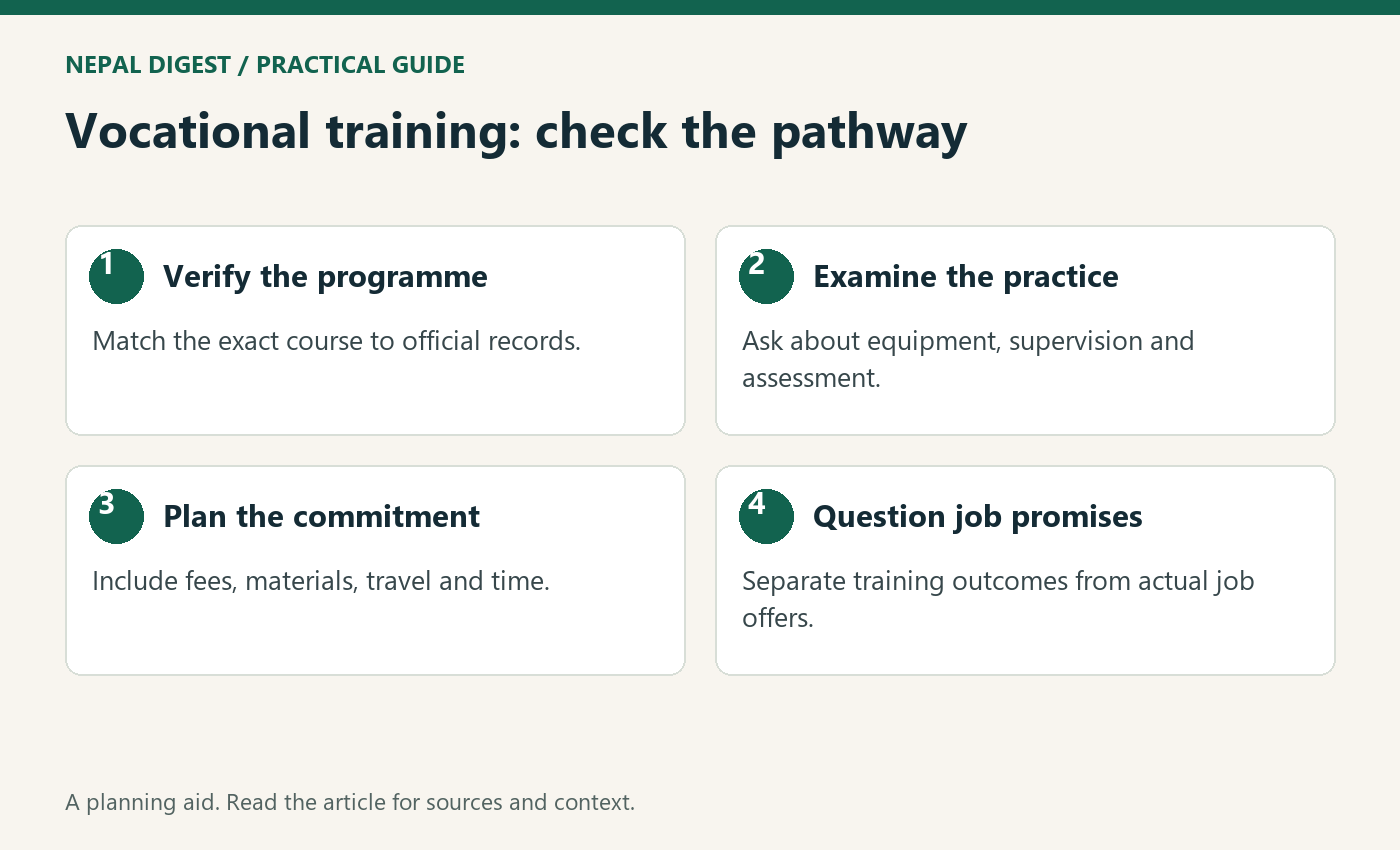
Table of Contents
Vocational training should identify the skill being taught
The Council for Technical Education and Vocational Training describes responsibilities including competency-based curricula, occupational standards and skills testing. Its publication directory also provides training-provider and curriculum-related records. These are useful starting points for checking a course rather than relying only on an advertisement.
Ask the provider for the exact programme title, duration and relevant affiliation or recognition information. Then compare that description with the available official record. A familiar logo on a poster does not explain which course, intake or certificate is actually being offered.
Be specific about the intended outcome. Someone looking for an introductory skill, an assessed qualification or further training for an existing job may need different things. The word vocational does not make those needs interchangeable.
Workplace learning adds tasks and responsibilities
The ENSSURE project’s description of training with on-the-job learning explains a model in which trainees practise in a workplace with supervision from an in-company trainer or OJT supervisor. It connects technical practice with workplace culture and industry standards.
The distinction is important. A placement should involve a clear learning purpose, not simply time spent at a business. Ask what tasks the trainee will practise, who will supervise them and how feedback will be recorded. Find out which responsibilities belong to the institution and which belong to the workplace.
Confirm the practical arrangements before accepting a place. Hours, location, transport, tools, protective equipment and any payment or allowance should be understood from the actual programme’s terms. Do not assume that every placement offers the same support or leads to an employment offer.
Compare practice time with the course promise
Vocational training requires enough access to equipment and feedback for learners to improve. A demonstration observed by a large group is not the same experience as each person completing a task and receiving guidance.
Ask to see how a normal training day is organised. How are learners divided into groups? What happens when equipment is unavailable? How is a mistake corrected? The purpose of these questions is to understand the learning conditions, rather than to judge quality from a building’s appearance.
Assessment should fit the skill. If a course prepares someone to make, repair, cook, operate or install something, ask how practical competence is demonstrated. A written test may form part of assessment, but it does not by itself show that a learner can perform every workplace task.
Read the full cost and the full commitment
Before enrolling, list the fees and other expenses stated by the provider. Check whether materials, examinations, assessment, equipment or placement travel are included. Keep the written explanation so that the family and learner are budgeting for the same programme.
Time has a cost as well. A course may require travel, attendance during working hours or a period away from paid employment. Someone with care responsibilities may need a plan for the placement stage as well as classroom attendance.
If financial support is advertised, confirm the conditions separately. Nepal Digest’s guide to checking scholarships and support explains how to distinguish an official opportunity from a forwarded promise and how to organise the supporting papers.
Vocational training is not a guaranteed job offer
Treat a claim of guaranteed employment as a request for more detail. Who is the employer, what role is offered and which conditions apply? A list of past hiring partners is not the same thing as an offer addressed to the current learner.
Ask a provider to explain its employment figures. The period covered, the number of graduates contacted and the definition of employment all affect what the figure means. Temporary work, self-employment and a continuing full-time role are different outcomes.
Where possible, speak with former trainees about the specific course. Ask what they practised, which parts helped in work and what they wish they had known before enrolling. An individual’s account is useful experience, but it should not be presented as a guarantee that everyone will obtain the same result.
Make a course decision around a realistic next step
Begin with the work the learner wants to become able to do. Compare the course against that goal, including any additional assessment or experience an employer may require. If the plan involves working abroad, verify the destination’s requirements separately rather than assuming that recognition transfers automatically.
Keep a learning record during the programme: tasks completed, feedback received and areas needing further practice. Respect workplace confidentiality and do not photograph customers, private systems or restricted work without permission.
The direction of improvement is clear even when individual outcomes differ. Vocational training should make skills observable, connect learners with supervised practice and explain its limitations honestly. The most useful course is one whose day-to-day teaching supports the work it claims to prepare someone to do.