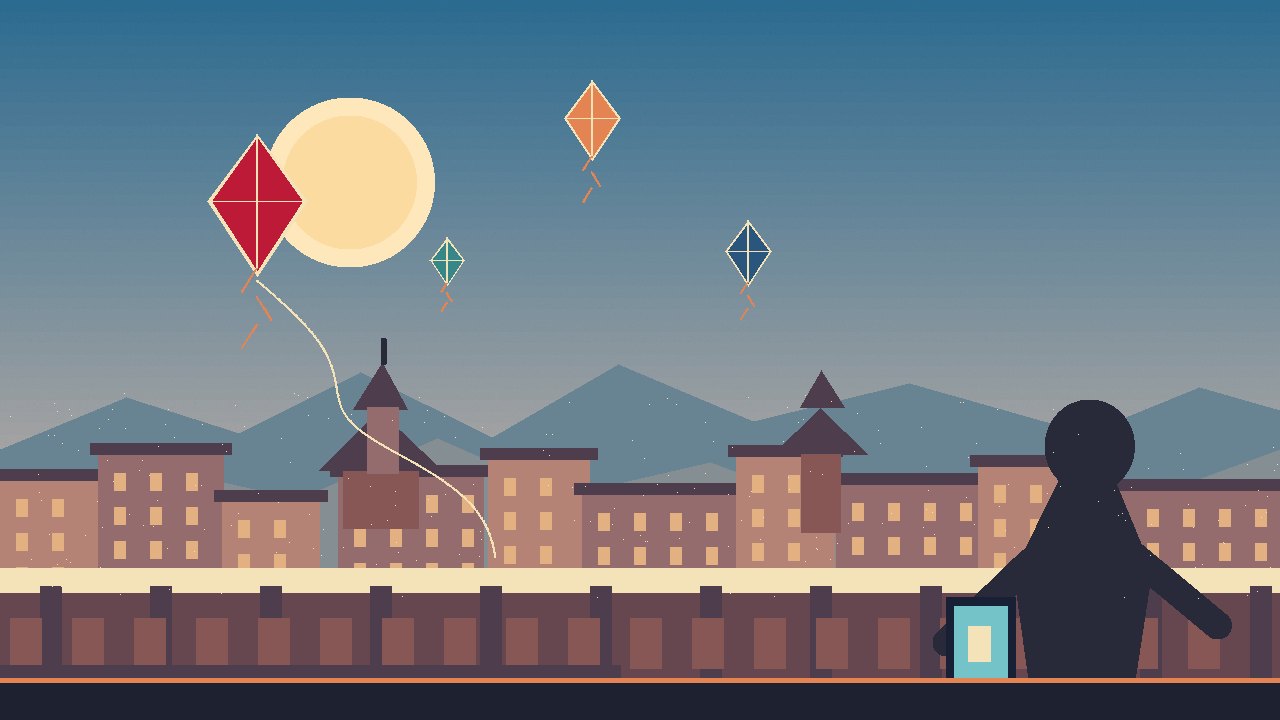
The standard explanation for Nepal’s shrinking kite-flying culture is uncomplicated: children once played outside, then smartphones arrived. It is a neat story, and it contains part of the truth. Yet blaming screens alone avoids a more uncomfortable question. If a child puts the phone down today, where exactly are they supposed to fly? In Kathmandu, the answer may involve a congested street, high rooftops, tangled wires, restricted open ground or a family that cannot spare an adult to supervise. A change in kite-flying culture that looks like a matter of personal taste may also be a question of urban design.
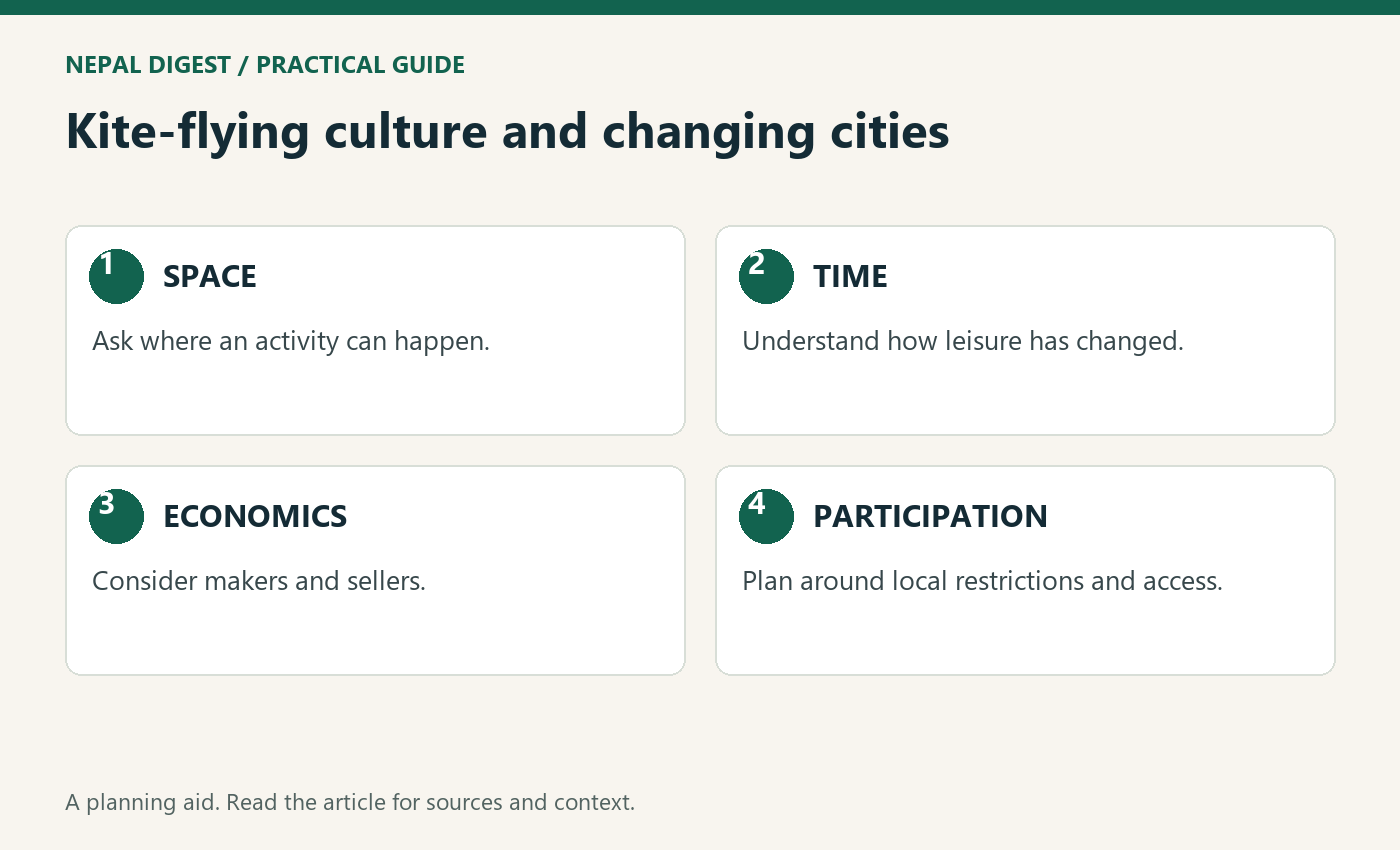
Table of Contents
Kite-flying culture: the evidence is mixed, not imaginary
There is real reporting behind the sense of decline. Nepal News interviewed traders in 2025 who described fewer kite buyers and quieter markets than they remembered. In the same period, other stories documented continuing interest among hobbyists and family groups. In 2026, sellers again offered contrasting accounts: some worried about cost and falling participation, while others described stronger sales and parents introducing children to the tradition.
Neither anecdote can substitute for national data on participation, which is not readily available in those reports. Kite demand can rise before a particular Dashain, then weaken if rain arrives or families leave the city. Sales in a single market cannot measure how many children fly in parks, villages or diaspora gatherings. The responsible headline is therefore that the practice is changing unevenly, not that it has conclusively disappeared.
Rooftops and the missing space
The physical environment matters. Older descriptions of the Kathmandu Valley include open areas, low buildings and rooftops linked by an informal neighbourhood social life. Densification alters that equation. New construction can reduce visibility and wind access, while water tanks, cables and nearby roads introduce hazards. A parent deciding not to allow unsupervised flying from rooftops may be responding to those risks sensibly.
Public space is more than empty land on a map. It must be accessible, maintained and appropriate for children. A cramped playground crowded with other users may not be suitable for a long line. A school ground may be locked during the holidays. Even communities that want to organise events need a venue, permissions where required, and people willing to manage safety. That creates a structural barrier that a nostalgic social-media post cannot remove.
Second, the changing use of free time
Smartphones and online games offer immediate access, repeatable rewards and entertainment regardless of weather. Kites demand a suitable breeze, equipment, patience and often a companion. Those differences influence how children divide their attention. But the technological explanation should not become a moral accusation against young people. Adults also spend substantial time on screens, and many parents understandably prefer an activity they can supervise from home.
Holiday patterns matter as well. Families travel for tika, visit relatives, work different shifts and organise children’s schedules around school and tuition. A successful kite outing may require coordination that the older informal neighbourhood game did not. The relevant comparison is not simply past childhood versus present childhood; it is two different systems of space, time, supervision and entertainment.
Third, the economics of a small tradition
A simple kite may be inexpensive, but a household must also consider a reel, line and possible replacements. Specialist supplies can cost much more, and markets increasingly depend on products brought from outside Nepal. In September 2026, Ratopati described traders sourcing kites and string from Indian cities and shipping supplies to diaspora buyers in the UK, Australia and the United States. This is a living market, but it is shaped by price, imports and seasonal demand.
The craft economy behind the game deserves attention. If demand falls, small shops lose the revenue and practical knowledge that once helped children enter the hobby. At the same time, commercial promotions and organised kite festivals can bring new customers. These trends can run in opposite directions. A shop’s survival and the number of flying children are related, but they are not identical measures of cultural vitality.
Fourth, a more serious understanding of safety
Kite battling has sometimes involved coated or sharp lines, which can hurt hands, cyclists, birds and other animals. In October 2026, Nepal’s aviation regulator also warned against kite flying around Tribhuvan International Airport because lines and flying objects can interfere with aircraft operations. These concerns are not attacks on tradition. They are reasons to modernise how and where the activity takes place.
A sustainable approach would prioritise ordinary non-abrasive lines, supervised locations, protected edges and clear separation from aircraft routes, traffic and power cables. It would teach children that a cut kite should not be chased into danger. Traditions that adapt to safety knowledge are more likely to gain the confidence of parents and local authorities.
What a practical revival would require
Reversing the decline, where it exists, does not require a campaign against phones. It requires opportunities. Schools and municipalities could identify appropriate grounds for short, supervised kite sessions. Local craft demonstrators could show children how to repair a paper kite or balance a frame. Sellers could create affordable beginner kits. Neighbourhood organisers could welcome inexperienced flyers rather than focus exclusively on aggressive line-cutting contests.
Success should be judged by participation, repeat visits and safe access, not simply by photographs of colourful skies. If children discover changa through a festival video, learn a technique online and then fly outside, technology has acted as a bridge rather than an enemy. Nepal’s kite-flying culture may never reproduce the exact landscape of rooftops of an earlier Kathmandu. That need not be failure. A tradition has a future when the next generation can practise it in a city that actually exists.
Related reading: Changa Chait! The Childhood Sound That Defined Dashain in Nepal; Where Have All the Kites Gone? The Fading Art of Changa in Nepal.
Rooftops make a compelling image of the older game, but an image is not a plan for present-day access. Before suggesting that children return to rooftops, ask who controls the space, whether the edges and surroundings are appropriate, and who will supervise. If those questions cannot be answered, choose another location rather than treating nostalgia as permission.