In a family group chat, a photograph, a festival greeting and a question about next month's visit can arrive in the same family chat. They do not all ask for the same kind of response. When relatives live across time zones, making that difference clear is a useful place to start.
Research offers a reminder that a group chat can carry both care and pressure. In interviews conducted in 2019 with 14 people from three UK–Zimbabwe family networks, including three UK-based Zimbabwean care workers, Obert Tawodzera found that WhatsApp helped coordinate care for ageing parents. Participants also described tensions over remittances and gendered family decision-making. These were particular Zimbabwean families, not a survey of Nepali households. Read the primary study
The suggestions below are a starting point for a family conversation. We have not accessed private chats or interviewed families for this guide, and the sample wording is invented as a template, not presented as anyone's testimony.
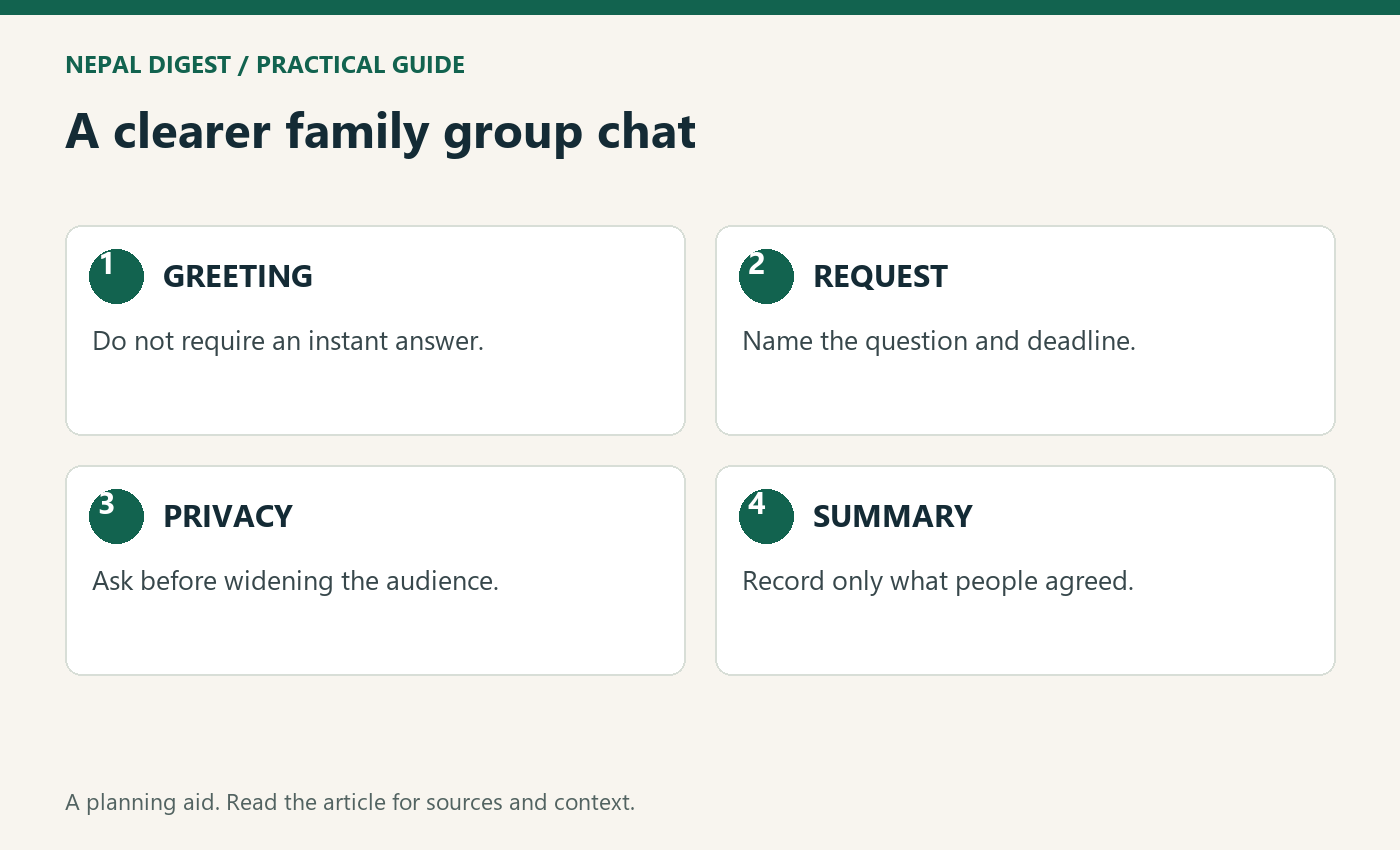
Table of Contents
Family group chat: separate a greeting from a request
Try agreeing on three plain-language openings:
- “Just sharing”: no answer needed.
- “Please reply by…”: a practical question with a clear deadline and time zone.
- “Can we arrange a call?”: something that needs a conversation.
These are suggested habits, not platform features. They work only if the people in the group understand and accept them.
For a decision, name what needs deciding. “Can you visit?” is broad. “Can you join a call on Sunday at 7 pm Nepal time to discuss the visit?” gives people something more definite to answer.
Do not make silence carry every meaning
A message left unanswered does not tell you why someone has not responded. They may be working, asleep, unsure of the answer or simply planning to return to it.
Rather than interpreting the silence in front of the whole group, try a private, low-pressure follow-up:
“Did you get a chance to look at the date? It's okay if you can't decide yet. Please let me know when you can.”
If a matter is time-sensitive, agree in advance who should be contacted and how. A group chat is a poor emergency plan if nobody has agreed to watch it. For an actual emergency, use the appropriate local emergency service rather than waiting for overseas relatives to reply.
Ask before widening the audience
A photo sent to close relatives is not automatically intended for another group or a public page. A simple family agreement can cover forwarding photos, sharing somebody's news and posting information about children.
Suggested wording:
“Please ask the person concerned before forwarding their photo or personal news outside this group.”
Make room for a quiet “no”. Nobody needs to give a public explanation for wanting a photo kept within a smaller circle.
Move sensitive discussions to a smaller conversation
Money, health and disagreements may need more privacy than a large chat provides. Ask the people directly involved how they want to discuss the subject. Do not use a bigger audience to pressure someone into a commitment.
After a call, share only the practical summary that the participants agree can go back to the group. A decision affecting someone should not be treated as settled merely because they did not object in the chat.
Try a short family agreement
Here is a suggested starting version:
“We share everyday updates without expecting instant replies. For a decision, we'll name the question, deadline and time zone. We'll agree separately how to contact someone urgently. We'll ask before forwarding personal photos or news, and take sensitive matters to the people involved.”
Invite changes, including from relatives who use the app less confidently. Review the agreement after trying it. The aim is to make contact easier to enjoy, with fewer guesses about what every notification demands.
A family group chat example for planning a visit
Imagine a fictional family trying to organise a weekend call about a visit to Nepal. One person asks a broad question, several relatives reply with greetings and a photograph arrives between the suggestions. The chat is active, but the decision is still unclear. More messages alone will not resolve that confusion.
A clearer message can name the decision and its owner: Please tell me by Thursday evening Nepal time whether you can join a twenty-minute call on Sunday. I will collect the replies and share the agreed time. This is sample wording to adapt, not a rule that every family should adopt.
Keep a small decision summary separate from the flow of conversation. It might state the proposed date, who still needs to answer and when the plan will be reviewed. Do not mark a person as agreeing merely because they sent a greeting or reacted to an unrelated photograph.
If the proposed time does not work, invite an alternative without asking for a public account of the person’s work or private responsibilities. A family group chat can coordinate a practical task while allowing people to keep the reasons for their availability to themselves.
Review the agreement with people who use the chat differently
A confident user may find it easy to follow a busy thread, while another relative may read only occasionally or prefer a telephone call. Ask what format helps each person understand a decision. The answer may be a short written summary, a voice message or a separate call, depending on what the family agrees.
Do not assume that the person who posts least cares least. Nor should one enthusiastic organiser automatically become responsible for every future update. Share the work and discuss whether the arrangement is still enjoyable for the people carrying it.
After trying an agreement, ask about one recent example. Was the request clear? Did everyone understand the deadline? Was a private matter kept within the intended audience? Concrete examples are easier to discuss than accusing the whole group of communicating badly.
Keep changes modest. One clear opening line or a better summary can be enough for the next week. A family group chat is part of a relationship, and the agreement should remain something participants can revisit together rather than a permanent set of rules imposed by one person.
Related Nepal Digest guides: The Nepali family is changing without losing its centre; Caring for Parents in Nepal From Abroad: A Family Care Plan.