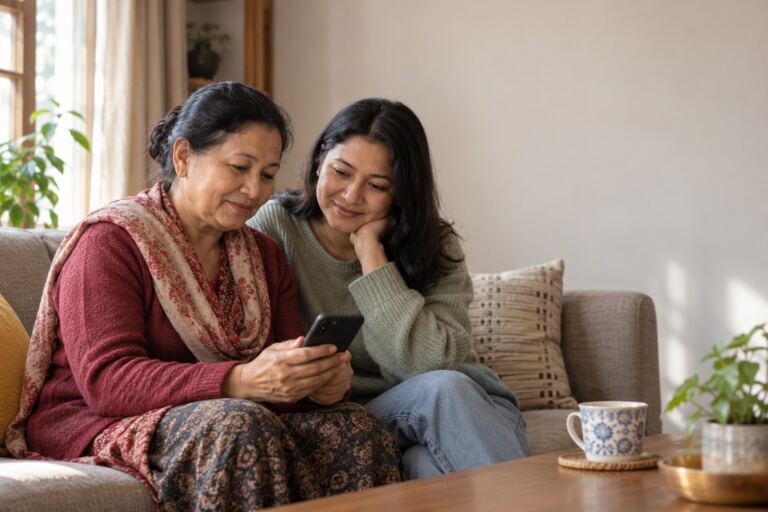
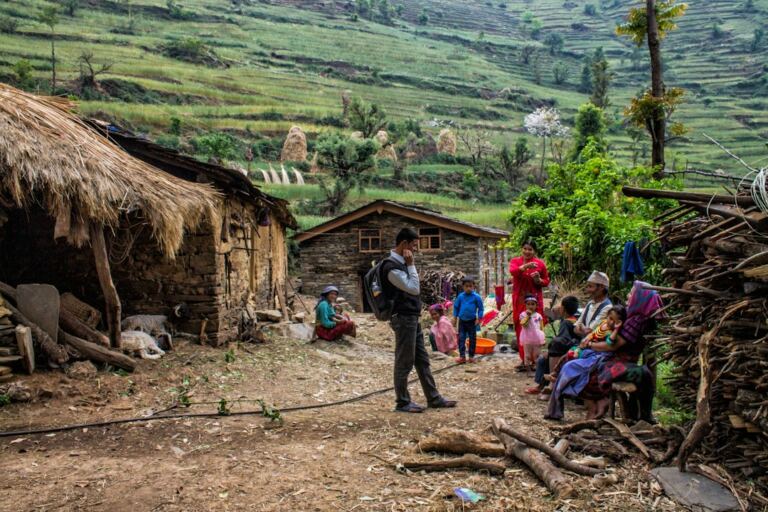
You do not need a new toy to start a family game. These five childhood games use voices, observation and simple movements, with no equipment to buy. They are suitable starting points for Nepali families wherever they live, rather than a claim that the games originated in Nepal.
Families may remember different names and rules. The versions below are based on published play guidance, with our adaptations clearly identified. We have checked the written instructions but have not field-tested them with children.
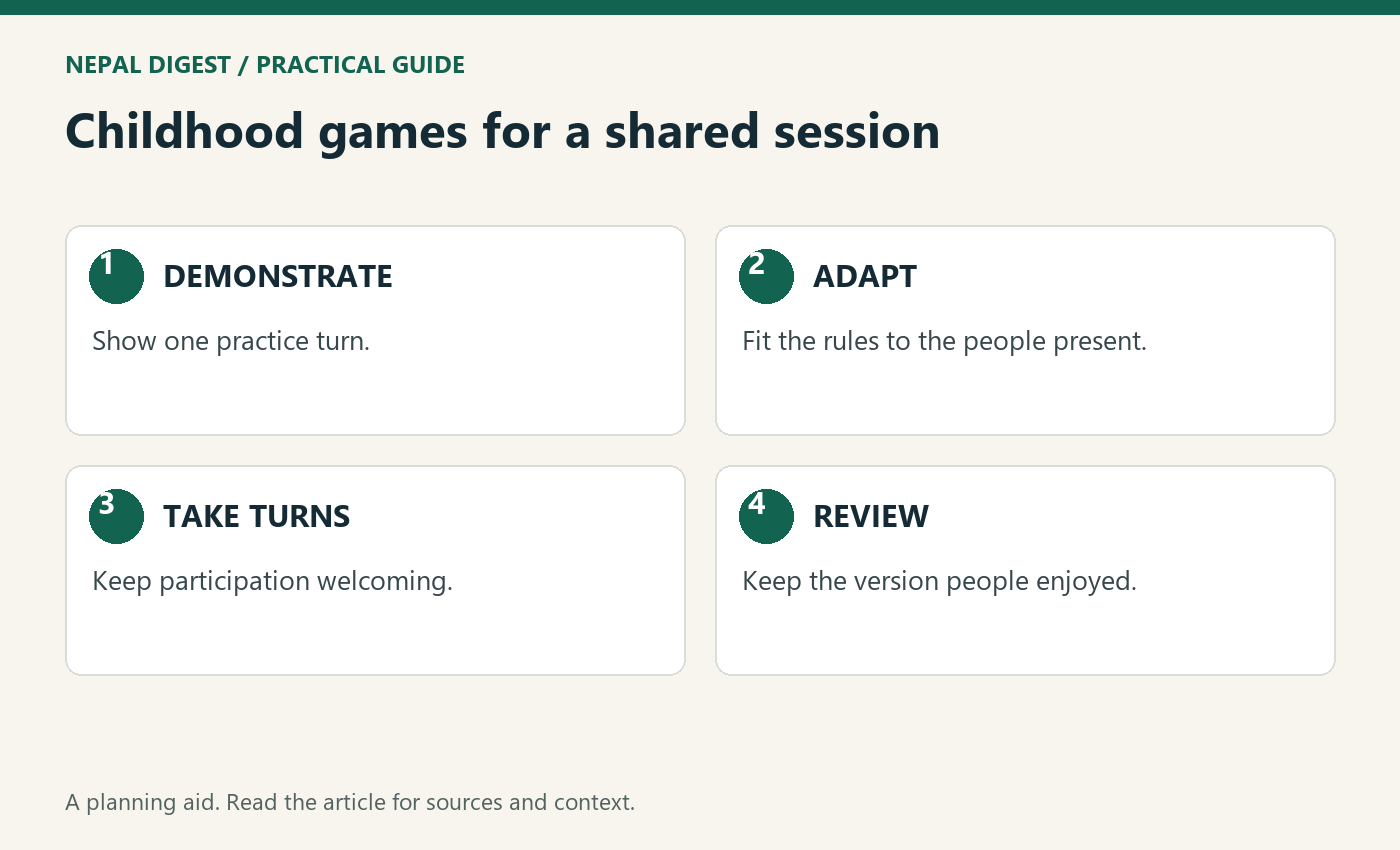
Table of Contents
Childhood games: before you start
Check the space for slippery surfaces and obstacles, and choose rules that suit the children taking part. UNICEF Nepal advises caregivers to reduce play-area hazards and adapt rules and duration to children's ages. Keep an adult involved, let children opt out, and stop if an activity causes discomfort. UNICEF Nepal: play and parenting
For movement games, leave enough room for everyone to stretch without touching someone else. Stay away from roads, stairs and balconies. The seated versions below can keep the same idea without requiring running or jumping.
1. Simon Says
Players: Two or more. Space: A clear standing or seated circle.
One person leads. Follow a movement only when the instruction begins with “Simon says”. For example, “Simon says touch your shoulder” means move; “touch your shoulder” on its own means stay as you are.
Start slowly and practise before adding tricks. Swap leaders after a short round.
Our adaptation: Nobody is eliminated for a mistake. Pause, explain and continue. Use gentle gestures everyone can do, including seated hand movements. You can agree on an equivalent opening phrase in the language your family prefers. Rules reference: Playworks
2. I Spy
Players: Two or more. Space: Anywhere everyone can safely observe the same surroundings.
Choose something already visible and give a clue: “I spy something blue.” Others guess; add a shape or size clue if needed. Reveal the object if the round becomes frustrating, then change the chooser.
Use colours or shapes before trying first-letter clues. Nobody needs to fetch or touch the object.
Our adaptation: For someone who cannot use visual clues, agree on a sound-based guessing round instead. Rules reference: UNICEF Serbia, activity 22
3. Word Statues
Players: Three or more, including a caller. Space: An uncluttered area.
Move gently within your own space. When the caller names a word such as “happy” or “tired”, make a comfortable still pose to express it. Relax, then try another word. Take turns calling.
UNICEF's published version is designed for adolescents. For a family adaptation, demonstrate a pose first and choose words children understand.
Our adaptation: Stay seated if preferred. Do not hold a strained balance or ask players to touch one another; nobody is “out” for moving. Rules reference: UNICEF group statues
4. Twenty Questions
Players: Two or more. Space: A comfortable place to talk.
Agree on a category, such as animals. One player silently chooses a familiar example. The others ask questions that can be answered “yes” or “no”: “Does it live in water?” Count each question aloud, including a direct guess such as “Is it a dolphin?”
End when the answer is guessed or twenty questions have been used. Reveal the answer and pass the turn.
Our adaptation: Keep the count aloud instead of using the paper listed in the Scouts version. For beginners, narrow the category and allow a helpful clue. Rules reference: Scouts
5. Copy My Clap
Players: Two or more. Space: A seated or standing circle.
The leader makes a short clapping pattern. Everyone repeats it. Begin with two slow claps, then vary the rhythm. After a few patterns, offer someone else the lead.
UNICEF describes a family member demonstrating a clapping sequence for others to copy.
Our adaptation: Keep the sound comfortable. Use quiet finger taps or visible hand movements if clapping is uncomfortable. No hand-slapping contest is needed. Rules reference: UNICEF Serbia, family orchestra
Let the children change the game
Ask which version they enjoyed and what they would change. Keep any new rule simple, safe and understandable to everyone. A short game that ends while people are still enjoying it is enough; there is no need to turn the whole afternoon into a competition.
Plan a short session of childhood games
For a mixed-age family, start with a game everyone can understand in one demonstration. Explain the version being used, show a practice turn and invite questions before counting any result. An older child can help demonstrate without becoming responsible for supervising the whole group.
Choose the pace from the people present. A quiet word game may suit one gathering, while a gentle movement game may suit another. Keep an easy way to pause, sit down or watch. A person should not have to explain a private need in order to choose a less active role.
If playing across languages, agree how clues and answers will work. A word familiar to one child may be unfamiliar to another who grew up abroad. Offer a translation or choose a different example rather than turning that difference into a judgment about belonging.
A simple sequence could be a short practice round, a chance for someone else to lead and a final round chosen by the children. The exact duration is a family choice. End when people have had enough, even if a prepared list contains more games.
Keep a useful record of the version your family enjoyed
Afterwards, write down the rules that worked, any adaptation that helped and one change to try next time. Record the name used in your family without claiming that it establishes the game’s historical origin. Childhood games can travel between places and acquire different names or versions.
Ask the children what made the activity enjoyable or frustrating. A rule that looked clear to an adult may have been hard to follow in practice. Change the instruction or demonstrate it differently before deciding that a child was not paying attention.
Keep competition optional. A shared challenge, turn-taking or a cooperative ending may be a better fit than elimination. The useful outcome is a version people want to play again, with instructions that welcome the next person who joins.
Related Nepal Digest guides: Schools are learning to look beyond exams; The Family Group Chat: Connection, Pressure and Unread Messages.