
A sold-out Nepali concert can look like simple arithmetic: ticket price multiplied by the crowd. That produces a rough sales figure, not the organiser’s profit. It also misses discounts, complimentary admissions, refunds and the difference between a buyer’s payment and the money available to stage the show.
This explainer maps the questions behind a concert budget. Nepal Digest has not obtained or audited a Nepali organiser’s accounts, and does not present a typical artist share or a finding about any particular show.
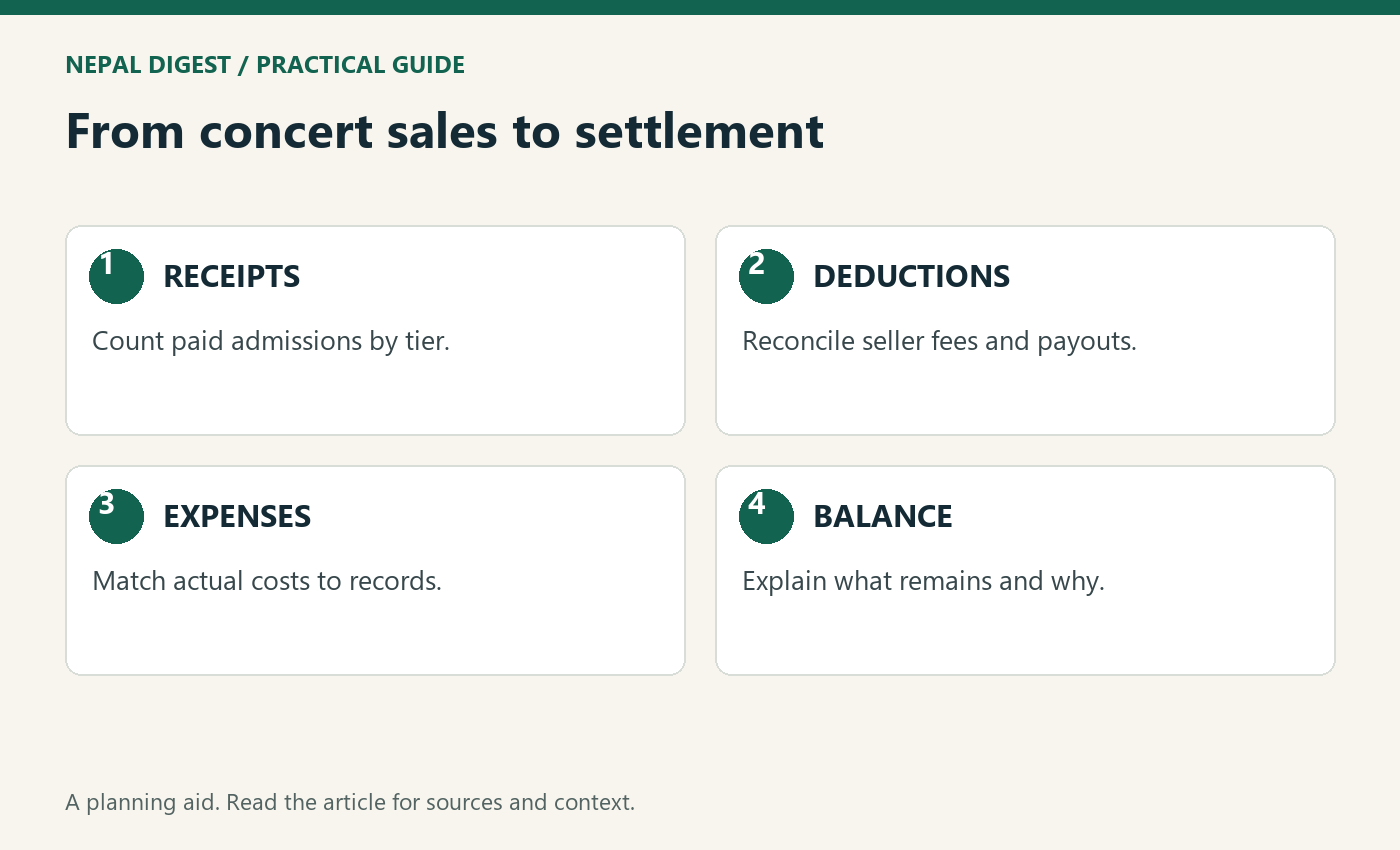
Table of Contents
concert: Start at the checkout
Separate the advertised ticket price from the full amount charged. A platform may add fees, or the organiser may absorb them within the price. Eventbrite’s own fee guidance, for example, distinguishes service fees and applicable payment-processing fees, allows organisers to absorb or pass on ticketing fees, and varies its charges by country and currency. That is one provider’s model, not a tariff for every Nepali event.
A checkout receipt is useful evidence of what a buyer paid. It does not reveal the artist’s contract, venue settlement or promoter’s final balance. Equally, an apparently separate booking fee should not be assumed to be the organiser’s profit.
The show has more than one payee
A UK competition authority analysis of live-music ticket income separates artists, promoters, ticket sellers, venues and production costs. Its historical examples are useful for understanding the parties involved, not for applying old UK percentages to a current show in Nepal or the diaspora.
For an individual event, the practical checklist is broader than a performer’s fee: venue hire, sound and lighting, crew, security, marketing, travel and accommodation where relevant, ticketing, applicable taxes and music licensing. Some costs may be bundled in a venue agreement; others may be paid separately. Only the contracts and invoices can establish the actual arrangement.
Nepathya’s public organiser form asks potential hosts for their location, expected audience band and bidding amount. It shows that booking begins with event-specific information. It does not disclose a standard performance price, an accepted bid or the accounts of any concert.
Why a full room does not settle the question
The relevant count is paid admissions by price tier, not simply people in the hall. An early-bird ticket and a full-price ticket contribute different amounts. Guest places may fill seats without creating ticket revenue. Sponsorship, merchandise or bar income may help fund a show, but should be counted only when the event is actually entitled to that income.
A useful budget therefore has separate lines for ticket receipts, other confirmed income, expenses and the remaining balance. Do not count a sponsor’s promised payment as cash already received. Do not count a venue’s entire bar takings as promoter income without knowing the agreement.
For a deliberately hypothetical example, suppose 500 paid tickets contribute 30 currency units each after the deductions included in that figure. That leaves 15,000 units before the event costs still to be paid. If those remaining costs total 14,000, the balance is 1,000; if they total 16,000, it is a loss of 1,000. These invented round numbers demonstrate the arithmetic only. They are not a cost estimate, a break-even forecast or evidence about a Nepali concert.
Five questions worth asking
- What is the final payable ticket price, including unavoidable charges?
- Who is the organiser and which seller is authorised?
- What happens if the event is cancelled, postponed or materially changed?
- What does the selected ticket tier include?
- If proceeds support a cause, does that mean gross sales, a fixed contribution or the balance after costs?
A claim that proceeds support a community project needs its own explanation. Ask for the recipient and the calculation before treating a ticket as a donation. For any refund question, read the particular event and seller’s terms; this article is not a statement of your legal entitlement.
There is room for both fair artist pay and reasonable questions from audiences. A ticket can support an evening of music, professional work and community gathering. Finding out where the money actually went requires the settlement, not a photograph of a full hall.
Reconcile the concert budget in separate stages
A useful exercise is to take the hypothetical example above and add a second page called “settlement.” The budget is what the organiser expected before the event; the settlement records what actually happened. Keep the same categories so differences can be explained. A venue invoice larger than expected belongs on its own expense line, rather than being hidden by changing the ticket-sales total.
Start with the seller’s transaction report. Separate tickets sold, refunded and complimentary, and compare the sales total with the amount the seller says is payable. Then identify any fees or deductions between those figures. Match the payout to the bank receipt when it arrives. This is a suggested bookkeeping exercise, not a description of the accounts of a named Nepali concert.
Now compare the event’s actual expenses with invoices and agreements. A deposit already paid should not be charged a second time when the final balance is recorded. An unpaid invoice is still different from cash already spent. Likewise, a sponsorship agreement, an invoice to a sponsor and the eventual receipt of money are three distinct records. The exercise works only when those stages remain visible.
Someone assessing a community fundraiser can ask for a short explanation built from that settlement: ticket income, other income included, costs deducted and the amount transferred to the stated recipient. The organiser may need to protect private contract terms, but a photograph of a donation does not explain how a “proceeds” claim was calculated.
For a ticket buyer, the practical outcome is a better question. Instead of guessing the performer’s earnings from the crowd size, ask what the public promise actually means and which document supports it. A concert can succeed artistically while losing money, or fill a hall while leaving a small balance. Establishing either outcome requires the numbers for that event.
Related reading: Lost Your Phone Abroad? Protect Your Accounts and Recover Access; Your First Australian Payslip, Explained for Nepali Workers.