Why the festival continues to connect Nepalis across borders—and why returning home for tika matters so deeply to many families.
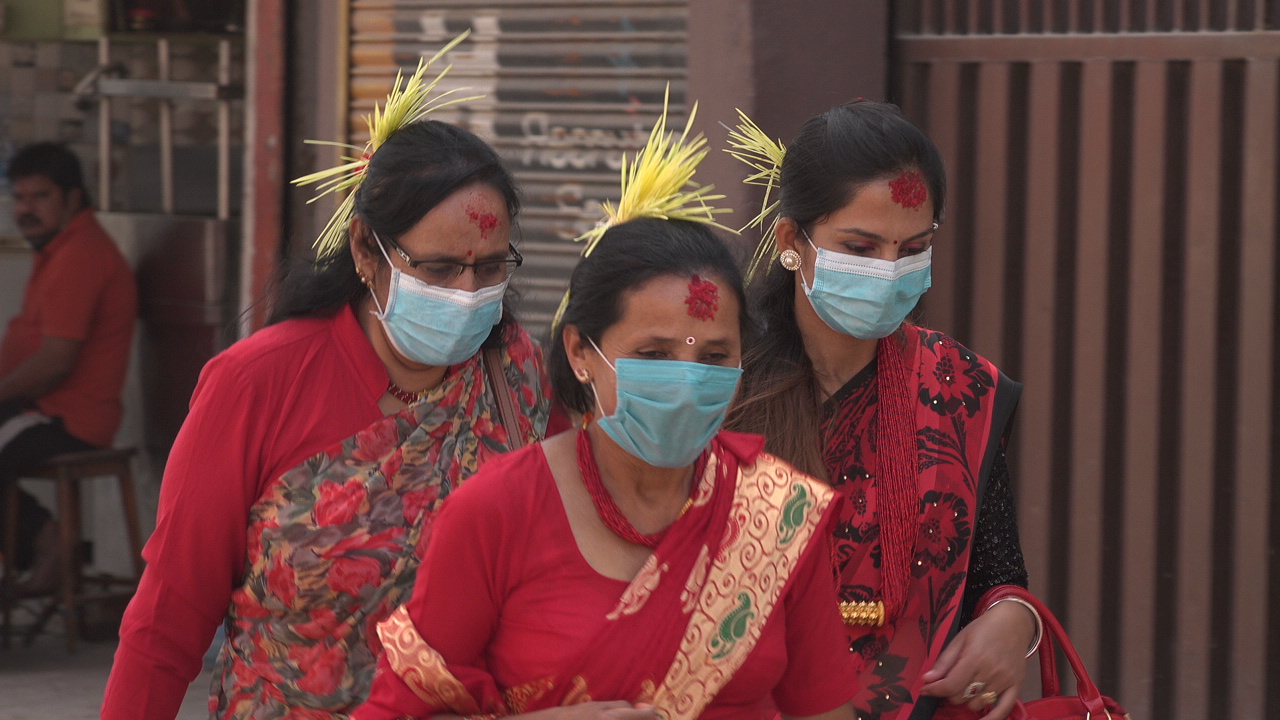
Every autumn, Nepalis cross cities, countries and continents to meet the people they call family. Airports fill, buses leave crowded terminals and households begin preparing for relatives who have been absent for months or even years. For many living abroad, however, Dashain also brings difficult choices. A worker in Dubai may not be able to take leave. A student in Sydney may see relatives only through a screen. Parents in Nepal may wait for a visit that cannot happen this year. The season is therefore more than a collection of rituals: it is a moment when belonging, duty, migration and memory meet.
The journey home is part of Dashain
Across Nepal, the approach of Dashain changes the rhythm of travel and family life. Bus stations fill, airports become busy and households prepare for relatives arriving from distant towns or other countries. The journey can be tiring and expensive, yet the destination means more than an address. Returning is an opportunity to sit with people who remember childhood, visit familiar streets and reconnect with relationships that routine working life often puts on hold. For Nepalis who have spent years overseas, the smell of a family kitchen or a conversation with an old neighbour can carry unexpected emotional force. Children raised abroad may encounter their parents’ hometown for the first time. The homecoming itself becomes part of the festival.
Tika, jamara and the passage of time
In many families, Vijaya Dashami is marked by elders placing tika and jamara on younger relatives and offering blessings. For children, Dashain may be remembered through holidays, new clothes, festive meals and dakshina. As people grow older, the meaning often changes. Receiving a blessing from a parent or grandparent after months or years apart is a moment of connection that few other occasions provide. The ceremony can be brief, but it makes the relationship between generations visible. As elders age, some people come to regard each Dashain visit as a precious chance to spend time together rather than simply a customary obligation. This feeling is personal and not universal, yet it helps explain why a journey home matters so much.
Dashain 2026 and the family calendar
Dashain began with Ghatasthapana on 11 October 2026, and Vijaya Dashami falls on Wednesday, 21 October 2026. Nepal’s calendar authorities announced 10:26 a.m. Nepal time as an auspicious time for tika, while noting that families may receive tika throughout the day. Customs and observances vary across communities and households. The dates create a shared focal point, but they do not determine everyone’s experience. For a migrant working a shift abroad or a student taking an examination, the festival may need to fit around responsibilities that do not pause for Nepal’s holiday calendar. A gathering on a different day can still preserve the occasion’s intention.
The financial cost of returning
An overseas trip is not simply a matter of booking a ticket. Flight costs, leave restrictions and family obligations make the decision difficult. Money allocated to travel could instead support household spending, a loan repayment or school fees in Nepal. In Gulf countries, including the United Arab Emirates and Qatar, Dashain is not generally an official public holiday. Many Nepalis work in sectors that continue operating normally, including hospitality, retail, construction, security and transport. Some celebrate after a shift; others cannot gather at all. Their absence should not be read as a lack of attachment. For many workers, staying overseas and continuing to earn is itself an expression of responsibility toward their families.
A festival recreated across borders
Nepali communities in Dubai, Doha, Sydney, London, New York and numerous other places organise gatherings that adapt familiar traditions to local circumstances. Friends may prepare festive food together, invite an elder from the community to offer blessings or arrange a celebration on the nearest available weekend. These events do not reproduce a village Dashain exactly, nor do they need to. Their importance lies in offering companionship and continuity. New arrivals meet others who understand their language and customs, while established families share traditions with children who have spent most of their lives overseas. The celebration becomes a way of making community in a place that may once have felt foreign.
What a video call cannot replace
Digital communication allows relatives to exchange greetings, photographs and blessings almost instantly. Parents can show children abroad how the home has been decorated; grandparents can speak with grandchildren they rarely see in person. Yet a screen can also sharpen the awareness of distance. A person looking at an entire family gathered around a table may feel the empty space where they would otherwise have sat. Video calling preserves contact and can provide comfort, but it cannot fully replace the experience of sitting beside an elderly parent. Both realities deserve acknowledgement: technology has made separation easier to manage without making separation disappear.
The sadness behind festive photographs
Dashain is widely associated with joy, but celebrations can also bring grief. The first festival after the death of a parent or grandparent may be marked by the absence of a familiar blessing. Parents whose adult children live abroad may prepare for a quieter gathering than in earlier years. Children may celebrate with only one parent present because the other must remain overseas for work. These are not exceptional emotions that should be excluded from the story of Dashain. They are part of how family life changes with migration, ageing and loss. A festival devoted to reunion naturally makes missing people more noticeable.
Children growing up away from Nepal
For children raised overseas, Dashain is often learned through family practice rather than through the wider society around them. They may recognise tika and jamara but know little about the places and people their parents associate with the festival. Parents can help by explaining the stories behind customs, sharing memories of their own childhood celebrations and keeping regular contact with relatives in Nepal. The aim need not be to reproduce every ritual exactly. Cultural inheritance is strongest when younger generations understand why an occasion matters rather than participate only because they have been instructed to do so. Traditions can adapt without losing their emotional meaning.
Different communities, different traditions
Dashain is among Nepal’s most widely observed festivals, but it is not celebrated identically by every Nepali. Religious, ethnic and regional traditions differ, and some communities do not observe Dashain at all. Even among families that celebrate, forms of tika, blessings and festive customs vary. Describing Dashain as a significant part of Nepali life should never erase this diversity. A diaspora publication can recognise the festival’s importance while respecting the many ways Nepalis relate to their heritage. Shared national identity need not depend on a single uniform ritual.
Where is home after twenty years abroad?
Long-term migration complicates what people mean by home. Someone who has worked overseas for decades may still regard Nepal as the centre of family identity, while everyday friendships and responsibilities are rooted abroad. A child raised in Australia or Britain may feel a stronger connection to the city where they go to school than to the village their parents remember. A Dashain visit can bridge these experiences, but it can also reveal how much has changed. Relatives relocate, houses are rebuilt and neighbourhoods transform. Home may become less a fixed location than a continuing relationship with people, language, memory and custom.
The larger migration story
The emotional weight of Dashain is connected to the economic realities that separate families. Overseas employment and education may increase opportunity and financial security, yet can also mean missed birthdays, family milestones and years spent apart from ageing parents. The choice between coming home and remaining at work rarely has a simple answer. A family’s finances, job security and caregiving needs all matter. It is unfair to romanticise returning without acknowledging the cost, just as it is unfair to assume that distance means weakened affection. Modern Dashain holds both the benefits and sacrifices of migration in the same frame.
The decisions families make together
When a parent or sibling works overseas, the decision to travel for Dashain rarely affects only one person. Family members may discuss whether the price of the journey is manageable, how much leave is available and which responsibilities need attention at home. There can be an unspoken expectation to return, particularly when relatives have waited a long time. That expectation deserves sensitivity. A worker whose contract makes travel risky should not feel compelled to choose between income and a reunion. Equally, an ageing parent may value a short visit far more than expensive gifts. The most useful conversations are often practical and compassionate: what can the family afford, who most needs support, and when could a visit realistically happen? These conversations may be difficult, but they replace guilt with shared understanding. Even when this year’s answer is to remain overseas, planning a later reunion gives everyone a more concrete sense of connection.
Keeping Dashain meaningful when travel is impossible
There is no single formula for celebrating Dashain outside Nepal. A household might prepare a familiar meal, speak with relatives at an agreed time or invite someone who would otherwise spend the festival alone. Parents can encourage children to ask grandparents about their experiences and record family stories that might otherwise be lost. Friends living abroad can create small traditions of their own without pretending these are exact replicas of celebrations back home. Some people may prefer a quiet observance rather than a large gathering, especially when work is demanding or grief remains close. The purpose is not to stage the perfect festival for photographs. It is to give attention to relationships, make room for memories and acknowledge what distance has changed. Even a short conversation can become a valuable annual ritual when it is thoughtful, sincere and repeated over time.
The ties that remain
As Vijaya Dashami approaches, some Nepalis will be packing for a long-awaited reunion. Others will be preparing a small celebration with friends or finding a quiet moment to call home. Their experiences are different, but many share the wish to remain connected to family and heritage. Dashain’s meaning lies not only in ceremonial details or festive food but also in the relationships renewed through them. Distance changes the way families gather. It does not have to erase the connections that make the gathering meaningful.
Related: Dashain Across Borders: A Festival Reimagined Far From Home.