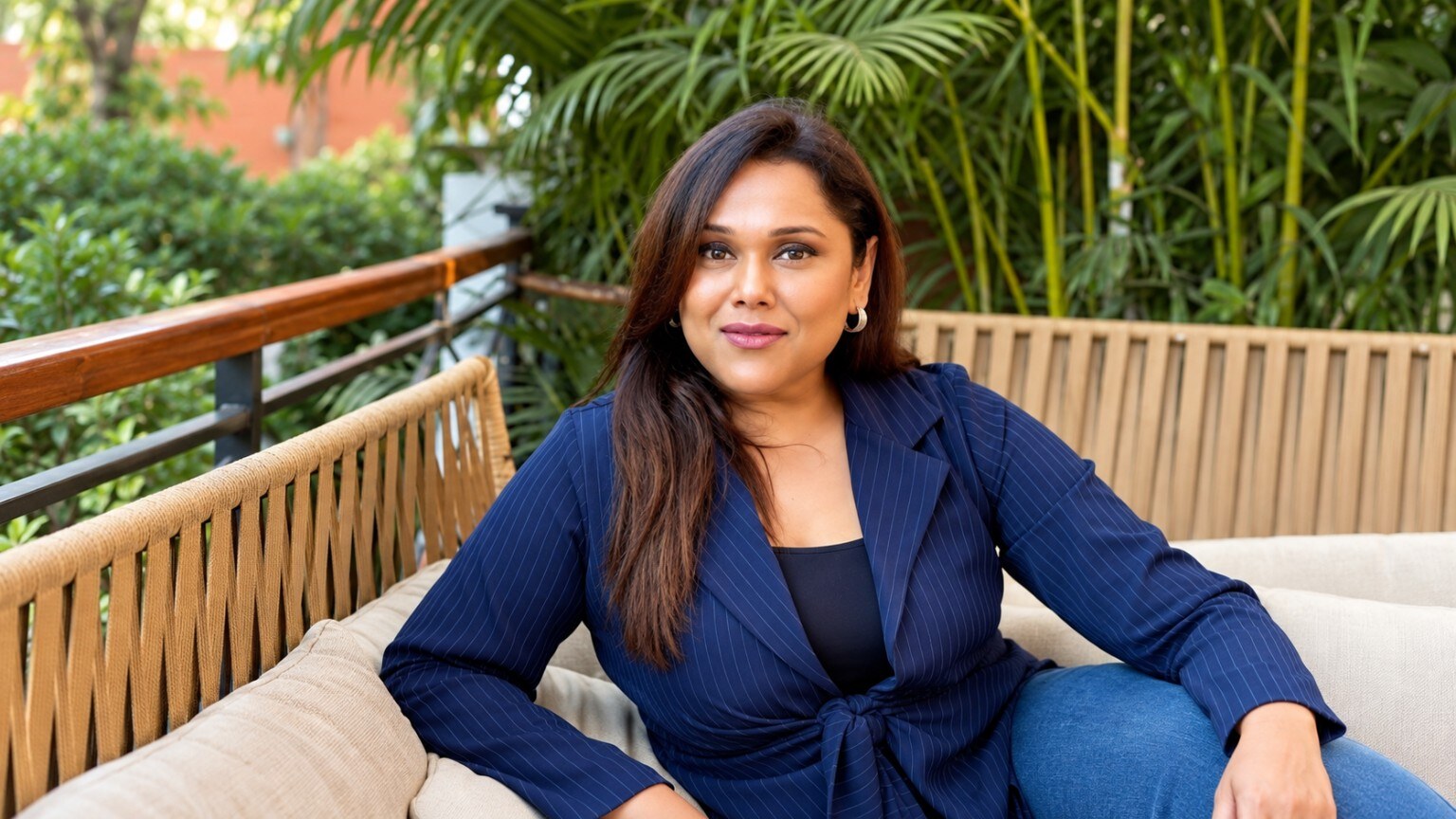
Mannsi Agrawal’s relationship with Nepal began through marriage and became something far more self-directed. She arrived in Kathmandu from Kolkata in 2006 at twenty-one, entered adult life in a country she had not grown up in and gradually built a career across communication training, photography, education and public storytelling. By the time a playful 2020 tourism video made her widely visible, she had already spent years learning how people in Nepal work, speak, present ideas and explain the country to one another.
The public image that followed was cheerful and accessible: a communicator with a camera, a sense of humour and an obvious affection for Nepal. The deeper story is quieter. It is about building professional identity after migration, learning how to belong without pretending to have been born into the place and turning the experience of crossing cultures into practical work helping other people communicate more clearly.
Table of Contents
Mannsi Agrawal leaving Kolkata
Mannsi Agrawal grew up in Kolkata, attended La Martiniere for Girls and studied economics at Symbiosis College of Arts and Commerce. The move to Kathmandu after marriage was therefore not simply a change of city but a shift in social world, family structure and professional expectation. At twenty-one, much of adult identity was still being formed.
Migration through marriage can appear more secure than migration for work because a household already exists at the destination. It can also create another kind of uncertainty: the person arrives with a clear reason for moving but no automatic answer about how to build an independent professional life.
Learning Kathmandu slowly
Mannsi Agrawal’s first years in Nepal involved exploration as much as work. Places such as Boudha, Thamel, Pokhara and Chitwan became reference points through repeated visits rather than tourism checklists. The country gradually shifted from unfamiliar destination to lived environment.
This process matters because later tourism storytelling drew on a resident’s memory rather than a visitor’s first impression. Agrawal knew what had surprised her originally and what had become ordinary after years of familiarity, allowing her to communicate Nepal to outsiders while understanding that the postcard view was only one layer.
The camera as a way of paying attention
Photography gave that curiosity a practical form. A camera forces the person holding it to decide what deserves attention, what belongs inside the frame and which details make a place feel specific. Those habits later connected naturally with food, baby photography and tourism storytelling.
Mannsi Agrawal’s visual work has often favoured warmth, colour and close-range detail over detached documentary distance. That style reflects both commercial purpose and personal taste, turning everyday subjects into carefully staged images without pretending they have become something entirely different.
City Centre and commercial Kathmandu
By 2009, Agrawal was representing Kathmandu’s City Centre during a period when shopping malls were changing urban leisure in the capital. The job placed her inside a city becoming more commercial, aspirational and brand-conscious. Businesses were learning how to present themselves to customers who were spending more time in formal retail spaces.
This experience helped connect communication with business. A brand is not only a logo; it is the way people understand what a place or company offers, why it matters and how consistently that promise is delivered. Mannsi Agrawal would later apply similar thinking in training rooms and tourism workshops.
Communication becomes the main profession
Agrawal began working as a communication coach around 2010 and moved further into corporate training over the following years. The field suited the combination of presentation, observation and audience awareness already visible in her photography. Communication training became the most sustained professional thread across an otherwise multi-hyphenate career.
In 2015, she earned the Distinguished Toastmaster designation, one of Toastmasters International’s highest educational achievements. The credential reflected not one speech but sustained work in public speaking, leadership and facilitation over time.
Why communication training matters
Public speaking is often treated as personality: some people are naturally confident, others are not. Training reveals how much of effective communication is technical. Structure, pacing, listening, question handling and the ability to simplify complex ideas can all be practised.
This is particularly important inside workplaces where technical competence does not guarantee clear communication. A strong engineer, banker or manager may still struggle to present decisions, give feedback or explain risk to people outside their specialism.
Corporate clients
Mannsi Agrawal’s clients have included large Nepali companies and institutions such as Ncell, Sipradi and WorldLink. The organisations differ in sector, but the communication problems inside them often overlap: teams need to explain ideas, manage disagreement, make presentations and translate specialist knowledge into language colleagues can act on.
Training in such environments is less about performance than behaviour. A polished speech is useful, but an organisation changes only when everyday meetings, emails, feedback and leadership conversations become clearer.
Role-play and practical learning
Agrawal has used role-play in training, including programmes such as a 2017 session for staff at The British College. Role-play works because it converts abstract advice into situations participants recognise. A person may agree intellectually that listening matters and still discover during an exercise that they interrupt constantly or become defensive under pressure.
Good facilitation creates enough safety for participants to notice such habits without turning the room into embarrassment. The trainer’s skill lies in making practice feel useful rather than performative.
Photography becomes another business
Alongside communication work, Mannsi Agrawal developed photography more seriously. Photographing her son contributed to the creation of Cherry Orchard, a baby photography venture built around the difficulty and intimacy of working with infants and families. Baby photography demands patience because the subject does not follow production schedules.
The photographer has to adjust to feeding, sleep, mood and family emotion while maintaining safety and visual consistency. This kind of work strengthened Agrawal’s ability to manage people as much as images.
Kathmandu Tales Food Photography
Food photography became another specialised practice through Kathmandu Tales Food Photography. Unlike babies, food remains still; the challenge moves toward light, styling, colour and the visual story created around the dish. A plate can look appetising and still say very little about where it belongs culturally.
Mannsi Agrawal often used vessels, fabrics and warm colour palettes to situate food within a wider aesthetic environment. The image became part commercial photography and part cultural framing.
Food as cultural communication
Food photography is especially powerful in Nepal because cuisine varies sharply across communities and regions. The way a dish is served can carry as much cultural information as the ingredients themselves. Brassware, leaves, baskets and household objects can place the viewer inside a social context before a caption explains anything.
This makes food photography a form of translation. The photographer decides which cues help an unfamiliar viewer understand what the dish represents without reducing the food to exotic decoration.
Stand-up comedy
Agrawal also experimented with stand-up comedy, another activity that appears separate from corporate training until one looks at the underlying skill. Both depend on timing, audience reading and the ability to structure an idea so that the response arrives when expected. The difference is that comedy gives immediate and unforgiving feedback.
A joke that does not land cannot be explained afterward into becoming funny. This forces performers to observe rhythm closely, a lesson that transfers surprisingly well into presentations and facilitation.
The 2020 Nepal video
Mannsi Agrawal’s wider public breakthrough came through a 2020 video framed around reasons not to visit Nepal. The joke worked because the visuals contradicted the premise repeatedly, turning the negative setup into an invitation. The concept was simple enough to travel on social media while allowing photography and humour to reinforce each other.
The idea began partly with friends and relatives in Kolkata who knew surprisingly little about the country where she had lived for years. The video therefore emerged from a migrant’s familiar experience: realising that people back home still imagine the adopted country through outdated or incomplete assumptions.
Why the video travelled
Successful tourism content needs more than attractive scenery because viewers have already seen thousands of mountain photographs. Agrawal’s video used structure and personality to create a reason to keep watching. The images supplied beauty, while the ironic premise supplied narrative.
That combination made the work more shareable than a conventional destination advertisement. People were not merely being told Nepal was beautiful; they were being invited into a joke whose punchline was affection.
The resident-outsider advantage
Mannsi Agrawal occupies a useful perspective because she arrived as an outsider and later became a long-term resident. She remembers what needed explanation originally while understanding more of the context that first-time visitors miss. This can be a strong position for cultural storytelling.
It also requires humility. Long residence does not make someone representative of every Nepali experience, and affection does not erase the fact that the person learned the country through a particular class, family and urban environment.
Tourism branding
Her later work increasingly brought communication training and tourism together. In 2024, she led the Nepal Tourism Board’s Brand, Communicate, Shine workshop for tourism entrepreneurs and officials. The programme connected brand positioning, public speaking and digital communication around the practical challenge of presenting Nepal effectively to potential visitors.
Tourism branding becomes weak when it relies only on generic words such as beautiful, authentic or adventurous. The strongest businesses explain exactly what experience they offer, who it is for and why the local context matters.
Local stories for global audiences
At the Kathmandu International Mountain Film Festival, Mannsi Agrawal moderated a discussion about taking local stories to global audiences. The question sits at the centre of much of her work: how can a story become understandable internationally without losing the details that make it belong somewhere specific?
Translation is not the same as simplification. A local story may need context, but the people inside it should not be flattened into symbols merely because an international audience is unfamiliar with the setting.
Learning Loft Asia
Education became another formal strand of Agrawal’s work when she co-founded Learning Loft Asia in 2020. The organisation has worked with digital-education partners, including India’s IIDE, bringing communication, professional learning and digital skills into a more structured educational environment.
This move makes sense within her broader career. Training sessions, public speaking and photography all depend on helping people notice, organise and communicate ideas. Education turns those activities into repeatable programmes rather than one-off workshops.
Communication Alchemy
Through the Communication Alchemy Guild and related programmes, Mannsi Agrawal has continued working on presentation, workplace communication and professional confidence. The name captures her belief that communication can transform how existing knowledge is perceived without changing the underlying expertise itself.
The strongest training avoids implying that confidence is theatre. The goal is clarity: a person should be able to explain what they know without performance anxiety obscuring the idea.
Working with survivors
Agrawal’s communication work has also extended beyond corporate settings. In late 2024, she worked alongside activist Muskan Khatun in a programme involving survivors of gender-based violence, focusing on confidence and storytelling. In such settings, the meaning of “finding your voice” becomes far more serious than delivering a better business presentation.
Facilitation has to respect consent and trauma. The objective is not forcing people to disclose experiences publicly, but helping participants speak on their own terms when and if they choose to.
Women in leadership
In January 2026, Mannsi Agrawal facilitated a Communication Excellence Workshop for members of the Australia Awards Nepal Women in Leadership Network. Working with established professionals creates a different challenge from entry-level training because participants may already possess deep expertise and leadership experience.
The trainer’s role becomes refinement rather than instruction from above. Strong facilitation helps people sharpen how authority is communicated without assuming they lack confidence simply because they are women.
Communication and power
Communication training is often presented as neutral, but communication exists inside power structures. A junior employee may know exactly how to speak and still be ignored because the organisation does not value their position. A woman may be labelled aggressive for the same directness praised in a male colleague.
This means better communication cannot solve every workplace problem. Training is most useful when organisations also examine who gets heard, who controls meetings and how decisions are made.
Confidence versus performance
Public-speaking culture can sometimes encourage people to imitate one polished style, flattening personality in the process. Agrawal’s strongest work appears to move in the opposite direction: helping people become clearer versions of themselves rather than copies of a trainer’s mannerisms.
Authenticity is not spontaneity. It can be prepared carefully while still sounding like the person who prepared it.
The migrant professional
Mannsi Agrawal’s career also belongs to a wider story of people who move through marriage and then build independent professional identity in the destination country. Such migrants are often described primarily through family connection even after decades of work. This can make professional achievement appear secondary to the relationship that enabled the move.
Nearly two decades after arriving in Kathmandu, that framing is no longer sufficient. Marriage explains why she moved; it does not explain the organisations, clients and projects she built afterward.
Home without claiming sameness
Calling Nepal home does not require pretending Kolkata disappeared from her identity. Agrawal’s visual preferences, speech and cultural references carry traces of both places. The result is layered rather than assimilated.
This is increasingly common in South Asian cities where migration through work, marriage and education creates lives spanning several cultural contexts. Belonging becomes additive.
The ethics of telling Nepal
A long-term foreign-born resident can become an effective storyteller about Nepal because familiarity reduces superficial observation. The same position can become problematic if confidence hardens into authority over experiences the storyteller does not share. Good cultural communication therefore requires continual listening.
Mannsi Agrawal’s work is strongest when she functions as a facilitator rather than the final interpreter: creating space for businesses, professionals and local voices to explain themselves more clearly.
Why workshops matter more than viral videos
The 2020 tourism video created visibility, but the sustained career is built from sessions, preparation and repeat clients. Workshops rarely produce the same public attention because their success is distributed across dozens of participants rather than attached to one creator. They are nevertheless where much of the professional impact accumulates.
A viral video proves reach. A client inviting the trainer back years later demonstrates trust.
The many careers are really one
Photography, corporate training, comedy, tourism and education can look like unrelated careers on paper. The connecting idea is audience. Each discipline requires understanding what another person is seeing, hearing or missing.
Agrawal’s career is therefore less fragmented than it appears. The tools change; the underlying work remains communication.
Finding home through work
Home can be described emotionally, but long-term belonging is often built through ordinary professional repetition: organisations that know your work, colleagues who call again and places that no longer require directions. Mannsi Agrawal’s connection to Nepal became visible in exactly these ways.
Communication in the short-video era
The media environment around Agrawal’s work has changed sharply since she began corporate training. Professionals are now expected to explain ideas not only in meetings and presentations, but through Zoom calls, short videos, LinkedIn posts and messages consumed on phones. Clarity has become more valuable because audiences decide within seconds whether to keep listening.
This does not make long-form communication obsolete. It increases the need to understand format, because a good idea should be compressible without becoming misleading and expandable without becoming repetitive. Trainers now help people move between a two-minute explanation, a ten-slide presentation and a difficult one-to-one conversation while keeping the central message intact.
AI changes the communication problem
Generative AI can now produce polished emails, scripts and presentation outlines in seconds, which changes what communication training needs to teach. The bottleneck is less often producing grammatically correct text and more often deciding what is actually worth saying, which claims are accurate and whether the language sounds like the person responsible for it. Fluency is becoming cheap; judgment is not.
For trainers such as Mannsi Agrawal, this makes voice and audience awareness more important rather than less. A professional who simply reads machine-generated language may sound smooth while communicating very little. The useful skill is knowing how to edit technology back into something specific, credible and human.
Cross-cultural facilitation
Agrawal’s background between Kolkata and Kathmandu also gives her practical experience of how similar South Asian workplaces can still misunderstand one another. Hierarchy, directness, humour and disagreement are interpreted differently across teams even when everyone speaks fluent English or Nepali. Cross-cultural communication is therefore less about memorising etiquette than noticing assumptions before they harden into conflict.
This becomes especially relevant for Nepali companies serving international clients and for professionals working with regional teams. A person may need to be more explicit with one audience, more contextual with another and more careful about how disagreement is framed. Adaptability becomes a professional strength when it does not require pretending to be somebody else.
The limits of personal branding
Mannsi Agrawal’s career also sits inside a culture increasingly obsessed with personal brands. Visibility can help trainers, photographers and educators attract clients, but a brand becomes fragile when the online personality grows faster than the actual work. Repeated delivery, referrals and professional outcomes remain harder to fake than engagement metrics.
This is why her less visible training work matters. A public storyteller can gain attention once; a facilitator invited back by organisations has to prove usefulness repeatedly. The stronger long-term reputation is built when the brand is a consequence of competence rather than a substitute for it.
What the next phase could become
After nearly two decades in Nepal, Agrawal is no longer building from the uncertainty of a recent arrival. The opportunity now is institutional: developing programmes, trainers and learning communities capable of carrying her methods beyond sessions she teaches personally. That would turn an individual communication practice into something more durable.
The transition is similar to the one many experienced professionals eventually face. Early careers ask whether the individual can do the work; mature careers ask whether the work can be taught, delegated and improved by other people. If that happens, the influence becomes less visible and more scalable.
That home remains layered rather than singular. Kolkata is still part of the language, taste and visual memory she carries, while Kathmandu is where most of the professional life has been built. The combination is not a compromise; it is the actual shape of the biography.
The woman who once tried to explain Nepal to friends in Kolkata now spends much of her time helping people in Nepal explain themselves—to clients, colleagues, audiences and the wider world. That reversal is the clearest measure of how far the move became a life. Marriage brought her to Kathmandu; work, curiosity and years of repeated participation are what made the city home.
Related reading: Becoming Jack Dai: The British Traveller Who Found a Home in Nepal; The Visitor Who Stayed: Lisa Choegyal and the Reinvention of Nepal Tourism.