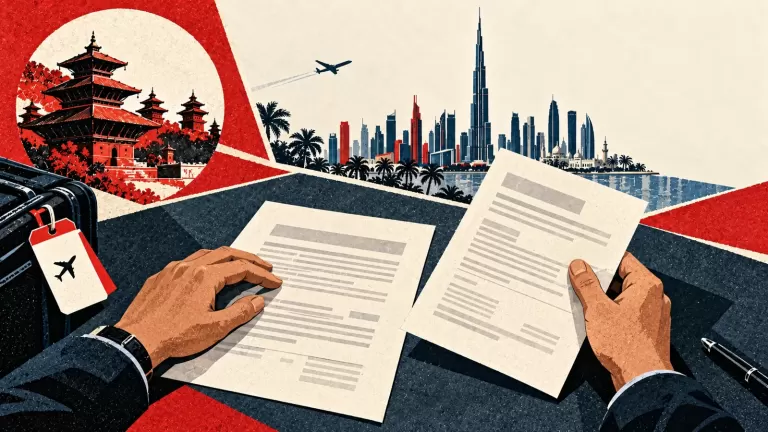
Route record: Flydubai’s 25 September 2026 announcement confirms the inaugural 23 September flight and the announced daily service. This establishes the launch record; confirm present operating dates and the full fare conditions before booking.
For UAE residents, Pokhara’s new direct connection to Dubai offers something more useful than another destination on a map: the possibility of spending a short holiday beside a Himalayan lake without first arranging an onward journey through Kathmandu. Flydubai launched the daily Dubai–Pokhara service on 23 September 2026, turning what had been an announced route into an operating international link.
A few days of annual leave can disappear surprisingly quickly. There is the journey to the airport, the flight, immigration, another connection and, finally, the transfer to the place that prompted the trip. For a UAE resident considering Pokhara, that last part has often complicated an otherwise appealing idea.
The announced Dubai–Pokhara connection changes that calculation. For Nepalis working in the Emirates, it could make a visit to family in and around Pokhara easier. For other expatriates, it makes a different kind of Nepal holiday worth considering: a comfortable city base, time outdoors and mountain scenery without committing to a long trekking expedition.
The opportunity deserves attention. It also deserves a realistic explanation of what is being offered, who benefits and how to plan a visit that feels like a holiday.
Table of Contents
The route has now launched
Flydubai’s inaugural scheduled service landed at Pokhara International Airport on 23 September 2026, and the airline confirmed the start of daily non-stop flights between Dubai International and Pokhara. The service operates from Dubai’s Terminal 3 and runs under flydubai’s codeshare partnership with Emirates, which can simplify connections for passengers arriving in Dubai from other cities.
The practical meaning is important: travellers no longer need to treat the route as a future plan. It is now an operating service, although schedules, fares and operational conditions can still change and should be checked on the airline’s current timetable before purchase.
| Route | Flight | Departure | Arrival |
|---|---|---|---|
| Dubai–Pokhara | FZ 1165 | 12:00 | 18:15 |
| Pokhara–Dubai | FZ 1166 | 19:15 | 22:00 |
Announced schedule; all times local. Confirm the current timetable and terminal on your booking.
These timings favour an arrival evening followed by full sightseeing days. They also make the return day potentially useful, provided luggage storage, airport transport and check-in are planned. They do not remove the need for time at the airport or make a two-day trip automatically relaxing.
The most valuable saving may be your leave
The direct route’s strongest advantage is straightforward: passengers whose destination is Pokhara can avoid arranging a separate journey there from Kathmandu. The precise saving depends on the alternative itinerary. A domestic connection, an overnight stop and a road transfer all involve different costs and uncertainties.
Consider a hypothetical couple living in Dubai who have four nights available. Their decision should begin with usable time at the destination. A cheap itinerary that consumes much of the first and final days may be less attractive than a higher fare that lets them stay in one place. This is a planning example, not a claim that the new service will always be cheaper or more reliable.
For Nepali expatriates, the benefit may be more personal. Parents visiting from the UAE, children travelling with luggage and workers returning for a short family occasion could face fewer arrangements. Those continuing beyond Pokhara still need to compare the final road journey. A convenient airport is valuable only when it fits the actual destination.
Residents of Abu Dhabi or other emirates should include their journey to Dubai in the calculation. The relevant measure is the entire trip from home to hotel or family home, rather than the flight alone.
Why Pokhara?
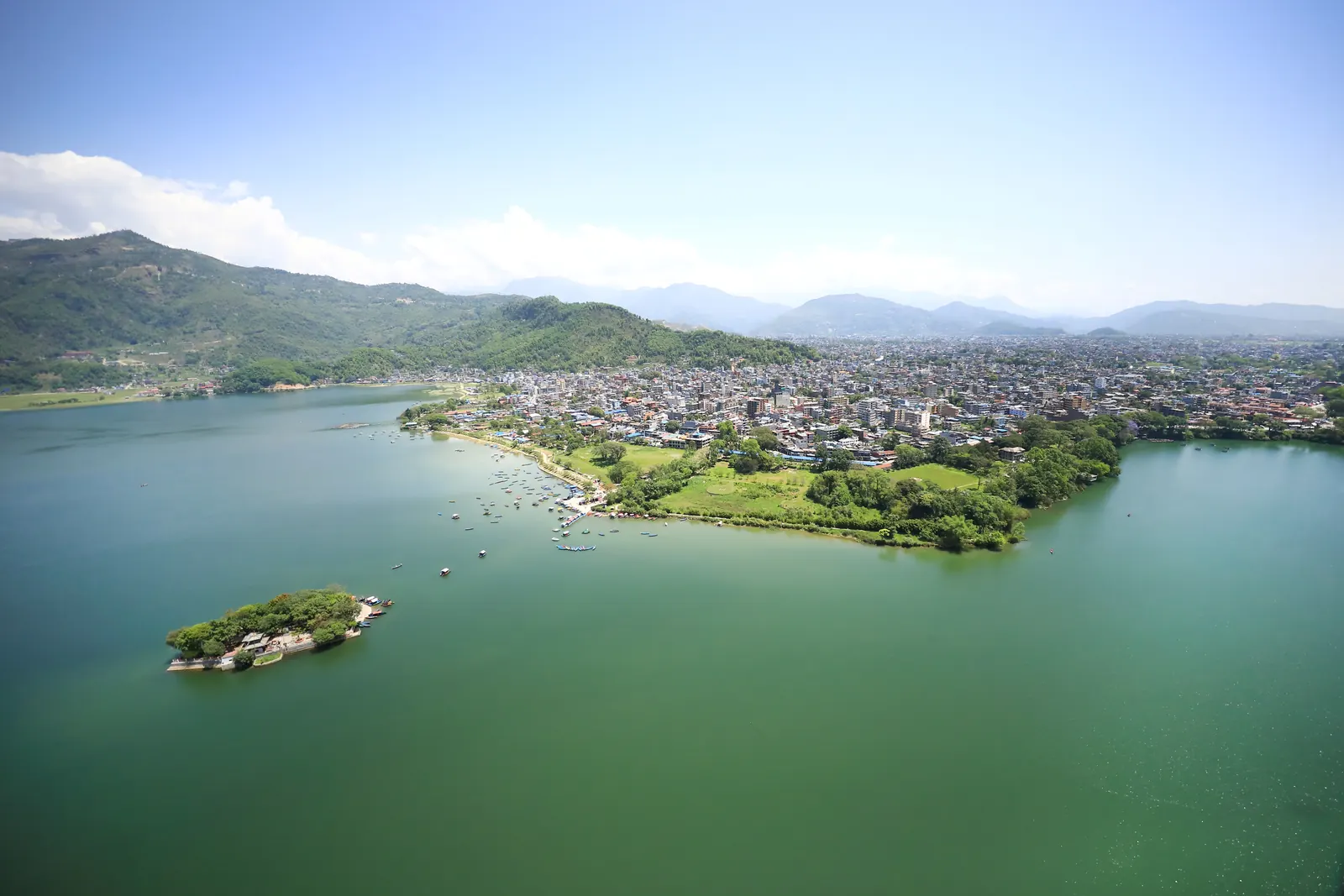
Pokhara’s appeal is that a Himalayan holiday need not begin with a demanding climb. The Nepal Tourism Board’s destination guide describes a city combining lakes, views of the Annapurna range and access to outdoor activities. Phewa, Begnas and Rupa give the area several waterside settings, while the city serves as a gateway to the Annapurna region.
For a visitor accustomed to the UAE’s urban routine, the attraction can be a change of pace. Choose a morning walk, a long breakfast and one outing instead of an itinerary organised around constant movement. Pokhara can work particularly well when the objective is to spend time together rather than complete a list of attractions.
This does not require dismissing Dubai’s comforts. Many travellers want both: a manageable journey and surroundings that feel different. The practical question is whether a hotel’s location, facilities and transport arrangements support that kind of break.
Mountains without a multi-day trek
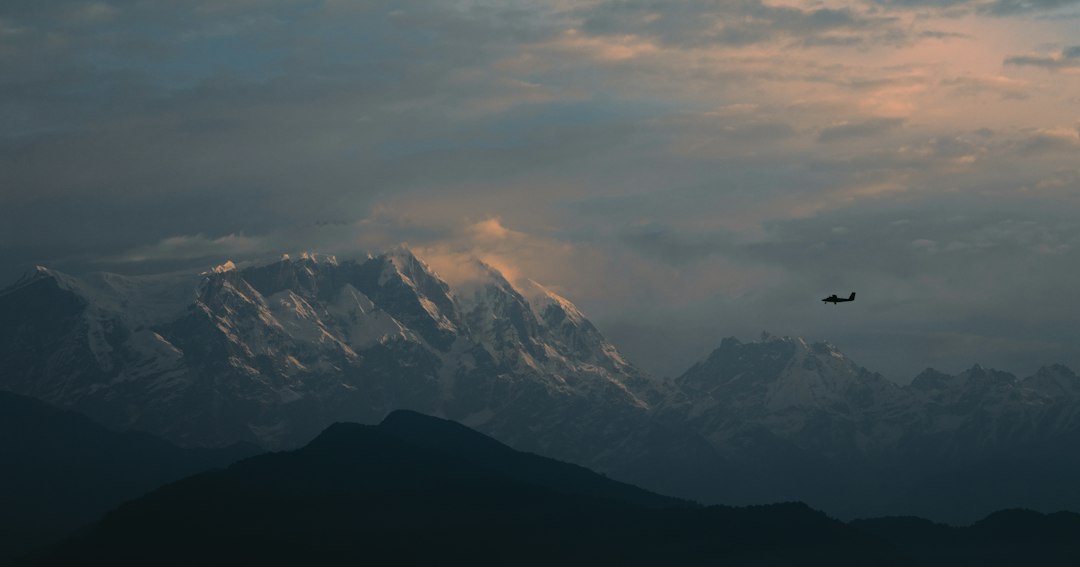
Sarangkot is one of the viewpoints identified in the Tourism Board’s mountain-viewing guide. On a clear day, the landscape provides the reason many people come to Pokhara in the first place. An early excursion can be the centrepiece of a visit, leaving the rest of the day free.
Keep expectations flexible. Mountain visibility is weather-dependent; no hotel package can guarantee the photograph in its advertisement. Ask your accommodation about local conditions and choose the clearest available morning rather than rigidly protecting a preselected date.
There is also a distinction between enjoying views and undertaking a trek. Visitors considering a longer mountain itinerary should plan it separately, with appropriate time, current permit information and suitable arrangements. A four-night city break should not be sold to a family as if it were an expedition.
A lake, a hilltop and a rainy-day alternative
Phewa Lake gives a short visit an obvious starting point. A lakeside walk or a boating outing, when conditions are suitable, can occupy part of a day without making the schedule exhausting. Begnas offers another lake excursion for travellers who prefer to spread their outings across several days.
The World Peace Pagoda, on a hill above the southern side of Phewa, combines a Buddhist site with views across the surrounding landscape. Before committing, ask about the access route and walking involved, particularly when travelling with small children or someone with limited mobility.
A visit should also have an indoor option. The International Mountain Museum presents mountaineering history and mountain-related exhibits. It can give context to the peaks outside and offers an alternative when an outdoor plan no longer suits the weather. Check current opening hours before setting out.
These are real places around which to build a modest itinerary. Their value is in the variety they offer; trying to fit all of them into the same day defeats the purpose of an easier journey.
A realistic four-night visit
The following is a suggested itinerary, not an advertised package. It assumes flights operate to the announced schedule and leaves room for changes.
- Arrival evening: Arrange an airport pickup, check in and have dinner. Save substantial sightseeing for the next day.
- First full day: Explore the Phewa lakeside area at an easy pace. Add boating only if conditions and the operator’s arrangements suit your group.
- Second full day: Choose Sarangkot for mountain views if the forecast is promising. Keep the afternoon open for rest or the museum.
- Third full day: Choose either Begnas Lake or the World Peace Pagoda, adjusting the outing to your group’s energy and mobility.
- Departure day: Have a relaxed breakfast, confirm luggage storage and leave ample time for the airport.
Swap the days when weather requires it. Parents should ask about room layout, child arrangements and transport before paying. Travellers who need accessible facilities should seek specific answers about steps, bathrooms and vehicle access; a general description such as “family friendly” is not enough.
Compare the complete cost
Flydubai’s launch announcement listed Economy return fares from AED 1,950 from Dubai. That is a dated advertised starting fare, not a current quotation or a fare available on every date. Check the complete price for your itinerary.
Build your own total using return airfare, baggage, seat choices, accommodation, airport transfers, food, activities and any applicable visa fees. Include travel to Dubai airport and the cost of returning home after the evening arrival.
A useful comparison asks whether two fares include the same things. A family carrying checked luggage may find that the first price shown is only the beginning. Someone whose leave approval can change should give amendment conditions real weight.
Avoid assuming every Pokhara holiday is inexpensive. A simple stay and a resort holiday are different purchases. Request a written total from each provider and clarify taxes, transfers and cancellation terms before comparing offers.
UAE residency is not a single visa category for Nepal
The UAE’s expatriate population holds many different passports. Nepal entry requirements depend on nationality and travel documents, so an Emirates ID should not be treated as proof that everyone receives the same entry arrangements.
The Nepal Tourism Board’s visa guidance lists visa-on-arrival facilities at Pokhara International Airport for eligible travellers. It also identifies nationalities requiring advance visas and separate arrangements for Indian citizens. Standard tourist visa fees listed are US$30 for 15 days, US$50 for 30 days and US$125 for 90 days, with exemptions applying to some travellers.
Check the rules for each member of your group before buying a non-refundable ticket, especially in families with different passports. Confirm passport requirements, supporting documents and your arrangements for returning to the UAE with the airline and relevant authorities.
Direct does not always mean simplest from every emirate
For somebody living in Dubai or the northern emirates, the direct flight removes a major layer of complexity. For a resident of Abu Dhabi, Al Ain or another location, the ground journey to DXB still belongs inside the total travel calculation. A route can be direct in aviation terms while the passenger’s actual journey remains multi-stage.
Compare the trip door to door. Include airport travel, parking or taxis, check-in time and the final transfer in Pokhara. A direct flight becomes genuinely valuable when the whole journey is easier, not only the segment shown on the airline map.
The route matters for expatriate Nepalis too
The new connection is not only a tourism story. Western Nepal has a large population with family members working across the Gulf, and a direct Dubai link can reduce the need to travel through Kathmandu before continuing west. For short family visits, funerals, weddings and festivals, that reduction in domestic transfer can matter more than the sightseeing value.
Passengers continuing beyond Pokhara should still compare onward road time with Kathmandu-based alternatives. The best gateway depends on the final district, not on airport prestige.
Connections through Dubai widen the market
Flydubai’s codeshare relationship with Emirates means Pokhara can now connect more easily with a wider international network through Dubai. This matters for visitors arriving from Europe, North America and other regions where Dubai already functions as a major transfer hub.
The route therefore has value beyond UAE residents alone. If schedules remain reliable, Pokhara can become the first point of arrival in Nepal for travellers whose trip is centred on the Annapurna region rather than Kathmandu.
What changes for Annapurna travel
Pokhara has long been the main staging city for the Annapurna region, yet many international trekkers previously entered Nepal through Kathmandu and added another flight or road transfer before beginning. A direct international arrival can simplify the front end of that journey considerably.
That does not mean travellers should land and begin trekking immediately. Time for sleep, weather adjustment, equipment checks and permit arrangements can still improve the trip. Convenience should reduce unnecessary transfer, not remove sensible preparation.
The route may change hotel demand
Direct international access can alter which parts of Pokhara benefit first. Hotels able to coordinate airport transfers, late arrivals and short-stay packages may become more attractive to UAE residents with limited leave. Higher-end properties may market weekend-style breaks, while family-run hotels can benefit from diaspora visitors who want more flexible stays.
The opportunity will depend on consistency. Tourism businesses can design around a daily route only if travellers believe the service will remain reliable enough to plan around.
Airport transfers deserve planning
Pokhara International Airport is close enough to the city for a manageable transfer, but arrival after 6 pm means many travellers will reach hotels during the evening rather than in daylight. Pre-arranging transport can make the first hour of the trip easier, especially for families carrying luggage.
Ask the hotel whether the transfer is private or shared, whether the price is fixed and where the driver will meet passengers. Small details reduce uncertainty after a long travel day.
Four nights can work because the first evening is simple
The midday departure from Dubai and evening arrival in Pokhara create a natural rhythm for a short trip. The first day does not need to contain sightseeing; check-in, dinner and sleep are enough. Three full days can then be used without rushing.
This is why the route may appeal to residents with limited annual leave. The trip becomes easier to imagine as a compact break rather than an expedition requiring a complicated domestic connection.
Weather still controls the mountain-view experience
Direct access does not guarantee clear Himalayan views. Pokhara’s appeal is closely tied to weather, and cloud can hide the Annapurna range completely even when every flight and hotel operates normally.
Build flexibility into the itinerary. If the clearest morning appears earlier than expected, move Sarangkot or another viewpoint forward rather than protecting a rigid sightseeing order.
Monsoon conditions still matter in late September
The route launched during a period when Nepal was still dealing with serious flood and landslide impacts in several districts. Pokhara itself may be operating normally while road journeys elsewhere face different conditions. Travellers should therefore separate the question of whether the flight operates from the question of whether every onward route is advisable.
Check current weather, road and trekking information close to departure, particularly if the trip extends beyond the city into mountain areas.
Short breaks reward fewer activities
A direct flight can tempt travellers to overfill the itinerary because access feels easier. The better use of saved transfer time may be doing less. A lake morning, one viewpoint, one museum and unhurried meals can produce a more satisfying four-night visit than several distant day trips.
Pokhara’s value lies partly in pace. The route is most useful when it preserves that advantage rather than turning the city into another transit point.
Fares should be checked, not remembered
Flydubai’s live fare pages change by date and availability. By late September, the airline was advertising different starting prices from those shown before launch. This is normal airline pricing rather than evidence that one quoted fare was wrong.
Use published fares only as snapshots. Compare the exact dates, baggage allowance, flexibility and total return price before deciding whether the direct route represents good value for your household.
Business-class pricing changes the audience
The route also includes Business Class, which may attract higher-spending leisure travellers, corporate passengers and diaspora families prioritising convenience. That segment can support hotels and tourism products positioned above the budget market.
Pokhara’s tourism economy benefits most if increased international access supports a range of businesses rather than concentrating spending in only a few premium properties.
Visa planning remains passport-specific
UAE residency still does not create one Nepal visa category. Two colleagues living in Dubai may face different entry requirements because they carry different passports. Travellers should check Nepal’s current visa rules for each person rather than relying on residence status or a friend’s previous experience.
This is especially important for families with mixed nationalities. Confirm entry requirements before purchasing restrictive fares.
The route could influence Pokhara’s international identity
Pokhara has long been internationally known as a tourism city without having regular direct links to major global hubs. A daily Dubai service changes that perception by giving the city a direct place in international airline schedules rather than only in domestic connections. If the route performs well, other carriers may watch the demand closely.
That does not guarantee a rapid wave of new international flights. Airlines evaluate aircraft utilisation, yields, seasonality and operational reliability. But sustained daily service can demonstrate that demand exists beyond one-off charters and promotional launches.
Tourism businesses should avoid overpromising
New connectivity creates temptation to market Pokhara as effortless. The city is easier to reach from Dubai, but mountain weather, seasonal rain and local transport still shape the experience. Businesses build stronger trust by describing those realities clearly rather than turning a direct flight into a promise that every part of the holiday will run perfectly.
Convenience is valuable precisely because the destination remains real, not because the destination has become frictionless.
The best use of the route may be repeat travel
For UAE-based Nepalis, one of the most important effects may emerge slowly. Easier access can make shorter, more frequent family visits practical instead of concentrating all travel into one long annual trip. That changes the emotional value of connectivity even when tourism numbers receive more public attention.
For other UAE residents, the route can make Pokhara a destination people consider more than once rather than a once-in-a-lifetime Himalayan journey.
Choose the holiday you actually want
Pokhara suits someone who wants a lakeside base, scenic outings and room to slow down. It may be a less obvious choice for a traveller whose main interests require several other Nepali destinations. Direct access should simplify a holiday, rather than encourage an unrealistic attempt to see the whole country in a few days.
For expatriate Nepalis, it also creates the possibility of combining a family visit with a small holiday of their own. That can mean reserving a few nights for a partner or children instead of allowing every day of leave to become another transfer or obligation.
For first-time visitors, the invitation is equally simple: Nepal can be experienced without beginning with an ambitious trekking plan. A lake, a mountain-view morning and time to explore at a comfortable pace can be enough.
The new route’s real value will be tested by its operation and by the experience after arrival. If those work well, Pokhara becomes easier to choose for a limited window of leave. The reward is not merely a shorter journey. It is more of the visit that people travelled for.
For Pokhara itself, the deeper test will be whether direct connectivity produces repeat passengers, steadier tourism demand and stronger links with the Gulf rather than only a successful inaugural week. Routes become important when they turn into habits, and habits form only when the service remains dependable enough for families, tourists and businesses to plan around with confidence across seasons, holidays and ordinary travel weeks. That consistency will matter more than the ceremonial success of the launch itself, because repeat demand is what turns a new air link into durable economic and family connectivity between western Nepal, the Gulf and onward international markets over time as well.