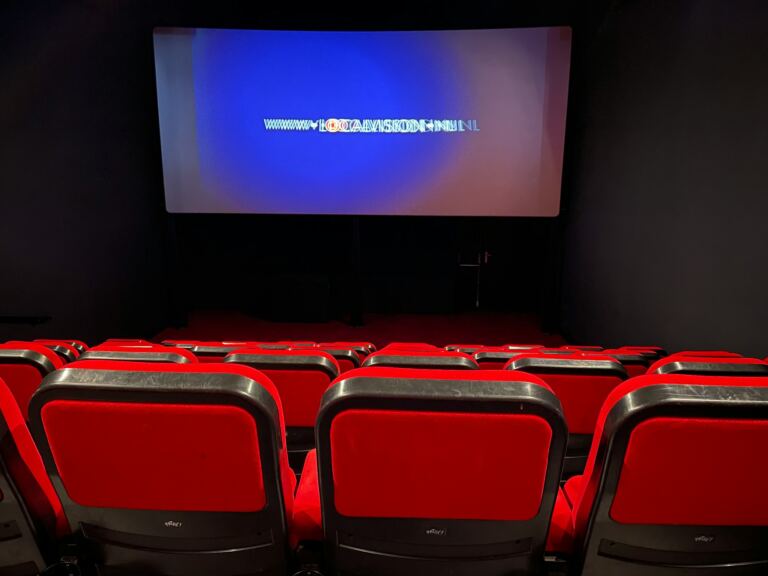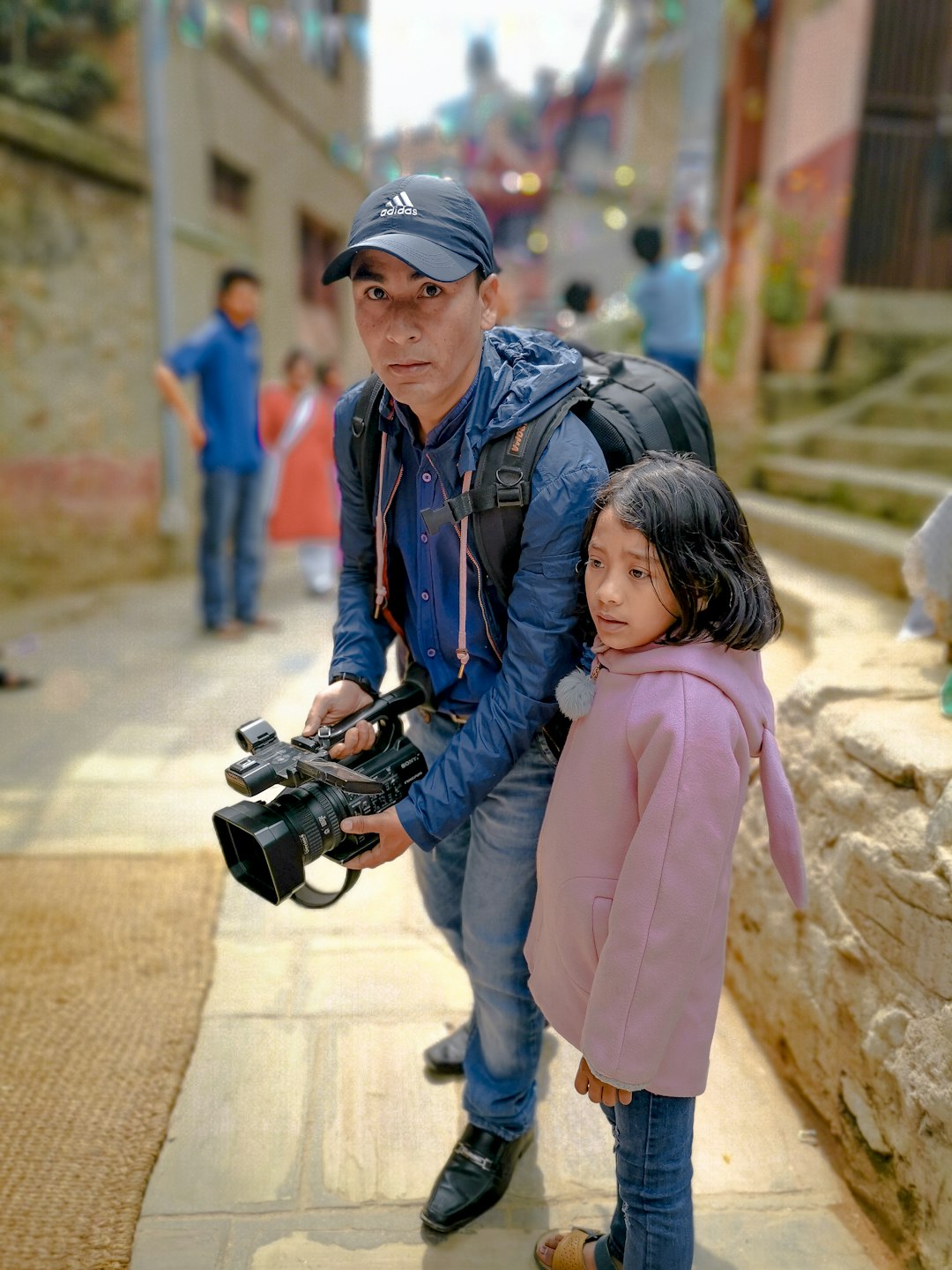
Nepali film finds its voice through particular stories, rather than through a single formula for representing a country. A road entering a village, a family negotiating change or a journey through an unfamiliar landscape can each become the centre of a film with its own language, pace and point of view.
The phrase new wave is useful as an invitation to look more closely, but it should not imply that every independent director belongs to one movement. This guide uses documented films as starting points and offers questions that help viewers notice the work behind what appears on screen.
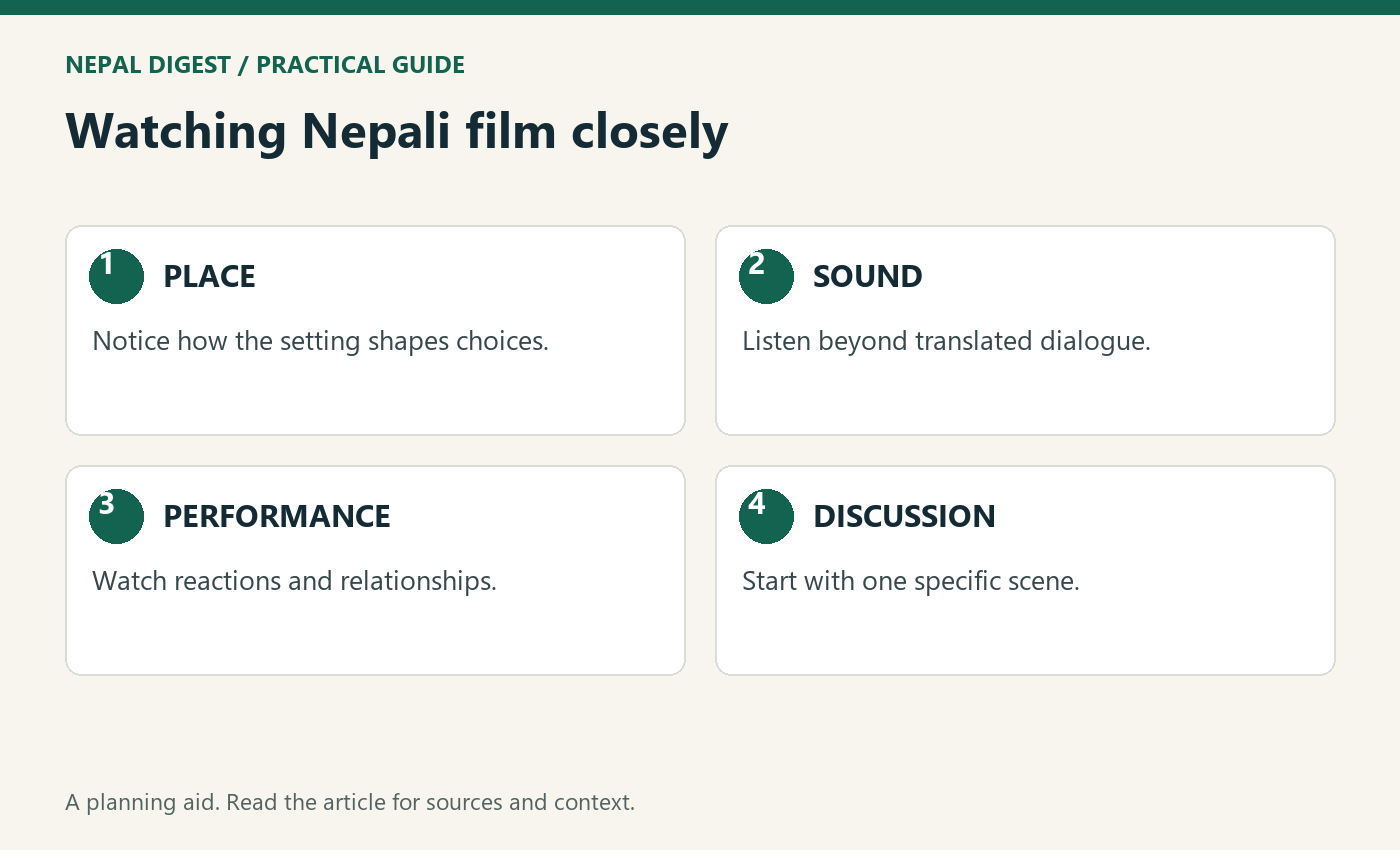
Table of Contents
Nepali film begins with a particular place
TIFF’s official account of A Road to a Village describes Nabin Subba’s 2023 drama about a rural family whose village becomes connected by a road. Dayahang Rai plays a basket weaver, while his son is drawn towards the goods and possibilities arriving from outside. Subba and Mahesh Rai wrote the film.
That premise provides a concrete way to think about storytelling. A road is physical infrastructure, but in a drama it can also reorganise a household’s choices. The interesting question is how the film makes those choices visible through scenes, relationships and objects, rather than whether a viewer agrees with a simple slogan about progress.
A setting is more than scenery when it shapes what characters can do. Notice how far people must travel, where they work, who has access to money and which spaces allow a private conversation. These details help a viewer follow the story without treating the place as an interchangeable mountain backdrop.
Different directors need different frames
The Berlinale Talents project record for Shambhala identifies Min Bahadur Bham’s film and its 2024 Berlinale participation. It is a separate creative project with its own setting and concerns. A festival connection can establish a screening context; it does not make two films alike in style or purpose.
Instead of expecting a single national voice, compare the choices a director makes. Is information delivered through dialogue or through an action the viewer must interpret? Does the camera stay close to one character or make room for a wider social setting? Does the ending resolve a conflict or leave a question open?
These are questions for looking, not rules for deciding which kind of cinema is superior. A commercial comedy, an intimate family drama and a formally experimental work may ask different things of their audiences. Understanding the intended experience creates a fairer basis for discussion.
Listen to language and sound
Subtitles make a film accessible across languages, but they are one layer of the experience. Tone, hesitation, a change of language and the rhythm of an exchange can carry meaning beyond the translated sentence. A viewer of Nepali film can notice these choices without claiming expertise in every language heard.
Listen also to what surrounds speech. A distant vehicle, a working tool, a crowd or an extended quiet passage can direct attention. Ask whether a sound belongs to the space of the scene or has been added as music or narration. Each choice affects how closely the audience is placed beside a character.
When discussing a film, distinguish something observed from something inferred. You can describe a scene as quiet and explain the effect it had on you. Claiming that the quiet represents an entire community’s temperament requires a different kind of evidence and risks turning an artistic decision into a stereotype.
Look at performance beyond the leading role
A performance is built through reactions as well as speeches. Watch what a character does while someone else speaks, how they occupy a shared room and when they choose not to answer. A small change in posture can carry a shift in a relationship that dialogue only partly explains.
The ensemble matters too. A parent, neighbour or colleague can establish the expectations surrounding the central character. Ask which relationships receive time to develop and which remain deliberately distant. That can help explain why a familiar plot feels particular in one director’s hands.
Avoid reducing an actor to one successful role. A performer’s work across theatre, popular cinema and independent projects can reveal different demands and choices. Nepal Digest’s profiles of Dayahang Rai and Manisha Koirala provide further career context.
Read festival recognition precisely
Selection, nomination, a jury prize, an audience award and a distribution agreement are different events. When a film is described as internationally recognised, ask which event occurred, where and in which year. A dated festival record is a stronger starting point than an unattributed promotional claim.
Recognition does not automatically establish local availability or commercial success. A screening abroad may be significant for a creative team while the film remains difficult to access in another territory. Ticket sales, streaming reach and critical response are separate questions that need their own evidence.
Before planning a screening, check the rights holder’s or venue’s current information. Do not assume that an old festival listing means a film is available to stream today. If organising a public event, establish the appropriate permission and technical format before announcing it to an audience.
A useful conversation after a screening
Begin with one scene that stayed with you. Describe what happened and identify the image, sound or performance detail that made it memorable. This gives other viewers something concrete to discuss, including people whose overall response differs from yours.
Then ask how the film changed your understanding of a character. Did an early assumption become less certain? Was important information withheld? An account of how your response developed is often more revealing than a verdict delivered as if every viewer should feel the same thing.
Keep a short viewing record with the title, director, year and version or screening you saw. Add a note about one craft decision you would like to revisit. Over several films, this creates a personal route into Nepali film that is based on attention rather than a checklist of supposedly essential titles.
An audience can make room for more voices
A wider audience for Nepali film begins with opportunities to encounter work and discuss it carefully. A small screening group can choose films from different periods, directors and settings, explain why they were selected and make room for viewers to disagree without turning preference into a test of cultural loyalty.
Credit the people who made the work and use images, clips and publicity material with appropriate permission. If an interview or discussion is recorded, agree the purpose and publication arrangement with participants. The same care used in understanding a story should extend to sharing it.
The voice of Nepali film will remain plural because filmmakers make different choices about what to show and how to show it. Looking closely at those choices offers a more rewarding encounter than asking every film to stand for the whole country.