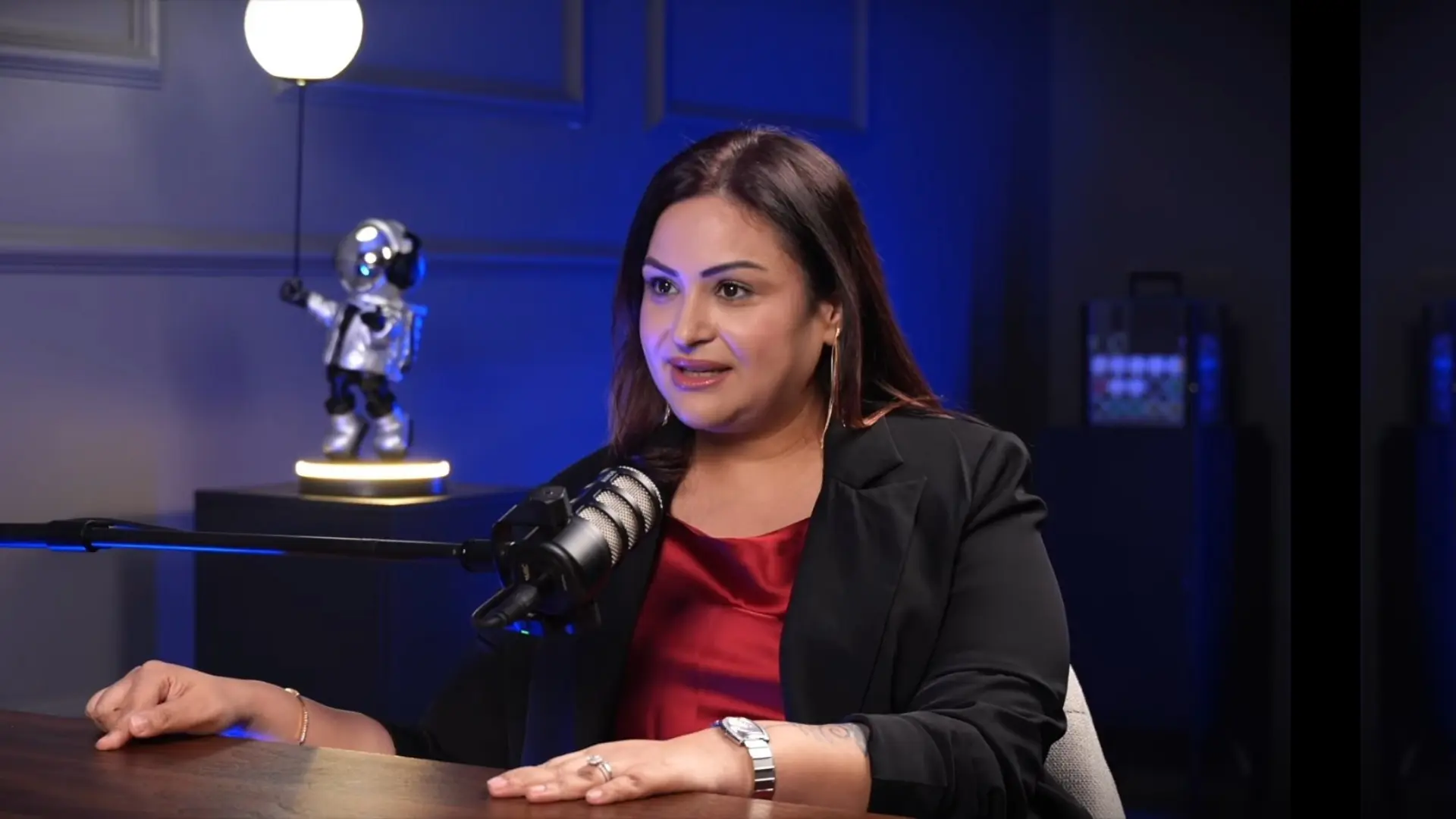
After 14 years in human resources and people management in the UAE, Rashmi Bastola is expanding People and Practice through Connecting Minds—a new conversation series bringing professionals, leaders and experts together to share workplace knowledge.
Rashmi Bastola is a Dubai-based human-resources professional originally from Dharan, Nepal. Her career has taken her through Nepal, India and the United Arab Emirates. Her work has included operations, recruitment, employee relations and strategic HR responsibilities, giving her a view of employment from both the candidate’s and the employer’s side.
She has brought that experience into the public sphere through People and Practice, a social-media community focused on human resources, personal development, career counselling and employment practices in the UAE. In a launch video supplied to Nepal Digest, Bastola says the community has grown to more than 10,000 people.
She is now developing the platform further through Connecting Minds, which she describes as more than a podcast: a place where professionals from different industries and countries can share challenges, knowledge and lessons. The central idea is simple: workplace systems become easier to understand when the people who use them explain how they work in practice.
Who is Rashmi Bastola?
Bastola’s professional story began long before Dubai. A March 2026 profile published by Banking News reports that she was born in Dharan and moved to Kathmandu at 17 for higher education. While attending college during the day, she worked night shifts at a call centre serving clients in the United States.
In the Harka Podcast conversation, Bastola describes herself as the youngest child in a middle-class family with two older brothers. She also speaks about losing one brother to health complications around two decades ago. She credits her father with treating his daughter’s education as seriously as his sons’ and encouraging her to speak for herself. That support did not mean the family always agreed about her future.
She recalls a disagreement over what she should study after school. Her family favoured a science or nursing route close to home, while she wanted to study commerce elsewhere. She says her teenage response cost her nearly two years of education—a decision she now regrets, but one that also pushed her to leave the familiarity of Dharan and take more responsibility for her own choices.
Moving to Kathmandu brought a different kind of education. Bastola says the experience of living away from her immediate family forced her to find her voice, move into a hostel and become more independent. She later combined daytime study with night work at a call centre serving American clients. The schedule was demanding, but it exposed her early to professional communication, different working hours and the discipline required to support herself.
After completing her undergraduate studies, she moved to India for an MBA in human-resource management. Back in Nepal, her early work included administrative roles, internships and around a year and a half with Ncell. A manager who recognised her work ethic encouraged her to consider an international career and helped connect her with an opportunity in Malaysia.
Malaysia became her first attempt at building a career outside Nepal. She stayed for about six months, but says homesickness, the climate and concerns about personal safety made the experience difficult. When the project ended, she declined a possible transfer to Tajikistan because of the language barrier and returned to Nepal. The return was not the end of her international ambition; it clarified the conditions she needed in order to pursue it.
In 2012, Bastola moved to the UAE. Although she already had education and work experience, she had to restart at an entry-level HR position. It was a familiar challenge for many migrants: qualifications and experience from one country do not always transfer neatly into another labour market.
Rather than treating the new role as a step backwards, she used it to understand the organisation from the ground up. During her early months in the UAE, she spent time in company warehouses, learning about operations, workplace conditions and the risks employees encountered in their daily work.
Her career later moved into healthcare HR. As of March 2026, Banking News reported that she was working as a senior HR business partner at NMC Healthcare. That progression placed her closer to the strategic side of HR while keeping her connected to the operational realities that shape employee experience.
Starting again in the UAE
Bastola says she chose the UAE because she wanted international experience in a place where she could feel safe while living and working independently. She arrived in Dubai with a job offer and company accommodation apparently arranged. The beginning, however, did not follow the secure path she had expected.
In her account on Harka Podcast, she waited for her employment visa and signed a contract, but then heard comments from company representatives that made her uncomfortable about the working environment. She decided not to proceed. She packed her belongings, left the accommodation and retrieved her passport, even though only about a week remained on her visit visa.
The episode is important because it complicates the usual migrant success narrative. Walking away from an offer created immediate uncertainty, but Bastola presents personal safety and dignity as non-negotiable. Her decision did not guarantee a better opportunity; it left her with very little time to find one.
She then interviewed for an HR-cum-office-assistant role at a family-run automotive spare-parts business in Al Quoz. The employer questioned why someone with an MBA would accept a junior title in a smaller company. Bastola’s answer, as she recalls it, was that a safe working environment mattered more to her than status or salary.
The role placed her close to the operational side of employment. She says the company employed roughly 500 to 600 workers across large warehouses. Instead of dealing only with policies from an office, she had to understand attendance, accommodation, documentation, workplace conditions and the concerns of employees doing physical work.
Over two years, she learned UAE labour procedures, government-relations work and hands-on employee relations. That period became the foundation of her UAE career. It also helps explain why her later public advice pays attention to the gap between what a policy says and what an employee experiences.
From warehouse HR to healthcare leadership
After the family business, Bastola moved into corporate HR at Landmark Group, where she says she spent around two years. She then joined Joy Dental and served in a senior HR role for nearly eight years. Her career later moved to NMC Healthcare.
In the podcast, she describes her current work as a senior HR leadership position supporting two hospitals in Dubai. A separate Banking News profile identified her in March 2026 as a senior HR business partner at NMC Healthcare. The description is consistent with her own broader account of moving from entry-level operational work into healthcare leadership.
Her career therefore spans the parts of employment that candidates rarely see when they submit an application: staffing needs, workplace policy, performance management, operational pressure and the relationship between employees and management. It is not simply a rise through job titles. It is a progression from learning how work is performed on the ground to helping shape the systems around it.
For a jobseeker, recruitment can appear to be a single decision made by an HR department. In reality, hiring may involve a recruiter, hiring manager, department head, budget owner and government process. Bastola’s experience across different organisations gives her a basis for explaining those layers without pretending that understanding them guarantees employment.
What her journey says about professional growth
Bastola’s account is less polished than the usual success story. An MBA and previous experience did not take her directly into a senior UAE role. She accepted junior work, learned the local system and built credibility through operational experience. Yet her decision to reject an environment she considered unsafe shows that starting again did not mean abandoning personal boundaries.
The warehouse visits, documentation work and employee problems were not detours from leadership; they became part of the knowledge that later allowed her to work across policy, management and employee experience. For migrant professionals, the lesson is to judge an opportunity by its legitimacy, safety, learning value and credible path forward—not by the title alone.
Family, belonging and a cross-cultural marriage
Bastola’s account of independence also includes the people who supported her outside her immediate family. While living in Kathmandu, she says the family of her friend Prabin Singh—particularly his brother Nabin and their mother, Manju—welcomed her during festivals and treated her as a daughter at times when she felt overlooked by relatives. The memory sits alongside the harder parts of leaving home: independence was not only self-reliance, but also learning to recognise care in unexpected places.
She later met her husband, who is from Chennai, while they worked in different departments of the same UAE company. In the podcast conversation, she says she valued his support for her ambitions and the absence of gender bias in his family. Rather than waiting for him to propose, she proposed to him.
Her father and surviving brother supported the marriage. Her mother was initially concerned about language and cultural differences, but Bastola says those concerns eased after she spent time with the couple in Dubai and saw their relationship firsthand. Bastola now lives in Dubai with her husband and son. The cross-cultural marriage forms another part of the wider story she tells: a career and family life built through choices that did not always follow the expectations set for her in Nepal.
Why she started People and Practice
In her launch video, Bastola begins with the belief that “knowledge grows when it is shared”. She says she started her social-media journey with People and Practice around a year and a half before the recording, with a straightforward purpose: to create awareness and share knowledge about human resources, personal development, career counselling and UAE employment practices.
The community’s growth also changed the demands placed on the platform. Bastola says more than 10,000 people have joined it and that followers regularly contact her with professional concerns, challenges and questions. She describes their trust as one reason to make the platform more meaningful and useful.
Her public work builds on 14 years in human resources and people management in the UAE. Bastola says she has worked with national and international organisations across HR and leadership. That experience gives People and Practice a practitioner’s perspective, but the platform is not presented as a substitute for legal advice or a guarantee of employment.
A September 2026 episode of Harka Podcast explored her journey into HR in Dubai alongside CV preparation, career growth, recruitment scams and the challenges facing Nepalis looking for work in the UAE.
A conversation with recruiter Aanchal Shrestha further illustrates the platform’s direction. In a public preview of their discussion, the two address CV presentation, keywords, career opportunities, recruitment scams and the UAE job market from the perspective of the Nepali community.
The format matters because it gives audiences access to the reasoning behind recruitment decisions. Instead of only listing vacancies or repeating general career advice, the conversations can explain what recruiters notice, how different employers assess candidates and why no single CV formula works for every role.
Connecting Minds: the platform’s next step
Connecting Minds is Bastola’s new initiative within the broader People and Practice platform. She describes it as “more than just a podcast”: a meeting place for professionals, leaders, experts and talented individuals from different industries and parts of the world.
The planned conversations will centre on professional development, learning, career growth and workplace experiences. Guests will be invited to discuss not only achievements, but also the challenges and lessons that shaped their work.
This distinction is important. People and Practice is the established community and knowledge-sharing platform; Connecting Minds is the conversation series through which Bastola intends to widen the range of voices and experiences available to that community.
Her stated aim is not to hand audiences one fixed formula for success. It is to help them gain perspectives and insights they can apply to their own professional journeys. The series’ line—“where conversations inspire growth”—summarises that ambition.
What People and Practice discusses
The platform sits at the intersection of people, policy and workplace experience. Its themes include CV preparation, recruitment expectations, career development, personal growth, workplace learning and protection from employment scams. Advice about photographs or keywords, for example, is useful only when it helps candidates present truthful evidence of their responsibilities, results and skills.
Recruitment fraud is another important subject. The UAE Government’s official job-search guidance says candidates should not pay commission to a recruitment agency or hiring company; those fees are the employer’s responsibility. The government’s fraud guidance also advises candidates to verify formal offers and reject demands for money to process a visa or medical test.
An experienced HR practitioner can help audiences distinguish a legitimate recruitment step from an individual preference or a warning sign. The value lies in explaining the difference clearly, not promising that one CV formula or contact can guarantee a job.
A platform for the Nepali community
For Nepalis in the UAE—or those hoping to move there—the value of People and Practice lies in context. Bastola knows what it means to arrive with qualifications and begin again, then move from operational work into strategic HR. That range makes her experience relevant without turning it into a universal formula.
Through Connecting Minds, the platform can bring in other professional voices: recruiters who explain shortlisting, managers who assess relevant experience and HR leaders who discuss workplace culture. Its strongest contribution will be specific, transparent conversations that distinguish personal experience from current law and direct audiences to official sources when rules can change.
People behind the practice
The name People and Practice reflects the two sides of Bastola’s work. HR involves policies, procedures and organisational decisions, but those systems affect real people: candidates waiting for an answer, employees trying to progress and managers responsible for difficult choices.
Bastola’s career and the community she has built give the initiative a credible base, but its long-term value will depend on what it consistently delivers. If it challenges recruitment myths, invites knowledgeable practitioners and turns broad topics into usable guidance, it can become a meaningful resource for Nepali professionals navigating the UAE and other international workplaces.
Her story is therefore not only about an HR professional building a career in Dubai. It is also about turning experience into a shared resource. With People and Practice as the community and Connecting Minds as its new conversation series, Bastola is bringing more people behind work into a clearer discussion about building and sustaining a career.