In a digital economy where a million views may bring attention but not necessarily a living, a new creative space in Kathmandu is asking what Nepali creators need after the algorithm has done its work.
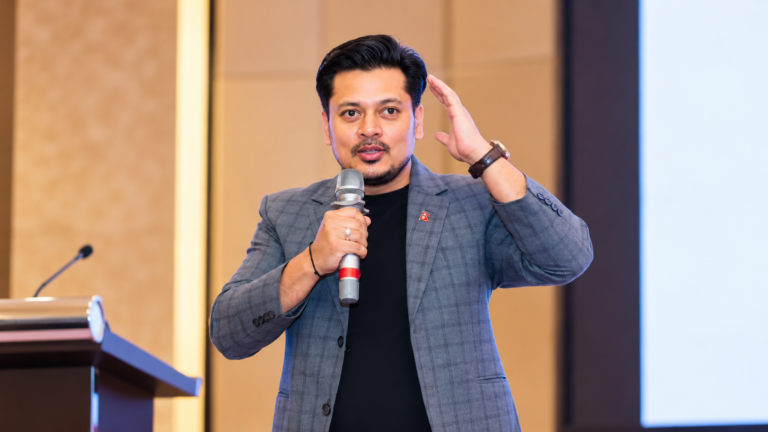
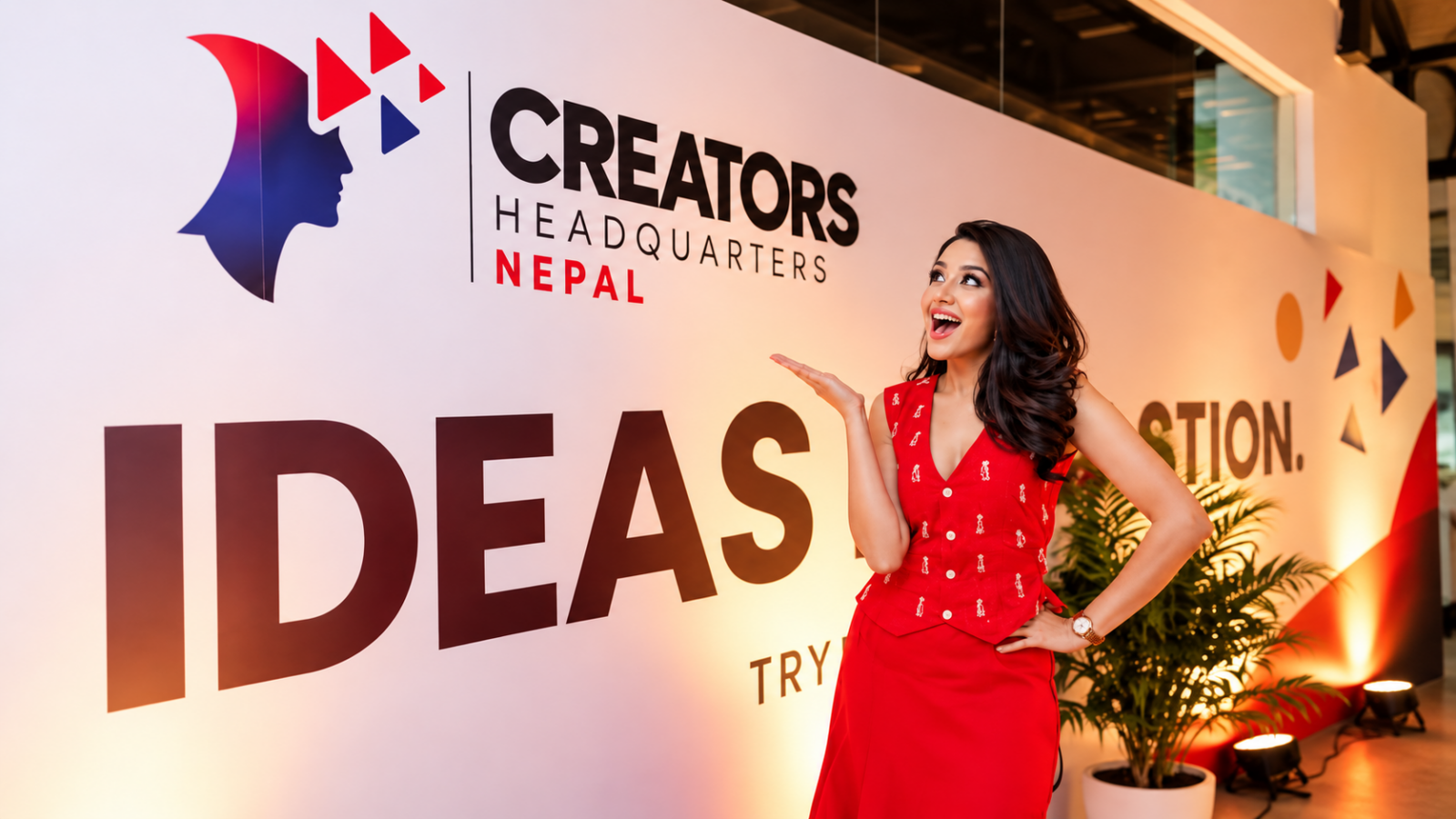
Founded by entrepreneur and media creator Sanjog Koirala, Creators Headquarters Nepal (CHQ) has opened in Kamalpokhari, Kathmandu, presenting itself as more than another studio for hire. Its proposition is to put recording rooms, production tools, learning opportunities, professional support and commercial connections under one roof. The ambition is significant: to help move content creation in Nepal from an improvised individual pursuit towards something closer to a functioning industry.
Whether that ambition can translate into sustainable careers is a more complicated question.
From visibility to a viable profession
Content creation is easy to mistake for a business simply because its most visible output is measurable. Views, likes, followers and shares offer instant feedback. Income, by contrast, depends on less glamorous things: dependable clients, reasonable production costs, a clear audience, repeatable work, contracts and the capacity to withstand a month when a video fails to travel.
For a creator starting with a phone and an idea, even a modest production setup can be expensive. Good sound requires more than a good camera. Editing demands time, technical skill and software. A professional shoot may require lighting, space, collaborators and several rounds of revisions. Bigger ambitions can quickly outrun a small creator’s budget.
CHQ is positioning itself at precisely this point of friction. On its public company page, the organisation describes its approach as bringing creators, brands, spaces, tools and opportunities together. It lists coworking, podcast studios, editing support, content spaces, workshops, events, creator marketing and brand collaborations among its offerings.
The potential attraction is straightforward. Creators could pay for access to shared facilities or expertise rather than individually acquiring every piece of equipment and assembling an entire production team. This does not guarantee cheaper content, but it changes the arithmetic worth considering.
What has opened in Kamalpokhari?
In its launch announcement, CHQ said it had officially opened its doors in Kamalpokhari. It described both formal and casual podcast rooms, green-screen and creative spaces, and classes covering video editing, AI tools and content creation. It also presented a community built around shared learning and access as a central part of the offer.
Its stated motto is Create. Connect. Scale. The three words also describe different problems. Creating requires tools and practical know-how. Connecting requires peers, collaborators and customers. Scaling requires reliable demand and a system that can support more output without compromising quality or exhausting the person behind it.
CHQ’s public description extends beyond facilities. For brands, it says it aims to provide access to a curated creator network and services from matching creators with campaigns to execution and performance reporting. This is an important distinction: a facility that only rents rooms depends on bookings, while a hub that can win and coordinate commercial work could help creators obtain the projects that make studio access worthwhile.
These remain the organisation’s own descriptions of what it offers and intends to build. Details such as independent usage figures, membership uptake, creator earnings and long-term financial results have not been established publicly in the sources reviewed for this feature.
A large audience is not the same as a healthy market
There is a substantial domestic digital audience. DataReportal’s Digital 2026 Nepal report, drawing on information available in late 2025, estimates 16.6 million internet users and 14.8 million social-media user identities in the country. Those social-media identities are not necessarily distinct individual people, a qualification often lost when audience figures are used to advertise the size of a market.
The numbers suggest reach, not automatic income. A creator with an engaged niche audience might be more commercially resilient than someone whose viral hits bring a large but transient crowd. Advertising budgets are finite; platform policies and recommendation systems can change; and brands may demand performance that individual creators struggle to document.
For a new institution, this creates both an opportunity and a test. A professionally managed creator network could make collaborations easier for businesses to purchase, measure and repeat. But unless creators receive a fair share of the value they produce, the infrastructure risks serving marketers more effectively than the talent it claims to support.
Who gets access?
There is also a question of geography and cost. A base in central Kathmandu may be convenient for established creators and agencies in the capital. It is less immediately accessible to aspiring filmmakers, educators, musicians or storytellers working elsewhere in Nepal. If the country’s creative economy is to expand beyond a familiar urban circle, the next challenge may be whether comparable training, collaborations and production opportunities can reach creators outside the Valley.
Pricing matters just as much. A premium studio might serve successful influencers while remaining out of reach for beginners—the very people who most need help. Flexible hourly access, transparent booking terms, practical entry-level training and opportunities for smaller creators would be useful measures of how inclusive the hub becomes. These are questions to put to CHQ, not services that Nepal Digest can yet confirm are available under particular terms.
Training quality is another differentiator. Someone may learn to shoot a polished video in an afternoon, yet still need guidance on negotiating a brand contract, disclosing sponsorship, handling copyright, protecting personal data, interpreting analytics and avoiding unsustainable production schedules. Skills in these areas are less photogenic than a studio tour, but potentially more valuable over a career.
The work behind the screen
The risks faced by creators are not only commercial. In a report published on 19 October 2026, UNESCO highlighted the experiences and challenges of Nepal’s digital content creators, including the need for a safer and more inclusive online environment. A sustainable creator ecosystem cannot be measured solely in revenue or production output. It also has to consider harassment, rights, safety and who is able to participate without disproportionate personal cost.
That broader perspective offers CHQ a chance to differentiate itself. The most useful creator community may not simply be one with better lighting and microphones. It may be one where people can learn professional standards, share knowledge, access fair opportunities and develop the confidence to say no to exploitative deals.
The measure of success
The opening of Creators Headquarters Nepal reflects a change in how creative work is being framed in the country: not simply as entertainment, but as an activity requiring infrastructure, skills, institutions and commercial relationships. Its model makes intuitive sense. Shared resources can reduce barriers, and proximity can encourage collaboration.
Yet the difficult part starts after the launch. Can the hub attract regular bookings without pricing out new talent? Can workshops lead to demonstrable skills? Will brands return with paying campaigns? Are creators receiving transparent terms and meaningful revenue? Does the community grow beyond Kathmandu’s already-visible personalities?
These are not reasons to dismiss the project. They are the standards by which its wider claim to transform the industry should eventually be judged.
Creators Headquarters Nepal has opened a space. Building an ecosystem will require something less immediate, and far harder to photograph: creators who can make a dependable living from the work they love.