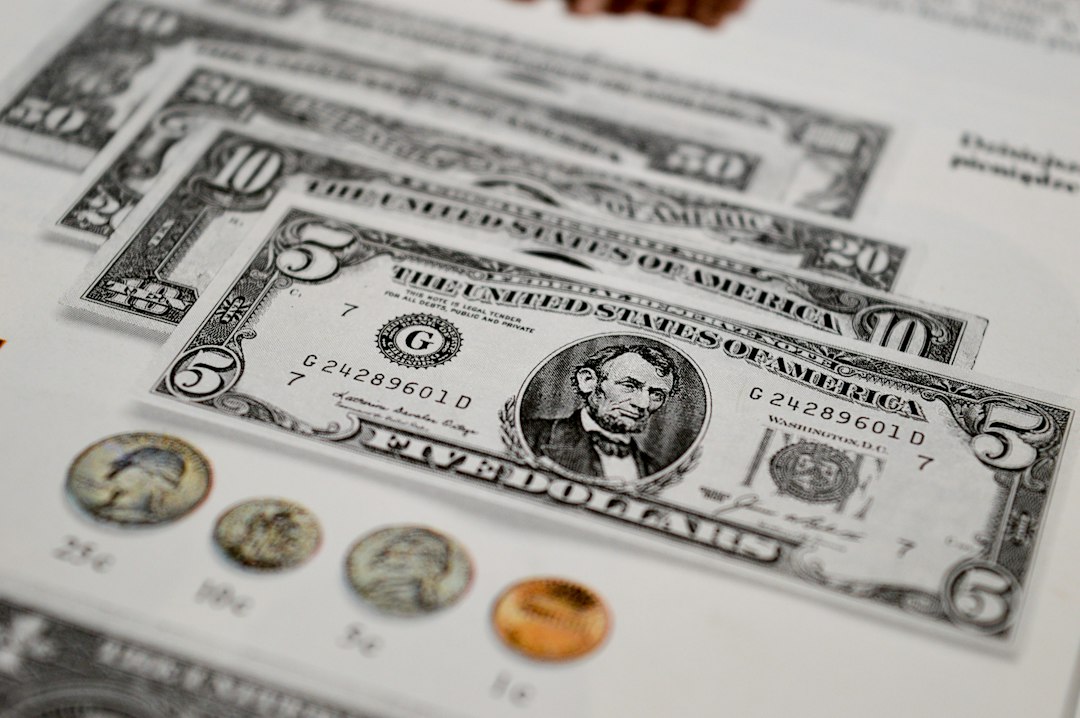
For most of the modern world, the American dollar has been more than a currency. It has been infrastructure.
America remains the centre of global finance, but debt, interest costs, reserve diversification and geopolitical strain are changing the mathematics beneath dollar dominance. Nepal Digest examines what is weakening, what remains powerful, and why the consequences reach Nepal.
Oil is priced in it. Governments save in it. Corporations borrow in it. Banks settle transactions through it. Countries thousands of kilometres from the United States measure their own financial stability partly by how many dollars their central banks possess.
This extraordinary arrangement has allowed America to enjoy something close to a monetary superpower: it can borrow in its own currency, issue the deepest pool of highly liquid government securities in the world, finance deficits at a scale almost impossible for smaller economies, and transmit American financial conditions across the planet.
But systems of monetary dominance do not last forever.
The Dutch guilder once occupied an extraordinary position in European commerce. Sterling later became the financial language of a British-centred world economy. After the Second World War, the dollar replaced sterling at the centre of the international system.
Now the uncomfortable question is no longer whether America’s fiscal position is deteriorating. The arithmetic establishes that clearly. The harder question is whether the deterioration has become structural enough to begin weakening the monetary order built around the dollar.
The answer emerging from the data is increasingly difficult to dismiss.
America is not presently experiencing an economic collapse in the conventional meaning of recession, mass unemployment or industrial shutdown. Real GDP is still expanding. Unemployment remains relatively low. American technology companies remain globally important. Its capital markets remain unrivalled in depth.
Yet these strengths coexist with another reality: gross federal debt has moved above $40 trillion; deficits remain extraordinarily large despite the absence of a major recession; annual net interest expense is around $1 trillion and rising; the Congressional Budget Office projects debt held by the public reaching 175% of GDP by 2056; central banks are accumulating gold at historically elevated rates; China’s reported Treasury holdings have fallen sharply from their 2013 peak; and the dollar’s share of global foreign-exchange reserves is well below its early-century level.
What is beginning to weaken is therefore not necessarily the dollar’s exchange rate tomorrow morning. It is the architecture that made dollar dominance appear permanent.
The 80-Year Question
There is an intriguing historical pattern surrounding American monetary upheavals.
During the Revolutionary era, the Continental currency was destroyed by inflation and loss of confidence. Eight decades later, the Civil War transformed American public finance and produced federally issued greenbacks. Roughly eight decades after that came Bretton Woods in 1944, when the foundations of the modern dollar-centred international monetary system were established.
Then add another 80 years to 1944. You arrive at 2024.
It is tempting to turn this into a law: every 80 years, the monetary system resets.
That would go too far. Economics has no scientifically demonstrated 80-year timer. Wars do not begin because calendars demand them, currencies do not collapse because four generations have passed, and financial crises emerge from institutions, leverage, political choices, productivity, demographics, confidence and policy errors.
But historical cycles can still be useful when treated as frameworks rather than clocks.
Approximately one human lifetime is long enough for societies to lose direct memory of the conditions that created a previous crisis. Rules created after disaster gradually appear unnecessarily restrictive. Financial innovation expands. Debt becomes normalised. Institutions adapt around leverage. Eventually, risk that once seemed unacceptable becomes routine.
The significance of 2024 is therefore not that an invisible 80-year alarm automatically sounded. It is that America arrived around that period with a fiscal structure fundamentally different from the one that created the post-war dollar system.
That difference can be measured.
Bretton Woods: When the Dollar Was a Promise
In July 1944, delegates from 44 countries met at Bretton Woods, New Hampshire, to construct the post-war monetary system.
Currencies were ultimately linked to the dollar, while foreign official holders could convert dollars into gold at $35 an ounce. When the system became fully operational, the United States stood at the centre of an arrangement combining the flexibility of a dollar-based trading system with an external monetary anchor.
America could not create unlimited dollars without consequences because foreign governments possessed a theoretical exit: they could demand gold.
That discipline eventually became increasingly difficult to maintain.
American overseas military expenditures, foreign aid, investment and balance-of-payments deficits supplied the world with dollars. Yet the American stock of gold did not grow correspondingly. Eventually foreign dollar claims became larger than the gold available to redeem them at the official price.
This was the famous Triffin dilemma: the country supplying the world’s reserve currency must provide enough of that currency to satisfy global demand, but doing so persistently can undermine confidence in the promise supporting the currency itself.
The tension finally broke in August 1971.
President Richard Nixon suspended the convertibility of dollars into gold. Bretton Woods did not vanish that evening, but its central commitment had been broken. Attempts to reconstruct fixed exchange rates failed, and the world gradually moved toward the fiat-currency system that exists today.
This was one of the most consequential monetary changes of the twentieth century.
The dollar survived. Indeed, it became even more globally important in many respects.
But something fundamental changed: the ultimate constraint on dollar issuance was no longer a promise to exchange dollars for a fixed quantity of metal. Monetary discipline increasingly depended upon institutions, political credibility, inflation control and investor confidence.
That system can function extremely well. But confidence, unlike gold, has no fixed supply.
From Hard Constraint to Political Constraint
The end of gold convertibility did not itself create America’s present debt problem. Federal borrowing depends on taxation, spending, wars, recessions, entitlement programmes, interest rates, demographics and decisions taken by successive administrations and Congresses.
Nevertheless, the post-1971 system changed what was possible.
A reserve-currency issuer with deep capital markets can finance extraordinary deficits because the world wants its securities. Treasury bonds are not merely American borrowing instruments. They function as collateral, reserve assets, safe assets and pricing benchmarks throughout global finance.
This creates what former French finance minister Valéry Giscard d’Estaing famously described as America’s “exorbitant privilege.”
The privilege is real. It is also dangerous when interpreted as a permanent exemption from arithmetic.
For decades Washington increasingly behaved as though Treasury demand were an unlimited natural resource.
Wars could be financed through borrowing. Tax reductions could coexist with high expenditure. Financial crises could be countered with enormous fiscal interventions. A pandemic could trigger trillions of dollars in emergency support. Entitlement spending could expand as the population aged.
Each intervention might have its own justification. The cumulative result is what matters.
By September 2026, total federal debt had surpassed $40 trillion on the broad gross-debt measure. That number includes debt the government owes to its own accounts, so economists often focus instead on debt held by the public when evaluating macroeconomic sustainability. The Congressional Budget Office projects the latter at approximately 101% of GDP in 2026.
The important point is not a frightening-looking nominal number. It is the trajectory.
America Is Borrowing Like a Country in Crisis — Without Being in a Crisis
The Congressional Budget Office projects a federal deficit of approximately $1.9 trillion in fiscal year 2026, equivalent to 5.8% of GDP.
By 2036, under current-law assumptions, the annual deficit reaches approximately $3.1 trillion, or 6.7% of GDP.
Over the previous 50 years, American deficits averaged about 3.8% of GDP.
That comparison is more alarming than the headline debt number.
Large deficits during wars, financial crises or deep recessions are economically understandable. Governments intentionally absorb private-sector weakness during emergencies.
But the United States is running deficits approaching 6% of GDP while unemployment is around 4% and economic activity is still expanding.
That is precisely why the deficit is structurally important.
America is no longer borrowing enormous sums only to rescue the economy. Large borrowing has become part of ordinary government operation.
The Interest Bill Is Becoming a Government Programme of Its Own
Debt becomes dangerous not merely when it is large, but when servicing it begins consuming fiscal capacity.
In fiscal 2025, net federal interest expenditure reached approximately $970.4 billion. National defence spending was roughly $916.6 billion.
Interest had overtaken defence.
There is no recognised sovereign-finance concept called a “death cross” triggered when interest exceeds military expenditure. Calling it one would convert a useful observation into a false economic law.
Yet the underlying signal is serious.
Unlike discretionary spending, interest represents payment for past decisions.
Washington can cancel an infrastructure project. It can postpone military procurement. It can alter departmental budgets.
It cannot simply announce that Treasury bondholders will not receive the interest they were promised without threatening the foundation of global financial markets.
CBO expects net interest expense to reach approximately $1 trillion in 2026, or 3.3% of GDP, before rising to about $2.1 trillion by 2036, equivalent to 4.6% of GDP.
By 2056, CBO projects net interest spending of 6.9% of GDP.
That would exceed projected expenditure on Social Security at 6.0% of GDP and Medicare at 5.5%.
That is not a political slogan. It is arithmetic.
The Equation Washington Cannot Escape
The mathematics of government debt can be expressed in a relatively simple relationship.
d = government debt as a share of GDP
r = average effective interest rate on that debt
g = nominal GDP growth
p = primary deficit as a share of GDP
Then, approximately:
Change in debt/GDP ≈ primary deficit + (r − g) × existing debt/GDP
The equation explains why some highly indebted governments survive for decades while others enter crisis surprisingly quickly.
If nominal GDP grows faster than the effective interest rate, economic growth helps dilute the existing debt ratio.
If interest costs rise above nominal growth while the government continues running primary deficits, the debt ratio can accelerate.
For 2026, CBO projects a primary deficit of roughly 2.6% of GDP, while debt held by the public is around 101% of GDP.
Suppose nominal growth were 4% while the effective average interest rate eventually became 4.5%.
(4.5% − 4.0%) × 101% ≈ 0.5% of GDP
Add a primary deficit of roughly 2.6%:
Debt/GDP increases by roughly 3.1 percentage points per year.
Persist for ten years and the scale becomes obvious.
This is illustrative rather than a forecast, but CBO has modelled exactly this vulnerability.
Its September 2026 analysis found that if average interest rates ultimately rose just one percentage point above its baseline, debt held by the public could reach approximately 222% of GDP by 2056, compared with 175% under the baseline.
One percentage point in financing costs adds 47 percentage points of GDP to the eventual debt burden.
This is why the American fiscal problem cannot be reduced to the comforting statement that “the United States can always print dollars.”
It can. The harder question is what those dollars would be worth if monetary creation became the mechanism for financing persistent fiscal imbalance.
The COVID Money Explosion — Correctly Measured
Another popular claim says that “40% of all dollars in history were printed between 2020 and 2022.”
That formulation is inaccurate. But correcting it does not make the monetary expansion small.
The Federal Reserve’s M2 measure rose from approximately $15.4 trillion in January 2020 to about $21.8 trillion by April 2022.
That is an increase of approximately:
($21.8tn − $15.4tn) ÷ $15.4tn ≈ 41%
So M2 grew by about 41% relative to its starting level.
But the newly added amount represented around 29% of the final April 2022 stock, not 40% of every dollar that had ever existed.
And M2 is not equivalent to banknotes printed by the Bureau of Engraving and Printing. It includes physical currency, deposits, savings balances and other liquid forms of money.
The viral version is therefore wrong. The corrected version remains extraordinary.
The American broad money stock increased by more than $6 trillion in a little over two years.
Fiscal transfers, emergency lending, Federal Reserve asset purchases, bank deposits and a collapse in normal spending patterns all contributed.
That expansion cannot alone explain every part of the subsequent inflation surge; supply-chain disruption, energy shocks, labour-market dislocations and later geopolitical events also mattered.
But the dilution of monetary scarcity was real.
What Inflation Actually Did to the Dollar
The strongest way to describe dollar debasement is not to claim the currency became worthless.
It is to calculate what happened to domestic purchasing power.
Between early 2020 and 2026, the U.S. consumer-price level rose by roughly 30%.
Put differently, a basket that cost $100 at the beginning of 2020 costs roughly $130 today.
Reverse the calculation and the purchasing power of $100 measured in early-2020 prices has fallen to roughly $77.
That is what currency erosion looks like inside an advanced economy.
It does not require hyperinflation. It does not require wheelbarrows of cash. It happens through cumulative inflation.
By August 2026, headline CPI inflation was running at 3.4% year-on-year, while core CPI was 2.4%. In September, the Federal Reserve raised its target federal-funds range to 3.75–4.00%, stating that inflation remained elevated.
The central bank therefore faces a familiar fiscal-monetary tension.
Higher rates help restrain inflation. Higher rates also increase federal refinancing costs over time.
Lower rates reduce the Treasury’s financing burden. But lowering them prematurely risks allowing inflation to remain embedded.
That is not an impossible trap. The Federal Reserve still possesses policy options.
But every additional trillion dollars of debt makes the trade-off more expensive.
The Dollar Is Losing Share — Slowly, Not Suddenly
If the dollar were literally collapsing as an international currency, central banks would already be abandoning it rapidly.
That has not happened.
But the longer-term direction is unmistakable.
The dollar represented more than 70% of disclosed global foreign-exchange reserves at the beginning of the century.
By 2024, its share had fallen to roughly 58%.
In the first quarter of 2026, the IMF put the figure at 57.13%.
A decline from above 70% to around 57% over a quarter-century is not a sudden collapse.
But neither is it nothing.
It represents a material erosion of the dollar’s reserve-market share relative to its early-2000s position.
Reserve managers have diversified into the euro, yen, sterling, Canadian and Australian dollars, renminbi, gold and other assets.
What is weakening, therefore, is not yet the dollar’s global leadership.
It is the old assumption that international reserves would remain overwhelmingly concentrated in dollars indefinitely.
The Dollar Still Has No Equal
Any serious argument about dollar decline must confront an inconvenient fact: the dollar remains astonishingly dominant.
In 2025, it appeared on one side of roughly 89% of global foreign-exchange transactions, according to the Bank for International Settlements.
The dollar also remains dominant in international banking, global borrowing, cross-border lending and debt issuance.
This explains why dollar decline is more likely to resemble erosion than an explosion.
A replacement reserve currency needs far more than political ambition.
It requires enormous liquid bond markets, open capital accounts, reliable institutions, legal protections, financial infrastructure and a willingness to run external deficits that supply the rest of the world with assets.
China possesses the economic scale but maintains capital controls.
Europe has a major currency but lacks a completely unified Treasury market equivalent to America’s.
Gold is excellent as a reserve asset but inefficient as the operating system of modern credit.
Cryptocurrency provides a different architecture altogether and remains volatile.
The dollar’s weakness is therefore not that a perfect successor has appeared.
It is that countries increasingly have incentives to use several alternatives instead of one overwhelmingly dominant system.
That is how monetary multipolarity begins.
China Is Quietly Reducing Its Exposure
The most striking example is China.
At the end of 2013, mainland China held approximately $1.27 trillion in U.S. Treasury securities.
By mid-2026, the figure had fallen to roughly half that level.
This should not be exaggerated into the claim that China has abandoned the dollar. China’s exchange-rate management, reserve composition, use of custodial centres and broader foreign-asset strategy make the picture more complicated.
But a reduction of this magnitude over more than a decade is structural.
Beijing is clearly less willing than it once was to hold an ever-expanding quantity of American government debt.
Central Banks Are Voting With Gold
For decades, gold appeared increasingly peripheral to the modern monetary system.
Central banks are reversing that assumption.
The World Gold Council estimates that central banks accumulated around or above 1,000 tonnes annually during several recent years, an historically elevated pace.
The motivations are not mysterious.
Gold carries no sovereign default risk. It cannot be frozen by the government that issued it because no government issued it. It is not another country’s liability. It has a global market.
And in an era of sanctions, frozen reserves and geopolitical fragmentation, those properties have become more valuable.
This should not be described as evidence that central banks expect the dollar to vanish.
It is evidence that reserve managers increasingly consider concentration in sovereign fiat assets insufficient protection.
That is a meaningful shift.
The Weaponisation Problem
The freezing of Russian central-bank reserves following Russia’s invasion of Ukraine in 2022 introduced another dimension into reserve management.
For Western governments, financial sanctions demonstrated the extraordinary power of the dollar-centred financial system.
For governments worried that they might someday become sanction targets, the same action demonstrated concentration risk.
Both interpretations can be true simultaneously.
Countries do not need to abandon dollars to reduce vulnerability.
They can hold somewhat more gold, invoice bilateral trade in local currencies, establish alternative payment systems, hold fewer Treasuries, develop central-bank digital settlement and expand currency swaps.
Each individual measure looks small.
Together they gradually build redundancy around the dollar system.
That is de-dollarisation in its realistic form.
Not one dramatic replacement currency.
A thousand small exits.
BRICS Does Not Need a New Dollar to Weaken the Old One
Much discussion of BRICS asks the wrong question: when will the bloc create a single currency capable of replacing the dollar?
It may never do so.
Its members have vastly different economies, political systems, capital controls and strategic objectives.
The more important development is the construction of infrastructure that allows trade to occur without automatically passing through the dollar.
Local-currency settlement agreements, payment networks, development-bank financing and reserve diversification all reduce marginal dollar demand.
None by itself dethrones the dollar.
But monetary dominance is fundamentally a network effect.
The dollar can therefore decline without another currency becoming “the new dollar.”
A multipolar system itself is the competitor.
America’s Domestic Economy: Strength at the Top, Pressure Below
One reason America’s fiscal vulnerability can be difficult to perceive is that headline wealth remains enormous.
The United States continues producing technological champions, record equity valuations and extraordinary private fortunes.
That fact directly contradicts simplistic descriptions of a universally collapsing American economy.
But distribution matters.
Federal Reserve data show an extraordinary concentration of household wealth in the upper decile, while the bottom half controls only a small share of national net worth.
Asset inflation therefore affects Americans very differently.
When equities and property rise, households already owning substantial financial assets become dramatically richer.
A younger renter facing high housing costs experiences the same economy differently.
This helps explain the paradox of modern America.
Aggregate wealth can reach records while economic insecurity remains politically powerful.
Both can be statistically true.
Financialisation Changed the Character of American Power
Post-war America became dominant by combining finance with extraordinary productive capacity.
Factories, aerospace, automobiles, machinery, chemicals, agriculture, electronics and infrastructure underpinned the dollar.
Over subsequent decades, the economy shifted toward services, technology and finance while many lower-value manufacturing activities migrated abroad.
Calling this simply “deindustrialisation” can mislead because America still produces huge quantities of advanced goods and possesses extraordinary productivity in aerospace, semiconductors, pharmaceuticals and energy.
Yet the political economy undeniably changed.
Corporate profitability became increasingly connected to asset markets.
Household retirement became increasingly tied to equities.
Housing became not just shelter but a wealth vehicle.
Private equity, derivatives, securitisation and increasingly sophisticated credit markets expanded.
The financial system became capable of generating enormous apparent wealth.
It also became dependent on stable asset prices and low systemic stress.
This is why modern American monetary policy operates under pressures that did not exist in the same form in 1944.
Raising rates sufficiently to crush inflation now affects government debt service, mortgage affordability, corporate financing, equity valuations, commercial real estate and banking balance sheets simultaneously.
The system is richer. It is also more leveraged.
Tariffs: A Fiscal Solution That Creates Another Cost
America’s renewed tariff strategy reflects stated policy objectives: rebuild domestic industry, protect strategic production, counter foreign subsidies, reduce dependence on rivals and raise government revenue.
But tariffs do not escape economic arithmetic.
They are taxes on imports.
Who ultimately bears the cost depends on exchange rates, foreign producer margins, supply chains and domestic substitution. A significant portion can nevertheless reach American businesses and consumers.
CBO has estimated that broad tariff increases can temporarily raise inflation, reduce households’ purchasing power, lower investment and leave real economic output below what it otherwise would have been.
This does not mean tariffs can never achieve strategic industrial objectives.
It means those objectives come with costs.
Thus tariffs reveal the central contradiction in American economic strategy.
Washington wants to rebuild domestic production. It also wants inexpensive consumer goods.
It wants to reduce deficits. It also wants lower taxes.
It wants to contain inflation. It also wants tariffs that can raise import prices.
It wants lower interest rates. It also needs the Federal Reserve to restrain inflation.
Each objective is understandable individually.
Together they increasingly collide.
The Iran War: Another Bill Arrives
The U.S.-Iran conflict adds another pressure.
By July 2026, the Pentagon said the conflict had cost approximately $37.5 billion, including certain projected costs through the end of the fiscal year.
The direct military spending is only part of the economic consequence.
The Strait of Hormuz is one of the world’s most important energy chokepoints. Disruption there affects oil and liquefied-natural-gas flows, insurance costs, shipping routes and inflation expectations.
For a government already facing above-target inflation, high debt-service costs and enormous deficits, an energy war is economically expensive even before military appropriations are counted.
Is War Being Used as a Distraction?
There is a politically attractive argument that governments facing domestic economic difficulties may emphasise foreign threats to redirect public attention.
History contains examples of leaders benefiting politically from external confrontation.
But applying that explanation to a specific war requires evidence about motive.
The available economic data cannot prove that Washington entered or prolonged the Iran conflict in order to distract Americans from debt, inflation or affordability.
It is possible to establish that the war competes with domestic economic concerns for political attention.
It is possible to establish that it raises federal spending.
It is possible to establish that disruption in the Gulf can contribute to higher energy prices and inflation.
It is possible to establish that American policymakers knew war in the Persian Gulf carried substantial economic risks.
But none of those facts proves that distraction was the original motive.
Likewise, mathematics cannot prove that America “knew it would lose” a war.
Economic arithmetic can show that a long war becomes progressively more expensive.
It cannot calculate military victory.
The War and Tariff Paradox
Placed together, the tariff campaign and Iran conflict reveal something larger about America’s present economic position.
Tariffs seek to redirect global production toward America but can raise prices and reduce economic efficiency during the transition.
The Iran conflict seeks strategic objectives in the Middle East but adds military expenditure and energy-price risk.
Higher inflation pushes the Federal Reserve toward tighter monetary policy.
Higher interest rates increase Treasury refinancing costs.
Higher interest expense enlarges future deficits.
Larger deficits require additional borrowing.
Additional borrowing can put upward pressure on long-term interest rates.
This is the feedback loop that matters.
A policy does not need to be wrong in every strategic sense to worsen the fiscal equation.
The United States increasingly operates in an environment where foreign policy, trade policy, monetary policy and fiscal policy collide on the federal balance sheet.
Britain Has Been Here Before — But History Is More Complicated Than the Analogy
Britain provides the most obvious historical comparison.
Sterling once performed many of the functions the dollar performs today.
London stood at the centre of global finance. British government securities were held around the world. The Royal Navy protected trade routes connecting a vast empire.
Two world wars transformed the equation.
By the end of the Second World War, Britain’s government debt was around 250% of GDP.
Yet Britain did not instantly collapse.
In fact, its experience provides an important correction to simplistic debt-doom arguments.
Between 1946 and 1976, Britain’s debt ratio fell dramatically because nominal economic growth greatly exceeded the growth of nominal government debt. Negative real interest rates and financial repression also helped.
But Britain’s relative international financial dominance continued to fade.
Sterling’s reserve role declined. The United States became the larger economic and financial power.
And in 1976, after severe pressure on sterling, Britain secured a major IMF standby arrangement.
The lesson is not that America will replay Britain year for year.
It is more subtle.
A country can remain wealthy. Its citizens can remain prosperous. Its institutions can survive. Its currency can continue functioning.
And yet its relative monetary privilege can decline dramatically.
That is the type of “collapse” most relevant to the dollar.
Not disappearance.
Loss of exceptional status.
The Dutch Warning
Before sterling, there was Amsterdam.
The Dutch Republic became a commercial and financial superpower in the seventeenth century. The Bank of Amsterdam’s money became trusted internationally because of its reliability and the Netherlands’ central role in European trade.
Eventually geopolitical competition, war, fiscal pressure and financial problems weakened the system.
The Fourth Anglo-Dutch War beginning in 1780 proved particularly damaging.
But here again the popular version is usually too dramatic.
The guilder did not simply become worthless overnight. The Netherlands did not disappear. Amsterdam remained financially important.
What changed was relative power.
Britain developed a larger, deeper system capable of performing the same international functions more effectively.
Reserve-currency history is therefore usually evolutionary.
The incumbent weakens. Alternatives strengthen. Usage diversifies.
Then one day historians look backward and identify a transition that, to the people living through it, unfolded over decades.
The Dollar Does Not Need to Die for America to Become Poorer
Imagine the dollar’s reserve share falls from today’s roughly 57% to 45% over the next 20 years.
The dollar could still remain the world’s largest reserve currency.
But foreign demand for Treasury securities at the margin could decline.
If that required Washington to offer even modestly higher yields to attract capital, the fiscal impact would compound across tens of trillions of dollars of debt.
CBO’s alternative scenario demonstrates the sensitivity: one percentage point of additional average financing cost eventually pushes projected public debt from 175% to 222% of GDP in 2056.
This is the hidden value of reserve-currency status.
The advantage is not merely prestige.
It lowers the price of borrowing. It creates permanent global demand for financial assets denominated in your currency. It lets domestic firms borrow internationally with less currency risk. It allows sanctions to operate through financial infrastructure. It reduces the need to accumulate someone else’s reserves.
Lose part of that privilege and America does not suddenly become a failed state.
It simply becomes a more normal country.
For a nation accustomed to exceptional financing conditions, normality itself would be a major economic adjustment.
There Is No Point of No Return — But There Is a Cost of Delay
Fiscal debates often search for a dramatic threshold: 100% debt-to-GDP, 120%, 150%, or some particular level of interest expense.
Economics offers no universal line.
Japan has carried government debt far above American levels without a classic sovereign crisis.
Other governments have experienced financial stress at much lower ratios.
Currency regime, domestic savings, institutional credibility, debt maturity, foreign ownership, inflation expectations and central-bank behaviour all matter.
America therefore has not crossed a mathematical “point of no return.”
But CBO’s projections show something almost as consequential.
The longer adjustment is delayed, the larger the eventual adjustment must become.
To keep debt held by the public near its 2026 share of GDP through 2056, CBO estimates that primary deficits would need to average only around 0.2% of GDP, compared with roughly 2.1% under its baseline.
Taxes must rise. Spending must fall. Growth must increase. Inflation may absorb part of the real burden. Or some combination of all four must occur.
There is no fifth mathematical option.
Why America’s Technology Boom Does Not Automatically Solve the Problem
There is one powerful counterargument.
America may grow out of its debt.
Artificial intelligence, robotics, biotechnology, energy innovation and automation could generate a productivity boom comparable to previous industrial revolutions.
Higher productivity would transform the debt equation.
If nominal GDP grows rapidly while interest rates remain contained, debt/GDP can stabilise even with significant borrowing.
Britain’s post-war debt reduction demonstrated the enormous power of the denominator.
But relying upon technological acceleration is a gamble, not a fiscal plan.
AI investment can enrich shareholders and raise productivity while government deficits remain structurally large.
It can also require enormous capital expenditure and energy infrastructure before productivity gains fully appear.
The American economy may therefore simultaneously experience a technological boom and fiscal deterioration.
Those are not contradictory outcomes.
So Is the Dollar Collapsing?
Not in the ordinary meaning of the word.
The dollar is not experiencing hyperinflation. International investors have not abandoned Treasuries. Central banks have not dumped dollar reserves en masse. The dollar remains involved in almost 90% of global FX transactions. American GDP is growing. The labour market remains functional.
A claim that the U.S. economy is currently undergoing conventional economic collapse would therefore be inconsistent with observable data.
But there is another definition of collapse worth considering.
A structure can weaken long before it falls.
The dollar’s reserve share is substantially below its early-century peak.
China’s Treasury holdings have fallen markedly from their 2013 level.
Central banks are buying gold at an historically elevated pace.
Alternative payment mechanisms are expanding.
Federal gross debt has crossed $40 trillion.
Net interest is on course to become one of the largest components of federal spending.
CBO projects public debt reaching 175% of GDP within three decades even without a major new crisis.
Taken together, these are not signs that the dollar disappears tomorrow.
They are signs that the economic foundation of unconditional dollar supremacy is becoming progressively more expensive to maintain.
That is structural decline.
And structural decline, if left uncorrected long enough, is how monetary eras end.
Nepal Is Not a Spectator
For Nepal, this might appear to be a distant American problem.
It is not.
Nepal’s financial system is connected to the dollar through an indirect but powerful chain.
The Nepalese rupee is pegged to the Indian rupee at approximately NPR 1.60 per INR.
When the Indian rupee weakens against the dollar, the Nepalese rupee generally follows.
This immediately connects American monetary conditions to millions of Nepali households.
The Remittance Paradox
Nepal is one of the world’s most remittance-dependent economies.
World Bank data put personal remittance receipts at approximately 26% of GDP in 2024.
For Nepalis working in the Gulf, the consequences of dollar strength are obvious.
The UAE dirham is pegged to the dollar. So is the Saudi riyal. The Qatari riyal is tightly managed against it.
If the dollar strengthens against the Indian rupee, and therefore against the Nepalese rupee, workers in these economies receive more rupees for the same Gulf salary.
Suppose a worker earns AED 5,000.
At an exchange rate near NPR 41.66 per dirham, that equals roughly:
5,000 × 41.66 = NPR 208,300
If the rupee strengthened enough for the dirham to fall to NPR 35, the same salary would convert into only NPR 175,000.
A weaker dollar could therefore reduce the rupee value of Gulf remittances.
That is the first-order effect.
The second-order effect runs in the opposite direction.
A Strong Dollar Makes Nepal’s Imports More Expensive
Nepal imports petroleum, machinery, electronics, industrial inputs, medical equipment, vehicles and numerous consumer products.
Many are priced directly or indirectly in dollars.
Consider crude oil.
Suppose a barrel costs $100.
At NPR 153 per dollar:
$100 × NPR 153 = NPR 15,300
If the Nepalese rupee depreciated to NPR 170 per dollar while the global oil price remained unchanged:
$100 × NPR 170 = NPR 17,000
Nothing changed in the international commodity market.
Yet Nepal pays roughly 11% more in local currency.
That higher cost flows through transport. Transport flows through food. Fuel flows through agriculture, industry, aviation and construction.
This is why the same strong dollar that increases the rupee value of remittances can simultaneously raise the cost of living for the families receiving them.
Nepal gains foreign-exchange income and imports inflation at the same time.
Nepal Has a Strong Buffer — For Now
The encouraging part of Nepal’s present position is its foreign-exchange reserve stock.
Nepal has recently maintained a historically comfortable reserve buffer, supported largely by powerful remittance inflows and balance-of-payments surpluses.
This provides Nepal with protection against an external currency shock.
But it also reveals a structural weakness.
Nepal accumulates foreign currency primarily because Nepalis leave the country to work.
The reserve position is strong.
The productive base generating it domestically is much weaker.
Remittance-supported reserves can stabilise the economy.
They do not automatically make the domestic productive economy stronger.
What If the Dollar Weakens Sharply?
A sustained dollar decline would not necessarily hurt Nepal.
It would redistribute gains and losses.
Imported commodities denominated in dollars could become cheaper in Nepalese rupee terms, depending on what happened simultaneously to the Indian rupee.
Dollar-denominated debt could become less burdensome when translated into local currency.
Machinery and technology imports might become cheaper.
Energy inflation could ease.
But remittance households receiving dollar-linked Gulf currencies might receive fewer rupees.
Nepal’s dollar-denominated reserve assets could lose value relative to gold or other currencies.
Tourism dynamics would change.
The important lesson is therefore not that Nepal should welcome or fear dollar weakness.
It is that Nepal should reduce its vulnerability to any single external monetary arrangement.
What Nepal Should Learn From America
America’s debt problem contains a lesson that has little to do with America itself.
Countries become vulnerable when consumption consistently outruns productive capacity and borrowing becomes easier than adjustment.
Nepal’s version is different.
Its government does not issue the global reserve currency.
It cannot finance unlimited deficits in Nepalese rupees while expecting foreign central banks to accumulate them.
But Nepal also consumes far more imported goods than its domestic export economy can independently finance.
Remittances fill the gap.
That model can continue for many years.
Yet it is not a substitute for productive transformation.
For Nepal’s economy, strategic protection against a changing dollar system is therefore not currency speculation.
It is building an economy capable of earning foreign exchange from multiple sources: tourism, hydropower, information technology, specialised agriculture, manufacturing, services and investment.
A country that produces things the world wants has options.
A country dependent almost entirely on migrant labour has fewer.
The End of an Assumption
The most important question about the dollar is not whether it will “collapse” next year.
That question encourages the wrong type of thinking.
The Dutch did not wake one morning to discover Amsterdam had ceased functioning.
Britain did not disappear when sterling lost its pre-eminent reserve role.
Monetary empires usually fade before they fall.
Their governments borrow a little more.
Their military commitments become more expensive.
Their industries face stronger competition.
Interest consumes more tax revenue.
Foreign creditors diversify.
Domestic politics makes fiscal reform harder.
Alternative systems gradually become usable.
The incumbent currency remains dominant long enough for critics of decline to appear correct.
Until the accumulated changes become impossible to ignore.
America still controls the most powerful financial system in the world.
But the mathematics underneath it are deteriorating.
- Gross federal debt above $40 trillion.
- A deficit around 6% of GDP without a recession.
- Approximately $1 trillion in annual net interest.
- Public debt projected at 175% of GDP by 2056.
- A one-percentage-point adverse interest-rate scenario producing debt of 222% of GDP.
- A reserve share down from above 70% near the beginning of the century to around 57%.
- Chinese Treasury holdings markedly lower than their 2013 peak.
- Central banks buying gold at historically elevated rates.
- Tariffs creating inflation, revenue and growth trade-offs.
- Middle Eastern conflict adding military costs and energy-price risk.
None of these figures alone proves that the American monetary era is ending.
Together they describe something more consequential than a temporary business cycle.
They describe a system spending more of its future to sustain its present.
The United States can still change direction.
Its economy remains immensely productive. Its technological advantages are extraordinary. Its universities, capital markets, energy resources and entrepreneurial system remain formidable. No rival currently offers a complete replacement for the dollar ecosystem.
But reserve-currency privilege is not a constitutional right.
It is confidence accumulated over generations.
And confidence can be spent.
The dollar’s greatest threat does not come from a BRICS declaration, a Chinese speech or a pile of gold in a foreign central-bank vault.
It comes from Washington gradually convincing the rest of the world that American debt will grow faster than the political system’s willingness to manage it.
For Nepal, that is not an abstract geopolitical debate.
It determines the exchange rate attached to a migrant worker’s salary, the cost of a barrel of imported fuel, the value of central-bank reserves, the price of machinery, the burden of foreign debt and ultimately the purchasing power of the Nepalese rupee.
The post-war monetary order is not disappearing tonight.
But its foundations are shifting.
History suggests that when the world’s monetary architecture changes, small economies do not get to vote on the outcome.
They only get to decide how prepared they are when it arrives.
Data sources: U.S. Congressional Budget Office, U.S. Treasury, Federal Reserve, Bureau of Labor Statistics, Bank for International Settlements, International Monetary Fund, World Gold Council, Nepal Rastra Bank and World Bank.