

How Baltasar Kormákur’s 2015 survival drama returned to Nepal to recreate the 1996 Everest disaster—and what the film reveals about ambition, commercial climbing, Sherpa labour and the global mythology of the world’s highest mountain.
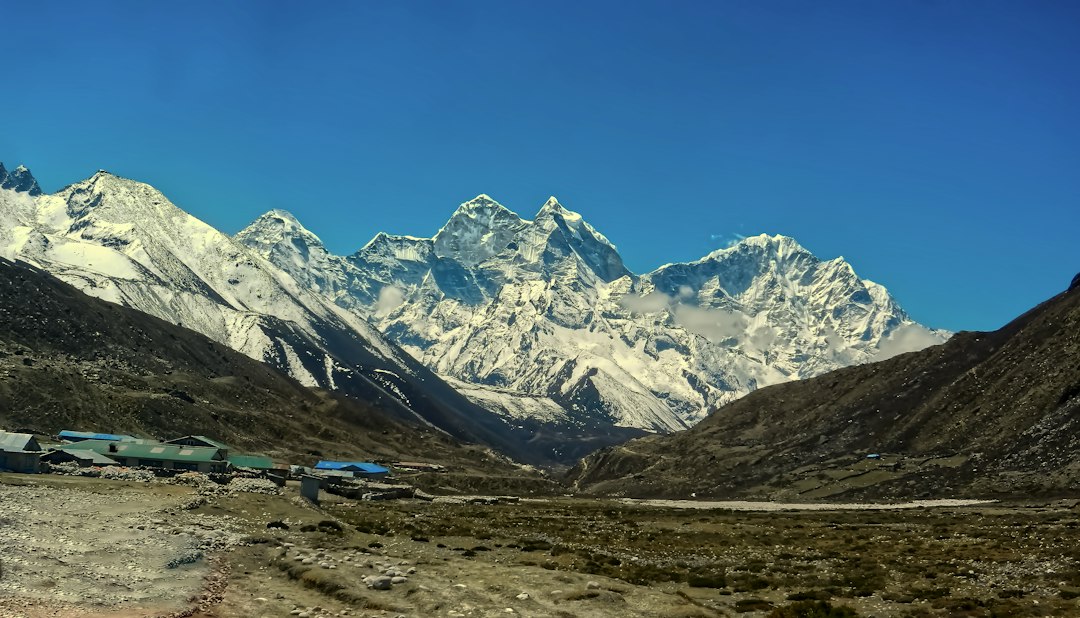
Everest has never needed cinema to make it dramatic. At 8,848.86 metres, the mountain already exists at the edge of ordinary human possibility, where cold, altitude, wind and exhaustion can turn small mistakes into irreversible decisions. Yet the modern story of Everest is also a story about something much more human: ambition, money, prestige, tourism and the belief that enough preparation can make even the world’s highest mountain manageable.
Baltasar Kormákur’s Everest, released in 2015, enters that tension through one of the most scrutinised disasters in mountaineering history. The film dramatizes the events of May 10–11, 1996, when climbers from multiple expeditions were caught high on Everest during a severe storm. Eight people died during the disaster; twelve climbers died on Everest over the full 1996 season, which at the time made it the mountain’s deadliest season.
The movie focuses primarily on two commercial guiding teams climbing from the Nepal side: Adventure Consultants, led by New Zealand guide Rob Hall, and Mountain Madness, led by American climber Scott Fischer. Jason Clarke plays Hall, Jake Gyllenhaal plays Fischer, Josh Brolin plays Beck Weathers, John Hawkes plays Doug Hansen, Keira Knightley plays Hall’s wife Jan Arnold, Robin Wright plays Weathers’s wife Peach, Emily Watson plays base-camp manager Helen Wilton, Michael Kelly plays journalist Jon Krakauer and Sam Worthington plays Guy Cotter.
Universal Pictures describes the film as an epic adventure inspired by the real events surrounding two expeditions pushed beyond their limits by a devastating storm. But Everest is not a documentary. It compresses personalities, decisions and controversies into a two-hour dramatic structure. That distinction is essential because the real 1996 disaster generated competing memoirs and arguments about responsibility that continue decades later.
What makes the film particularly relevant to Nepal Digest is that the production did not simply build a generic “Everest” on a soundstage. Kormákur insisted on returning part of the production to Nepal. Universal’s own production material says the film was shot on location in Nepal on the foothills of Everest, while Nepal’s Film Development Board lists Everest among major international productions shot in the country. The cast and crew travelled through Kathmandu and into the Khumbu, filming around Lukla, Namche and toward Everest Base Camp before moving to the Dolomites, Cinecittà and Pinewood for the most dangerous high-altitude scenes.
The result is a film that combines real Nepal, reconstructed mountain terrain and visual effects. That mixture matters because authenticity in Everest is not merely about whether every rock is real. It is about whether the audience feels the physical cost of moving through the mountain environment.
Watch the Official Trailer
Universal Pictures’ official trailer establishes the film’s scale immediately: Kathmandu, the Khumbu, expedition camps, summit ambitions and the storm that transforms a commercial climb into a survival crisis.
Everest (2015) official trailer from Universal Pictures UK.
The Real Disaster Behind the Film
By 1996, commercial guiding on Everest was no longer an experiment. Rob Hall’s Adventure Consultants had already demonstrated that experienced guides, Sherpa teams, fixed ropes, oxygen systems and careful logistics could take paying clients to the summit. Scott Fischer’s Mountain Madness represented another ambitious operator in the growing market for high-altitude guided expeditions.
The promise was never that Everest had become safe. The promise was that professional organisation could make an exceptionally dangerous mountain more manageable for climbers who had sufficient fitness, money and commitment but were not necessarily elite independent Himalayan mountaineers.
On May 10, both Hall’s and Fischer’s teams pushed toward the summit in crowded conditions. Delays accumulated. Climbers reached key points later than planned. Some continued upward beyond intended turnaround times. As the weather deteriorated, people were spread across the upper mountain with limited oxygen, severe exhaustion and increasingly poor visibility.
Adventure Consultants’ own history records that six climbers and two Sherpas from Hall’s expedition reached the summit that day. During the descent, Hall remained high on the mountain while trying to assist client Doug Hansen. Guide Andy Harris later went back upward toward Hall and disappeared. Yasuko Namba also died, while Beck Weathers was initially believed dead before recovering consciousness and eventually surviving an extraordinary evacuation.
Scott Fischer, exhausted on descent, also died. Three members of an Indo-Tibetan Border Police expedition died on the north side during the wider disaster. The 2015 film concentrates mostly on the south-side commercial expeditions, which means its narrative is not a complete account of every death associated with May 10–11.
This matters because popular films have enormous power to become the version of history people remember. Everest is one interpretation of the disaster, not the final historical record.
Rob Hall and the Promise of Guided Everest
Jason Clarke’s Rob Hall provides the film with its emotional centre. Hall was not portrayed as a reckless entrepreneur who believed money could defeat nature. He was an accomplished mountaineer who had co-founded Adventure Consultants and built a reputation for careful organisation.
His success also represented the emerging commercial model. Clients no longer needed to assemble their own national expeditions or belong to elite climbing clubs. They could hire a professional operation with logistics, permits, high-altitude staff, tents, oxygen, food and leadership.
That model transformed Everest. It opened access to climbers who might never have attempted the mountain independently. It also created new ethical questions. If a client has paid a large amount of money and spent months preparing, how much pressure exists to keep climbing when conditions become marginal? What is a guide’s responsibility when a client refuses to turn around? Can a commercial relationship distort judgement at 8,000 metres?
Everest does not answer these questions cleanly, and that is one of its strengths. Hall is presented as caring and professional, yet the system around him still produces pressure. The tragedy does not require a cartoon villain. It emerges from accumulated delays, weather, fatigue, individual decisions and a commercial structure built around an objective that cannot be guaranteed.
Scott Fischer and a Different Style of Leadership
Jake Gyllenhaal’s Scott Fischer provides a contrast. Fischer’s Mountain Madness brand carried a more relaxed, charismatic identity, and the film emphasises his confidence and physical toughness.
The real Fischer was an elite climber with major Himalayan experience. Mountain Madness remembers him as someone driven by the desire to share adventure and transformation with clients. Yet in 1996, he was also running a commercial expedition in an increasingly competitive guided-climbing environment.
Placing Hall and Fischer beside each other allows the movie to show two styles of leadership without pretending that either style could control the mountain. Hall appears methodical; Fischer appears instinctive. Both ultimately confront the same reality: experience reduces risk but never eliminates it.
This is one of the film’s most important ideas. Everest does not distinguish between people according to reputation when conditions collapse. The mountain does not reward confidence simply because confidence has worked before.
Why Turnaround Times Matter
One of the central debates surrounding the 1996 disaster concerns turnaround times. High-altitude climbing depends on strict limits because the summit is only halfway. Reaching the top late leaves climbers descending when oxygen supplies are lower, temperatures are falling and exhaustion is greatest.
The film repeatedly returns to time. Who is late? Who should turn around? Who believes the summit is still close enough to justify continuing?
This tension is psychologically powerful because Everest offers a terrible asymmetry. A climber may spend years training, thousands of dollars preparing and weeks acclimatising, only to stand a short distance below the summit and be told that the correct decision is to abandon everything and descend.
At sea level, turning around can sound obvious. At extreme altitude, after enormous emotional and financial investment, the decision becomes harder.
This is where commercial climbing complicates human psychology. Payment does not buy the summit, but it can make failure feel intolerable.
Nepal as More Than the Gateway
Foreign Everest films often treat Nepal as a corridor: land in Kathmandu, fly to Lukla, walk through the Khumbu, climb the mountain. The country becomes logistical infrastructure for an international adventure.
Everest partly follows that pattern, but its decision to film in Nepal gives the early sections greater texture. The journey through the country establishes distance from ordinary urban life and reminds the viewer that Everest is embedded within a lived Himalayan region rather than floating in isolation above a blank map.
Lukla, Namche Bazaar, trekking lodges, prayer flags and the approach through the Khumbu create a gradual transition. The climbers do not simply appear at Base Camp. They enter a landscape shaped by Sherpa communities, Buddhist practice, tourism and decades of mountaineering history.
Director Baltasar Kormákur described taking actors into Nepal in January 2014, travelling upward with equipment, donkeys and yaks, sleeping in minimally heated lodges and working at altitude where crew members began to suffer sickness. He wanted the performers to experience enough of the physical environment that exhaustion would not be entirely simulated.
That choice gives the Nepal sequences a quality impossible to reproduce completely on a studio stage. The actors’ breath, posture and movement reflect at least some genuine altitude stress.
Where the Real Mountain Ends and Cinema Begins
No responsible production could place major actors in the most dangerous sections above 8,000 metres. The film therefore combines several geographies.
Nepal provides Kathmandu, the Khumbu approach and real Himalayan scale. The Dolomites in Italy stand in for higher portions of Everest. Cinecittà in Rome and Pinewood Studios in Britain provide controlled sets. Visual-effects teams combine those elements with genuine mountain footage.
Kormákur compared the challenge to making a space film: the production could approach the real environment only to a certain point before safety and insurance made further filming impossible.
This hybrid approach is worth recognising because “shot on Everest” can be misleading. Parts of the movie were genuinely filmed in Nepal and on Everest’s lower approaches; other sections are carefully engineered cinematic constructions.
The film’s success lies in making those transitions difficult for viewers to notice.
The Sherpa Labour Beneath the Summit Story
Any Nepal-centred discussion of Everest must address a structural imbalance in how the mountain is usually represented.
Foreign climbers often become the protagonists. Their dreams, fears, marriages, sacrifices and summit photographs receive the narrative attention. Sherpa climbers and other Nepali high-altitude workers perform much of the dangerous logistical labour that makes large commercial expeditions possible: carrying loads, establishing camps, fixing routes, moving oxygen and supporting clients through the mountain.
Everest acknowledges Sherpa participation, but the emotional architecture of the film remains overwhelmingly focused on Western guides and clients. That reflects the source material and the particular 1996 story it chose to tell, but it also reproduces a familiar hierarchy in global Everest storytelling.
The imbalance becomes more significant because the commercial Everest industry cannot function in its current form without Nepali mountain workers.
This is not an argument that the Western climbers’ deaths matter less. It is an argument that the complete Everest story is larger than the people whose names become books and films.
Commercial Everest and the Question of Ownership
The 1996 disaster intensified a debate that has never disappeared: who is Everest for?
For climbers, it is the highest summit on Earth. For commercial operators, it is a business environment. For Nepal, it is a national resource, tourism asset and major source of expedition revenue. For Sherpa communities, the mountain and surrounding region are also home, workplace and sacred geography.
These meanings overlap but are not identical.
Commercial climbing creates employment and economic opportunity. It also concentrates risk among workers who repeatedly return to dangerous terrain while many clients encounter those hazards only once.
The film touches the business side of climbing but does not deeply interrogate the economic structure of Everest. A Nepal Digest reading should.
When an international movie frames Everest primarily as the ultimate personal challenge, it can unintentionally reinforce the idea that the mountain exists to test individual ambition. For the people who live around it, Everest is not simply somebody else’s bucket-list objective.
1996 and the Myth of the “Conquered” Mountain
By the 1990s, technology and logistics had created a dangerous illusion. Weather forecasting had improved. Oxygen systems were better. Commercial guides were experienced. Fixed ropes and established routes reduced uncertainty. Everest had been climbed many times.
None of that changed the altitude.
The disaster exposed the difference between familiarity and control. A route can be repeated without becoming predictable. Systems can reduce risk without removing it.
This is why the word “conquer” is especially misleading in mountaineering. Climbers can reach the summit. They do not defeat the mountain.
Everest communicates this more effectively than many triumph-oriented climbing films because its climax is not the summit. The summit becomes the beginning of the catastrophe.
Beck Weathers and the Limits of Probability
Josh Brolin’s Beck Weathers embodies one of the disaster’s most extraordinary survival stories. During the storm, Weathers became incapacitated and was effectively left for dead. He later regained consciousness and managed to reach camp despite catastrophic injuries.
His survival is almost too improbable for fiction, which is exactly why it works so powerfully on screen.
But the story also illustrates a recurring problem in disaster narratives: extraordinary survival can overshadow the systems that made survival possible. Other climbers, guides, Sherpa staff and eventually helicopter crews contributed to rescue and evacuation efforts.
Adventure Consultants’ historical account describes one of the most daring helicopter rescues then attempted in Nepal, organised after surviving climbers had been brought down from higher camps.
The survivor is visible. Rescue infrastructure is easier to forget.
Jon Krakauer and the Battle Over Memory
Journalist Jon Krakauer was on Rob Hall’s 1996 expedition and later wrote Into Thin Air, the best-known literary account of the disaster. His book helped turn the events into a global debate about commercial guiding, responsibility and individual decisions.
But it was never the only account.
Other survivors and climbers disputed parts of Krakauer’s interpretation, particularly around decisions made during the crisis. Anatoli Boukreev, a guide on Fischer’s team, became central to some of those controversies.
The 2015 film had to navigate a history already shaped by conflicting memoirs. That is one reason viewers should resist treating the screenplay as neutral reconstruction.
Disasters create fragmented memory. People experience different parts of the same event under extreme stress. Cinema then compresses those fragments into a coherent sequence because audiences require structure.
Reality rarely provides such neatness.
The Film’s Relationship With Authenticity
Kormákur stated repeatedly that he wanted authenticity, and Adventure Consultants CEO Guy Cotter assisted the production with mountain safety and historical context. That consultation matters.
Yet authenticity in historical cinema is always selective. Accurate equipment and genuine locations do not automatically make every conversation or motive historically certain.
The stronger standard is whether the film respects the complexity of the event.
On that measure, Everest is more restrained than many Hollywood disaster films. It avoids inventing a human antagonist. It does not transform Rob Hall or Scott Fischer into villains. It allows competence, error, loyalty and bad luck to coexist.
The result is emotionally powerful precisely because the tragedy does not require stupidity.
A Film Made During Another Dangerous Everest Era
The production itself occurred during a period when the risks borne by Nepali high-altitude workers were receiving renewed global attention. In April 2014, months after the main Nepal filming period, an avalanche in the Khumbu Icefall killed sixteen Nepali high-altitude workers.
The following year, the April 2015 Nepal earthquake triggered another deadly Everest avalanche and devastated communities across Nepal.
Those events changed the context in which Everest reached cinemas. A movie about a 1996 disaster arrived after modern audiences had again seen how vulnerable the mountain economy remained.
This makes the film impossible to view only as historical reconstruction. Everest risk is not safely contained in the past.
What Hollywood Sees When It Looks at Everest
Hollywood-scale cinema is naturally attracted to Everest because the mountain offers instant stakes. No fictional monster is required. The altitude itself is antagonistic.
But repeated focus on the summit can narrow how Nepal appears internationally. The country becomes a launch point for foreign achievement narratives.
This differs from Caravan, where the mountain community’s internal social world is the story. In Everest, Nepal largely surrounds the story of international climbers.
That does not make one film morally superior. They have different subjects. But placing them beside each other reveals how perspective changes representation.
Caravan asks what leadership means inside a Himalayan community. Everest asks what happens when outsiders bring ambition to the highest mountain on Earth.
Did Everest Glorify Commercial Climbing?
The answer is complicated.
The movie makes the summit look extraordinary. It shows friendship, courage and determination. Some viewers will inevitably leave wanting to experience the mountain themselves.
At the same time, the film is a two-hour warning about the limits of preparation. Characters pay enormous financial, physical and emotional costs. Several do not return.
Rather than functioning as simple mountaineering propaganda, Everest presents ambition as morally ambiguous. The desire to stand on the summit is understandable. The price is not automatically justified.
The most serious question is not “Why climb?”—a question mountaineers have answered in countless ways. It is “Who carries the risk created by that desire?”
That question leads directly back to guides, Sherpa workers, rescue teams and families waiting below.
What the Film Preserved of Nepal
The Nepal footage has acquired additional historical value because it captures the Khumbu and parts of Kathmandu immediately before the 2015 earthquake transformed the country.
The film is not a documentary archive in the way Baraka can be read as one, but location cinema always records more than its intended story. Airports, streets, lodges, villages and trekking routes become visible around the actors.
Over time, those backgrounds gain historical value.
This is one reason Nepal’s foreign-film history deserves systematic preservation. International productions contain fragments of Nepal’s architectural, tourism and landscape history scattered across decades of cinema.
The 1996 Disaster After Thirty Years
In 2026, the disaster is now thirty years old. The debates have not disappeared.
Everest guiding has become more sophisticated. Weather forecasting, communication and expedition coordination have improved. Commercial demand has also increased enormously, creating new problems of crowding, waste, route pressure and high-altitude labour.
The 1996 tragedy therefore remains relevant not because nothing changed, but because the underlying tension remains.
Human beings continue to build systems around an environment that cannot be made fully controllable.
Technology changes. Business models change. The mountain keeps the final veto.
Why Everest Belongs in Nepal Digest’s Cinema Series
Nepal Digest’s growing series on foreign films made in Nepal has traced a remarkable evolution in how the country has been imagined on screen.
In Up to His Ears, Nepal was adventure scenery. In Les Chemins de Katmandou and Hare Rama Hare Krishna, Kathmandu became counterculture. The Golden Child, Witch From Nepal and The Legend of Wisely turned Nepal into mystical fantasy. Baraka presented sacred visual meditation. Caravan centred Dolpo’s own social world.
Everest represents another phase: Nepal as the global stage of extreme commercial adventure.
It is perhaps the most contemporary international image of the country. Millions of people now know Nepal through trekking, climbing and Everest imagery even if they know little about Nepali politics, literature, cities or everyday life.
The movie both reflects and reinforces that imbalance.
The Mountain After the Movie
Everest ends with loss, not conquest. That choice matters.
Rob Hall became internationally remembered not simply as a guide who reached the summit many times but as a man who remained with a struggling client and died high on the mountain. Scott Fischer’s legacy is similarly inseparable from the clients, guides and friends who climbed with him. The survivors carried the event into books, interviews and decades of reflection.
The mountain continued.
More expeditions arrived. More records were set. More films were made. Commercial Everest grew rather than disappeared.
That may be the most unsettling fact behind the story. Tragedy does not end the human desire to climb. It becomes part of the mountain’s mythology and, paradoxically, sometimes makes the objective even more culturally powerful.
For Nepal, the challenge is therefore larger than managing climbers. It is managing an international symbol.
Everest is geography, sacred landscape, national asset, workplace, business and dream at the same time.
No two-hour movie can contain all of that.
But Baltasar Kormákur’s Everest succeeds at something more limited and perhaps more valuable: it makes the audience feel, for a short time, that reaching the highest point on Earth does not place human beings above nature.
It places them inside one of nature’s least forgiving environments.
The summit may be the goal.
Coming home is the achievement.
Further reading: Universal Pictures: Everest · Nepal Film Development Board: Everest · Adventure Consultants: 1996 Everest history · Mountain Madness: Scott Fischer and company history · National Geographic: The 1996 disaster, thirty years later