

Jennifer Peedom went to Everest to document tension between Sherpas and foreign climbers. Then the Khumbu Icefall collapsed, sixteen Nepali workers were killed, and the film became a record of grief, labour, anger and who really carries the risk on the world’s highest mountain.
For more than a century, the global story of Everest has usually begun with climbers who wanted to reach the summit.
The names remembered internationally are often expedition leaders, record breakers and paying adventurers. Their photographs appear on book covers. Their failures become documentaries. Their survival stories become films.
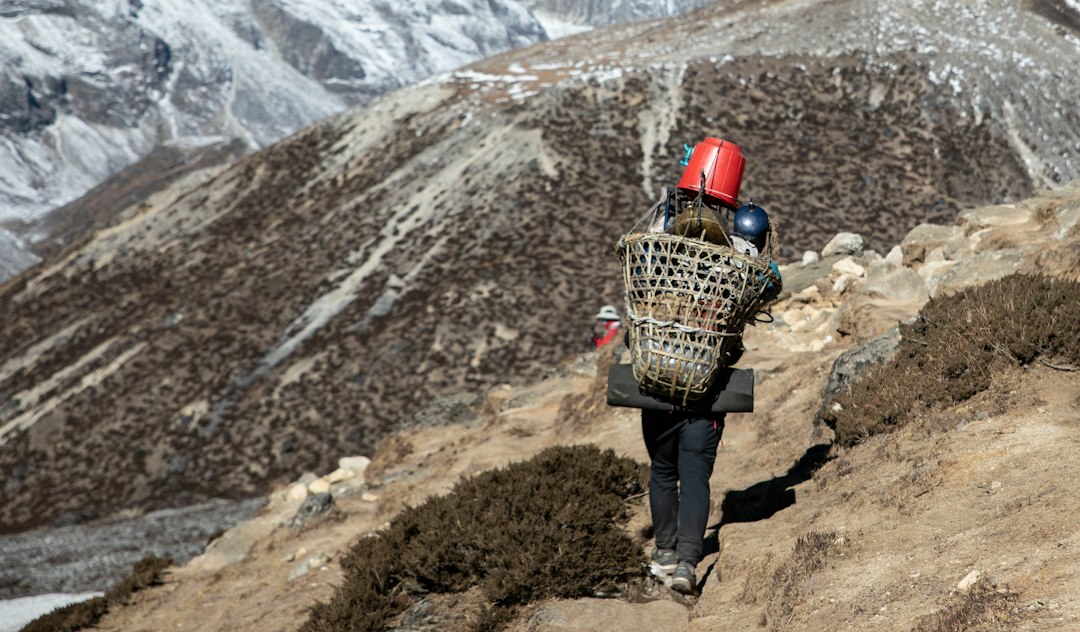
The people who repeatedly build the route, carry equipment, establish camps, move oxygen and enter dangerous terrain before most foreign climbers arrive are far less visible.
Jennifer Peedom’s Sherpa changes the camera position.
The 2015 documentary was originally conceived as a film about growing tensions between foreign climbers and Sherpas on Mount Everest. Peedom and her team were interested in the transformation that had occurred since the celebrated 1953 first ascent by Tenzing Norgay and Edmund Hillary. Sixty years later, Everest had become a commercial industry. Foreign clients paid enormous sums to attempt the summit, while Sherpa climbers performed much of the mountain’s most dangerous work.
Then, on the morning of 18 April 2014, the film changed.
A massive block of ice broke from the hanging glacier above the Khumbu Icefall. The avalanche struck Sherpa teams moving through the route. Sixteen Nepali high-altitude workers were killed.
At the time, it was the deadliest single disaster in Everest history.
Peedom’s cameras were already there.
Sherpa became not merely a film about tension but a record of the moment grief turned into political and economic confrontation.
Watch the Official Trailer
The official trailer from the filmmakers makes the change in the documentary’s purpose explicit: a film about the Sherpa-climber relationship becomes a film about loss, labour and collective refusal.
Official Sherpa trailer from Felix Media / the film’s official campaign.
First, a Necessary Correction: Sherpa Is Not a Job
International mountaineering language has often used “Sherpa” as though it means porter or mountain guide.
It does not.
Sherpa refers to an ethnic community whose historic homeland is in the Himalayan regions of Nepal. Many Sherpas became central to Himalayan mountaineering because of geography, local knowledge, adaptation to altitude and the development of the expedition economy. But a Sherpa can be a business owner, monk, farmer, politician, student or doctor. Not every high-altitude worker is Sherpa, and not every Sherpa works on mountains.
The documentary’s title therefore carries more weight than a generic climbing label. It is about a community whose identity became globally tied to dangerous labour performed for outsiders.
Why Jennifer Peedom Went to Everest
The official synopsis begins not with the avalanche but with a fight.
In 2013, an altercation high on Everest between Sherpa workers and European climbers shocked the mountaineering world. The image conflicted with an old Western stereotype of Sherpas as endlessly cheerful, loyal and self-sacrificing companions.
Peedom wanted to understand what had changed.
Her question was already critical. Perhaps the problem was not that Sherpas had changed. Perhaps foreign climbers had become accustomed to a relationship that was always more complicated than the mythology admitted.
The 1953 Hillary-Tenzing partnership became an international symbol of friendship. But commercial Everest created a different system: clients, operators, contracts, loads, fixed ropes, oxygen logistics, bonuses and repeated exposure to risk.
The smiling helper image could no longer contain that reality.
Phurba Tashi Sherpa and the Human Centre of the Film
One of the documentary’s central figures is Phurba Tashi Sherpa, an extraordinary high-altitude climber working with expedition operator Russell Brice.
At the time of filming, Phurba Tashi was preparing for what could have been his twenty-second Everest summit—an achievement that would have placed him alone at the top of the summit-count record then associated with Apa Sherpa.
But Sherpa is most powerful when it moves away from the record.
Phurba Tashi’s family does not experience his climbing career as abstract heroism. They experience it as recurring danger. His skill creates income and status, but every expedition season carries the possibility that he will not return.
This changes the meaning of a summit record. What looks from outside like achievement can look from home like accumulated exposure.
The Khumbu Icefall: Work Before the Clients Arrive
The Khumbu Icefall is among the most dangerous sections of the standard southern Everest route. The glacier is constantly moving. Seracs shift. Crevasses open. Ice towers can collapse without warning.
Foreign climbers pass through it, but Sherpa and other Nepali high-altitude workers may cross it many more times during a season because they transport loads and prepare camps.
This creates a fundamental inequality of exposure.
A paying climber may make a handful of crossings. A worker may enter the hazard repeatedly because the expedition depends on supplies moving upward.
Sherpa forces the audience to understand Everest not only as adventure but as workplace.
18 April 2014
According to the film’s official account, at 6:45 in the morning a roughly 14-million-ton block of ice broke loose and crashed onto the climbing route through the Khumbu Icefall.
Sixteen Sherpas were killed.
The numbers are essential but insufficient. Each person belonged to a family and community. Each death removed an earner, parent, spouse, son or relative from a household.
The disaster immediately exposed the contradiction at the centre of commercial Everest. The mountain generated enormous international revenue and prestige, yet the people accepting the most repetitive objective risk did not always possess comparable economic security.
Grief Becomes a Labour Question
After the avalanche, the issue was not simply whether climbing should resume.
For many Sherpa workers, continuing the season so quickly would have meant returning to the same route while bodies were being recovered and families were mourning.
Foreign clients and expedition businesses faced different pressures. Climbers had invested money, training and time. Operators faced contractual and reputational consequences. Some customers knew their expedition fees would not simply be returned.
This is where Sherpa becomes unusually important.
The film captures the moment when Everest stops looking like an individual adventure and begins looking like an industrial dispute.
Workers had collective leverage because without them much of the commercial climbing system could not function.
The Refusal to Climb
In the days following the disaster, Sherpa teams increasingly refused to continue the season. Their position combined mourning, safety concerns and demands for greater recognition and support.
To some outsiders, this looked like the cancellation of a climbing season.
From another perspective, it was workers deciding that a business operation could not continue as though sixteen deaths were simply an operational setback.
The difference between those perspectives is the heart of the documentary.
Russell Brice and the Operator’s Position
Expedition leader Russell Brice is another major figure in the film. As the head of Himalayan Experience, he represents the commercial operator who depends on Sherpa labour while also managing foreign clients and enormous logistical responsibility.
The documentary does not reduce him to a villain.
That matters. The commercial Everest system is not explained by one greedy operator or one insensitive client. It is a network of incentives.
Clients want summits. Companies want successful seasons. Workers need income. The government issues permits. Tourism businesses depend on traffic. Guides manage risk. Families depend on wages.
A system can produce injustice even when many individuals inside it believe they are acting reasonably.
Why Foreign Climbers Pay So Much
Everest expeditions are expensive because the mountain requires permits, oxygen, food, tents, transport, communications, guides, high-altitude staff and weeks of logistics.
But high fees can create a dangerous psychological expectation.
A client who has spent a life-changing amount of money may feel that the summit has become a purchased opportunity rather than a possibility dependent on weather, health and workers.
No legitimate operator promises a summit. Yet consumer psychology does not disappear at Base Camp.
Sherpa exposes the discomfort when that expectation meets the workers’ decision not to climb.
Everest as Sacred Mountain and Workplace
The film repeatedly contrasts commercial language with spiritual relationships to the mountain.
For many Sherpas, Everest is not simply terrain. The mountain exists within a sacred Himalayan landscape. Ceremonies are performed before expeditions. Climbers ask permission symbolically before entering dangerous space.
At the same time, the mountain is also a workplace.
This coexistence can be difficult for outsiders to understand. Sacredness does not eliminate the need to earn income. Employment does not eliminate spiritual meaning.
The contradiction is not hypocrisy. It is ordinary human complexity.
Tenzing Norgay, Edmund Hillary and the Myth of Equal Partnership
The 1953 first confirmed ascent by Tenzing Norgay and Edmund Hillary remains one of the foundational stories of Everest.
International memory often celebrates the partnership as proof that foreign and Sherpa climbers stood together as equals.
There is truth in the friendship and mutual respect associated with Hillary and Tenzing. But the symbolic partnership can obscure the broader structure that followed.
As commercial climbing expanded, the relationship between visitor and local worker became increasingly contractual.
The summit photograph remained romantic. The labour underneath it became industrial.
The Camera Changes Sides
Most climbing films organise themselves around the person attempting the mountain. The audience waits to see whether that protagonist will summit.
Sherpa changes the emotional question.
Instead of “Will the foreign climber reach the top?” the audience begins asking “Why must this worker cross the Icefall again?”
That shift is profound.
The same mountain appears completely different depending on whose risk defines the story.
Renan Ozturk and Filming the Mountain
The documentary’s cinematography team included Renan Ozturk, Hugh Miller and Ken Sauls. Filming at altitude required lightweight camera systems, physical acclimatisation and crews capable of working in conditions that were themselves dangerous.
The official behind-the-scenes material highlights the role of Sherpa camera personnel as well as international cinematographers.
This matters because even a documentary about labour depends on labour.
Who carries cameras? Who moves batteries and equipment? Who goes into dangerous spaces so an audience can later see them?
The production’s own logistics become part of the ethical landscape it is filming.
The Problem With the “Heroic Sherpa” Image
There are two common stereotypes.
One presents Sherpas as anonymous servants.
The other tries to correct that insult by presenting them as superhuman mountain heroes.
The second image is more respectful but can still flatten people.
If Sherpas are imagined as naturally fearless and physiologically destined for altitude, their labour can appear less costly. Risk becomes something they are simply built to absorb.
Sherpa is strongest when it refuses this mythology. Phurba Tashi is exceptionally skilled, but his family still fears for him. Courage does not eliminate vulnerability.
Economics After Tragedy
The 2014 avalanche forced public attention onto insurance, compensation and worker protection in Nepal’s mountaineering industry.
Those debates did not begin in 2014, and they did not end afterward. But the scale of the deaths made them impossible for international climbing culture to ignore.
A fair Everest economy cannot simply calculate what foreign clients are willing to pay. It must also calculate how risk and reward are distributed among the people who make those expeditions possible.
Comparing Sherpa With Everest (2015)
Nepal Digest has already examined Everest, Baltasar Kormákur’s dramatization of the 1996 disaster.
The two films make an extraordinary pair.
Everest asks what happens when foreign guides and clients are trapped by weather and altitude. The emotional centre lies with Rob Hall, Scott Fischer, Beck Weathers and their families.
Sherpa turns the camera toward the Nepali workers whose danger is built into the industry before the clients even start their summit push.
One film is about a catastrophic expedition.
The other is about the system that makes expeditions possible.
The Word “Support” Hides Work
Everest commentary often calls Sherpa teams “support.”
The word sounds secondary.
But commercial expeditions rely on them for tasks that are operationally central: load carrying, camp establishment, route preparation, oxygen movement, fixing, guiding and emergency response.
Calling that “support” can unintentionally preserve the fiction that the client’s climb is the main achievement and local labour merely assists it.
Sherpa makes that language harder to use casually.
Tourism, Pride and Dependency
Mountaineering provides income in regions where economic opportunities can be limited. The industry has supported families, businesses, schools and migration.
This means criticism of exploitation cannot simply conclude that Sherpas should stop working on Everest.
Workers themselves make choices within economic conditions. Many are proud of their expertise. Some build successful guiding companies and international careers.
The issue is not whether mountain work should exist.
The issue is whether the people taking the greatest repeated risks have enough power over the conditions of that work.
What Happened to the 2014 Season
The aftermath of the avalanche effectively ended commercial climbing on the Nepal side for that season.
For some foreign climbers, this was devastating. They had trained for years and spent significant sums.
For grieving families, the idea of resuming the season could seem morally incomprehensible.
The documentary allows both realities to exist while making the imbalance in consequence clear.
A cancelled expedition costs a client money and a dream.
A fatal expedition costs a family a person.
Why Sherpa Is More Than an Everest Film
The documentary is ultimately about labour visibility.
That makes it relevant far beyond mountaineering.
Modern economies constantly hide workers behind experiences purchased by consumers. Hotels hide cleaners. Delivery systems hide drivers. construction hides migrant labour. Tourism hides guides, cooks and porters.
Everest is simply an extreme version of a familiar structure.
The customer experiences achievement. Someone else may absorb much of the operational risk.
From Background Character to Political Subject
This is the film’s greatest contribution.
Sherpa workers stop being background figures in someone else’s adventure.
They become people making collective decisions about whether an industry can continue without their consent.
That is not merely representation. It is agency.
The Film’s International Impact
Sherpa screened at major international festivals including Toronto and London. Jennifer Peedom received significant recognition, and the film was BAFTA-nominated. Screen Australia records it as a major feature documentary, while industry profiles note that it became one of the most commercially successful Australian documentaries of its period.
Its success mattered because the global audience for Everest stories was already enormous. The film used that audience to redirect attention toward people who had often been treated as part of the mountain infrastructure.
What the Documentary Cannot Solve
No documentary can solve the economics of Everest.
Nor can it speak for every Sherpa. Communities contain disagreements. Workers have different financial needs, political views and attitudes toward climbing.
The film is strongest when understood as one powerful record of a particular season, not as the final statement on an entire people.
After 2014
Everest did not close permanently. Commercial climbing returned.
Operators changed procedures. Debate over worker insurance, pay and safety continued. The mountain remained economically important. Summit demand remained strong.
This can make the documentary’s conclusion feel unresolved.
That is appropriate.
The underlying system was never going to disappear because one season exposed its contradictions.
The Question Sherpa Leaves Behind
Every Everest summit photograph contains people who are not visible in the frame.
Someone established the route.
Someone carried oxygen.
Someone moved tents and food.
Someone crossed the Icefall earlier and more often.
Someone waited at home hoping those workers would return.
Sherpa asks the audience to remember those people before celebrating the summit.
That makes it one of the most important films ever made about Nepal’s place inside global adventure culture.
It does not tell viewers to stop admiring Everest.
It asks them to understand what the admiration costs.
Further reading: Official Sherpa Film: Synopsis · Official Sherpa Film: Inside Look · Screen Australia: Sherpa · British Council UK Films: Sherpa